Quick Take
- Narration: Virtual Voice narrates this intensely personal memoir, which is a significant mismatch, the raw, confessional quality of Kevin Murray’s writing deserves a human voice that can carry its emotional weight.
- Themes: Opioid addiction, fractured relationships, the search for identity beneath dependency
- Mood: Raw and unflinching, with moments of desperate hope
- Verdict: A genuinely affecting memoir that earns its honesty, but Virtual Voice narration creates a persistent distance from material that needs human presence to land fully.
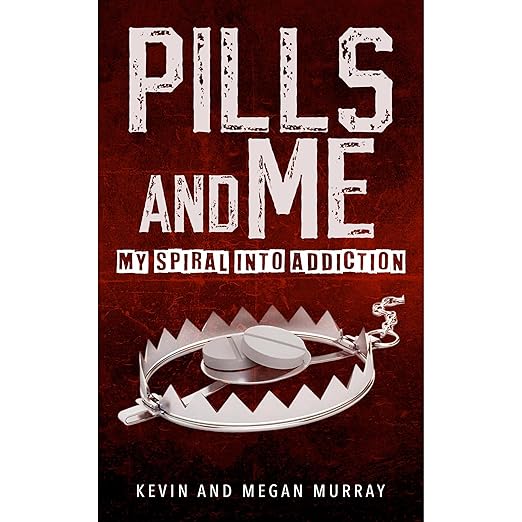
There is a specific kind of quiet that comes over you when someone tells the truth without ornamentation. I was listening to Pills and Me on a Tuesday afternoon, doing nothing in particular, and I found myself setting down whatever I’d been holding and just sitting with it. Kevin Murray’s account of his descent into opioid addiction begins with a white pill in a flooded basement, and the mundanity of that detail, the ordinary domestic setting, is exactly what makes it so unsettling. He is not describing a dramatic fall from grace. He is describing exhaustion and loneliness finding a chemical shortcut to relief.
The memoir covers familiar territory in one sense: the first high, the escalating need, the deteriorating relationships, the encounters with law enforcement. What Murray does differently is refuse to organize these events into a redemption arc that feels too clean. Reviewer Andantelle noted that the book reads in chapters that focus on distinct aspects of addiction, the buying, the dealing relationships, the legal consequences, and that structural choice gives Pills and Me something closer to a case study than a confession. You understand how the machinery of addiction operates from the inside, not just the emotional texture of it.
The Voice Behind the Story
This is where I have to be direct about a real problem. Virtual Voice narration handles prose, but it cannot handle testimony. Murray’s writing, per reviewer Lepacole, is marked by authenticity and vulnerability, qualities that only exist when a human reader brings their own breath, hesitation, and weight to the words. When a recovering addict describes near-daily despair or the moment they decide to fight for a second chance, the voice delivering those words matters enormously. Virtual Voice produces technically correct audio. It does not produce presence. For a memoir this raw, that gap is not a minor inconvenience. It changes what you receive from the book.
The reviewer Rita Patrick, a mother who has watched her own son spiral through addiction, described finding Pills and Me healing, a book that finally let her understand something she had been trying to comprehend for years from the outside. That is the kind of response this material is capable of generating. It speaks to how much the underlying writing accomplishes despite the narration working against it.
What the Memoir Doesn’t Sanitize
Murray’s account is notable for what it includes rather than elides. The estranged relationships are not summarized and resolved; they remain fractured in ways that feel true to how addiction actually functions within families and friendships. The despair he describes is not positioned as a stage to pass through on the way to recovery, it is presented as a condition that persisted, that required daily confrontation. There is no glamour in his version of events, and several reviewers noted specifically that this absence of glamour is what separates the book from celebrity addiction memoirs, where the drama of the fall can inadvertently become its own kind of spectacle.
The memoir also addresses the way addiction disguises itself as solution. Murray frames his initial use not as recklessness but as relief-seeking, a response to circumstances that felt unbearable. This framing is one of the more valuable contributions the book makes. It asks readers to stop thinking about addiction as a failure of willpower and start thinking about what the substance was solving for, even temporarily.
Who This Is For and Who Should Look Elsewhere
If you are navigating addiction in your own life or family, and you want a first-person account that prioritizes honesty over resolution, Pills and Me has genuine value. The writing accomplishes what it sets out to do. If you have access to the print edition, I would recommend that format for the full emotional register. If you are new to addiction memoirs and want something that reads with the propulsive quality of narrative journalism, reviewers consistently describe this as gripping from the first pages.
Skip it if you are looking for a structured recovery program or clinical framework. This is not that kind of book. It is one person’s account, and its utility lies in recognition and understanding rather than instruction.
Frequently Asked Questions
Is Virtual Voice narration a serious problem for this particular memoir?
Yes, more than for most genres. Pills and Me is confessional first-person testimony about opioid addiction, and that material requires a human narrator who can bring emotional weight to the words. Virtual Voice renders the prose correctly but cannot convey the vulnerability that reviewers consistently identify as the book’s defining quality.
Does Kevin Murray have a background in writing, or is this his first book?
Based on the available metadata and reviews, this appears to be Murray’s debut memoir. Reviewers compare its quality to celebrity addiction memoirs and find it holds up well, which suggests the writing is stronger than you might expect from a first-time author.
Is this suitable for someone who has a loved one struggling with opioid addiction, rather than someone in recovery themselves?
Reviewer Rita Patrick specifically describes it as essential reading for parents of addicts, noting that the book allowed her to understand her son’s experience in ways she couldn’t access before. It is explicitly written to provide a window into addiction for people on the outside as much as those living through it.
How does this compare to other opioid addiction memoirs in terms of scope and structure?
Rather than following a single narrative arc, the memoir is structured around different dimensions of addiction, relationships, drug acquisition, legal consequences, and the inner experience of dependency. This gives it more breadth than a strictly chronological account, though it covers roughly the arc from first use to the decision to pursue recovery.