The Short Version
- Performance: Virtual Voice, meaning synthetic text-to-speech rather than a human recording, which makes no interpretive choices at all and is a real cost in a genre that runs on trusting a voice.
- What it covers: Commitment over hedging, decision-making at a crossroads, self-belief treated as a professional strategy.
- Feel: Direct and encouraging, at least on the evidence the description supplies.
- Our call: Worth a sample if you are genuinely standing at a decision, and skippable if you want method rather than momentum.
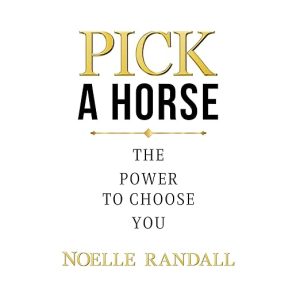
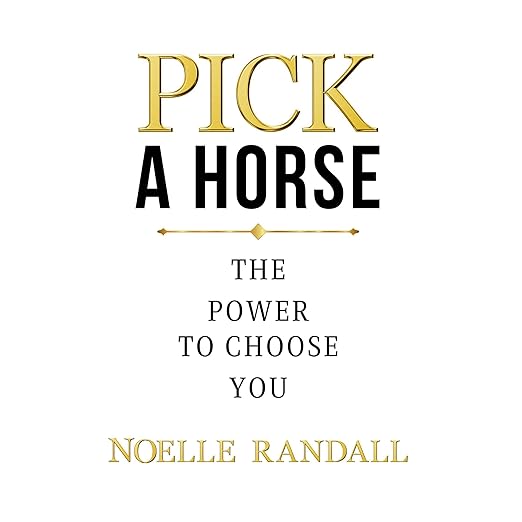
Read by a synthetic voice, and sold with a description that never once names a single technique it teaches, this audiobook asks for four hours and forty-eight minutes on trust alone. Noelle Randall's Pick A Horse carries the subtitle The Power to Choose You, and the listing credits Virtual Voice as narrator, which means machine-generated speech rather than a recorded human reading. Both facts are worth knowing before you decide, and neither of them is a reason to dismiss the book outright.
Marketing the Feeling of Having Already Finished
The description is written entirely in the language of outcome. You will experience "a journey of self-discovery and empowerment." The book will "redefine your perspective on self-empowerment, decision-making, and the pursuit of your true path." It is "more than just a book", it is "a manifesto for those ready to embrace their inner strength". What none of that tells you is what happens inside it. No framework gets named, no chapter structure is described, no case study or anecdote is previewed, and no method is so much as gestured at. The copy sells the feeling of having finished rather than the experience of listening.
The title is doing more work than the description acknowledges. Pick A Horse, The Power to Choose You reads as a betting metaphor about commitment: back one runner instead of hedging across the field, and make yourself the runner you back. Nothing in the copy unpacks it, so take that reading as my inference from six words on a cover rather than as a summary of the argument. It is a good metaphor though, and it points at a real problem. The paralysis of keeping every option open is a specific and common failure mode that most of this genre ignores in favor of goal-setting.
The description does name its moment precisely, and this is the most concrete thing on the page. It addresses somebody "at the crossroads of a major life decision," or seeking clarity personally or professionally. That makes it a situational book rather than a general one. A short book aimed at a person standing at a fork is a different product from a self-improvement programme aimed at a person who simply wants to be better, and the difference should govern whether you buy it at all.
Zero Interpretive Choices From a Text-to-Speech Voice
Self-help audio lives or dies on length, and this runtime is the right size for the category. It builds an argument without outstaying it, and a listener facing a live decision can reach the end before the decision does. Most books of this kind are padded toward a print page count they never needed, and the padding is exactly what makes the genre exhausting in audio, where you cannot skim a chapter you have already understood.
The narration is the thing to be clear-eyed about. Virtual Voice is text-to-speech, so the recording makes no interpretive choices whatsoever: no emphasis selected for meaning, no pause held for effect, no softening where the material turns confiding. For self-help that is a genuine cost, since the genre depends on feeling some trust toward the person talking. It is also a smaller cost for declarative instructional prose than it would be for a memoir or a novel, and the copy suggests declarative prose. Neither of the two reviews on this listing mentions the audio, so nothing here can tell you how the synthesis handles the material.
The filing is the last piece of usable context. This sits under business and careers with a Women in Business tag, which places the book in a commercial frame rather than a clinical one, and the listing offers no author credentials beyond that. Hold the expectation accordingly: decision-making advice from a business vantage point rather than a structured psychological method.
Five-Star Reviews About a Parcel and a Paperback
The two reviews attached here are the sharpest warning on the page, and not because they are negative. Both are five stars. The problem is that neither one describes the book. The first consists of the sentence "Arrived on time and as described", which is a review of a delivery. The second, headed Easy read, is a garbled line about reading a friend's copy and then ordering one. Both attach to a physical object moving through the post, and neither says anything about content, let alone about a recording.
That makes the 4.5 average across 15 ratings close to uninformative for an audio buyer, since the only two entries anybody can inspect concern a parcel and a paperback. Whatever that score is measuring, it is not measuring how this text behaves when spoken by a synthesizer for nearly five hours, which is the only question a buyer on this page needs answered.
The larger risk is the one the description creates for itself. Copy this abstract usually means one of two things: either the book really is method-light and runs on encouragement, or whoever wrote the blurb had not read it closely. Nothing on this page distinguishes between those cases. A buyer cannot tell from the listing, and the first twenty minutes will settle it faster than any further reading around the marketing.
One practical note about synthetic narration in this genre specifically. Self-help prose is full of rhetorical questions, direct address, lists and emphasis, and those are precisely the constructions where text-to-speech has the least to work with. If synthesized reading already bothers you, this book gives it plenty of opportunity; if it never has, the shorter runtime keeps the exposure contained.
Choosing Yourself Rather Than Optimizing Yourself
The honest recommendation splits along a single line: are you actually at the decision, or are you reading about decisions? The description is written for the first person, somebody standing at a fork in a career or a relationship who needs a push toward committing rather than a framework for analysis. For that listener, at this length, the book is a low-cost intervention at exactly the moment when a low-cost intervention is worth trying.
It also suits people who have found value in the commitment-and-self-belief end of the shelf and want a short entry rather than another long programme. The Women in Business filing points toward a readership of women navigating professional decisions, and the copy's emphasis on choosing yourself rather than optimizing yourself is a distinct and slightly unfashionable position inside the category.
Two reasons to walk away. Anyone who needs evidence, methodology or a named framework before committing time will find the description offers none, and the review pool cannot supply what the copy withholds. And anyone with a low tolerance for synthesized reading should treat the Virtual Voice credit as decisive rather than as a footnote, because nearly five hours is a long stretch to spend fighting a delivery you dislike. For everybody else the risk is genuinely small, which is the one thing an abstract description and a short runtime combine to guarantee.
Before You Listen
Who narrates this audiobook?
The listing credits Virtual Voice, a synthesized reading rather than a human one. Expect level delivery with no interpretive emphasis and no variation in tone as the material shifts. For a genre that depends on believing the person talking, that is a real consideration, though the short runtime limits how long it lasts.
How long is the audiobook?
Four hours and forty-eight minutes, which is well judged. Many books in this category are stretched to fill a print format and become punishing in audio, where skimming familiar ground is awkward. The restraint here counts as a genuine point in the book's favor rather than as a shortfall.
What do the customer reviews tell you?
Very little, which is itself worth knowing. Both are five stars and neither discusses the content. One is a single line about an order arriving on schedule. The other is a garbled sentence about a friend's copy. Neither reviewer appears to have listened to anything at all.
Does the description say what the method is?
It does not. The copy promises empowerment, clarity and a redefined perspective on decision-making without naming a framework, previewing an example or outlining a chapter. That absence is the single most important thing a buyer can learn from this page, and one listening session will settle it more quickly than any amount of research.