Quick Take
- Narration: Matilda (synthetic AI voice) delivers the pediatric protocols with functional clarity for review purposes, though clinical prioritization cues that human narration provides are absent.
- Themes: Pediatric cardiac and respiratory emergency protocols, PALS certification preparation, case-based clinical algorithms
- Mood: Dense and instructional, calibrated for healthcare professionals with prior clinical training
- Verdict: An efficient portable reference for healthcare professionals maintaining PALS certification, with the same synthetic narration limitations as the companion ACLS handbook in this series.
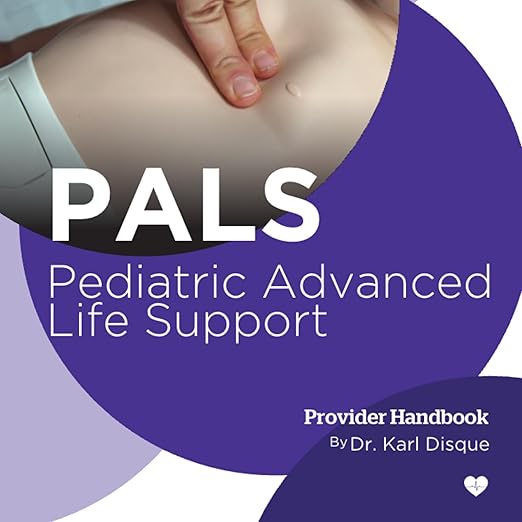
The third entry in Dr. Karl Disque’s AMC certification handbook series covers what is perhaps the most emotionally demanding territory in acute care: pediatric life support. The clinical stakes of a child in cardiac or respiratory arrest are high in every sense, and the certification that prepares healthcare professionals to respond effectively requires both technical precision and the ability to apply the right algorithm rapidly under stress. Whether an audiobook can meaningfully contribute to that preparation is the central question for any review of this format.
The short answer is: yes, within specific limits. The PALS Provider Handbook functions well as a portable review and pre-course preparation resource for clinicians who already have foundational knowledge of pediatric emergency care. For that audience, the 1.5-hour runtime covers the necessary algorithmic territory without padding, and the case scenario organization makes the material more clinically relatable than a straight algorithm recitation would be.
Where the 2020-2025 PALS Updates Land
Disque’s handbook is explicitly aligned with the 2020-2025 PALS guidelines from ILCOR, and for clinicians who completed their last certification under earlier guidelines, the specific updates matter. The handbook covers EKG and electrical therapy review with current parameter updates, pediatric respiratory failure categories and their algorithmic responses, medication dosing that reflects current weight-based recommendations, and the symptom distinctions between infant and child presentations that make pediatric cases different from the adult ACLS framework. A practitioner-instructor who reviewed the handbook noted that it addresses the adult-versus-pediatric comparison explicitly, which is useful for clinicians who work primarily with adults and are adding or maintaining PALS certification.
The case scenario architecture is the same structural choice that works well in the ACLS handbook: specific clinical presentations organize the algorithm content rather than presenting algorithms in abstract sequence. This matters because PALS certification tests are scenario-based, and encountering the material in a scenario context during study produces better retention for the test format. The reviewer who passed their PALS exam after using this resource noted helpful tables and comparison structures as particular strengths of the content organization.
The Synthetic Narration Problem in a Pediatric Context
The Matilda narration presents the same limitations here as in the companion ACLS handbook, but pediatric emergency content creates a specific additional consideration. Infant and child emergency protocols contain several steps where the stakes of sequence errors are extremely high, and where a human clinical instructor would use vocal emphasis to mark those steps as critical. The synthetic voice does not distinguish between a supporting detail and a critical decision point. For experienced clinicians reviewing familiar material, this is manageable because they bring their own clinical hierarchy to the content. For less experienced practitioners encountering these algorithms for the first time, the flat delivery could create genuine confusion about relative importance.
One reviewer noted a potential error in an assessment question that may reflect a proofing issue in the AMC materials. As with the CPR handbook in this series, this is worth flagging as a reminder to cross-reference any certification preparation material with current AHA PALS guidelines rather than relying on a single source. The AMC material is well-organized and consistently aligned with current standards, but no single reference should serve as the sole preparation for a certification exam with direct clinical safety implications.
The On-the-Go Review Use Case
A reviewer described using the audiobook for reviewing topics while riding the bus or taking a coffee break, and that describes exactly the format’s strongest application. PALS recertification typically requires clinicians to demonstrate both cognitive and procedural competency. The audio resource contributes to the cognitive side, providing portable access to the algorithm structures and case scenarios that form the intellectual scaffold for the procedural skills practiced in simulation. For a busy clinician with limited study time, being able to review the bradycardia algorithm or the respiratory failure pathway during a commute represents genuine value that the print handbook cannot provide in the same way.
Who Should Use This and How
This audiobook is calibrated for healthcare professionals preparing for PALS certification or recertification who want a portable, concise review resource aligned with current guidelines. It is not appropriate as the sole preparation resource, and it is not designed for general audiences interested in child safety. Paired with simulation practice and the AMC online course, it serves its intended purpose effectively. Clinicians working in pediatric-heavy settings, including emergency medicine, pediatric ICU, and general pediatrics, will find the current guideline alignment and the efficient case organization more valuable than the format’s synthetic narration limitations are costly.
Frequently Asked Questions
How does this PALS handbook differ from the ACLS handbook in the same AMC series?
The PALS handbook covers pediatric-specific presentations and weight-based dosing adjustments that do not appear in the ACLS content. It also addresses the developmental differences between infant and child respiratory and cardiac physiology that require different algorithmic responses.
Is this audiobook suitable for paramedics and EMTs preparing for PALS certification, or is it primarily designed for hospital-based clinicians?
The AMC PALS course is designed for healthcare professionals across settings, including pre-hospital providers. The algorithm content and case scenarios are applicable to both pre-hospital and hospital-based clinicians.
Does the handbook address the specific medication dosing differences for infants versus older children?
Yes. The handbook explicitly covers medication dose information specific to infants and children, which is one of the most practically important distinctions in pediatric emergency care. One reviewer specifically cited this as a strength.
Should I use this alongside the AHA PALS provider manual or as a replacement?
Use it as a portable review companion rather than a replacement. The AMC handbook is noted for being more concise and less redundant than the AHA ebook, making it an efficient supplement. For the definitive algorithmic reference, the AHA materials remain the certification standard.