Quick Take
- Narration: Alex Berenson narrates his own work with the conviction of someone who genuinely believes he has been proven right, which is either compelling or maddening depending on your priors.
- Themes: media and scientific consensus, COVID-19 policy failures, institutional trust and its erosion
- Mood: Polemical and relentless, with a prosecutorial edge
- Verdict: A confrontational audit of pandemic-era public health messaging that demands engagement even from readers who reject its conclusions.
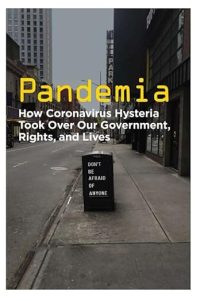
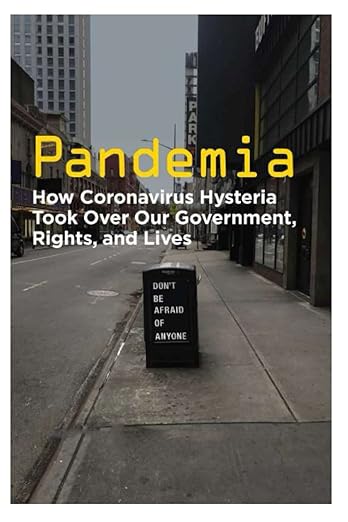
I finished Pandemia over two evenings in late autumn, sitting with a cup of tea and the steadily mounting discomfort of a book that keeps producing receipts for claims I wanted to dismiss without engagement. Alex Berenson is not a comfortable author to read, and he is certainly not a comfortable author to agree with, and I think he has designed the book to produce exactly that discomfort in readers who arrive with settled positions. His background as a New York Times reporter and thriller novelist gives him a fluency with evidence and argument that makes his case harder to bat away than the polemical framing might initially suggest to readers who categorize him reflexively. Whether or not you find his conclusions persuasive, this audiobook rewards careful listening rather than reflexive rejection or uncritical agreement, and it is most valuable for listeners willing to do the intellectual work it demands.
Pandemia is Berenson's extended argument that the official narrative around COVID-19 policy, vaccines, and public health messaging was systematically misleading, and that the institutions responsible for that messaging chose the appearance of certainty over intellectual honesty in ways that caused substantial and preventable harm. This is not a subtle thesis, and Berenson does not deliver it subtly or with diplomatic hedging. The tone throughout is prosecutorial: here is the evidence, here is what the authorities said, here is the gap between the two. He draws heavily on peer-reviewed studies, government data, and the public statements of officials, and he is careful to source his claims in ways that allow motivated listeners to check his work rather than simply accepting his framing as fact.
The Review
The strongest sections of Pandemia concern areas where the gap between official messaging and available evidence is genuinely difficult to explain as anything other than institutional motivated reasoning. His chapters on natural immunity, on the historical performance of pandemic modeling, and on the policy decisions made around school closures draw on a body of evidence that has since entered mainstream public health discourse in ways that were not anticipated or acknowledged during the initial response. These sections are the book at its best: rigorously sourced, willing to follow evidence into uncomfortable places, and honest about what that evidence does and does not demonstrate. The weaker sections are those where Berenson's prosecutorial confidence outruns his evidence and where overstatement serves the argument less well than precision would have. The book would have been more persuasive with tighter evidentiary standards throughout and less reliance on interpretive certainty where genuine uncertainty exists.
The Best Parts of Pandemia
Berenson narrates his own work, and this choice carries significant consequences for how the audiobook lands with different listener populations. Author narration works well when the author can convey measured authority alongside genuine conviction, as opposed to advocate's fervor that has displaced analytical distance from the material. Berenson is clearly intelligent and his delivery is technically crisp, but there are extended passages where his investment in his own argument becomes audible as a prosecutorial heat that tips from conviction into the performative. For listeners already sympathetic to his framework, this intensity reinforces and amplifies the material. For skeptical listeners, it provides an easy exit ramp from arguments that might otherwise warrant genuine engagement. A professional narrator with more emotional distance from the content might paradoxically have made the book's strongest claims more persuasive to the audience that most needs to consider them carefully.
The Caveats
The most honest thing I can say about Pandemia is that it made me do work I did not want to do and did not plan to do when I started listening. I found myself checking sources, reading the underlying studies he cites, and searching for the counter-arguments that a more balanced treatment would have addressed directly. That is not the comfortable experience of reading a book that confirms what you already believe, and it is not a passive listening experience. Some of what Berenson argues has been vindicated by subsequent reporting and official acknowledgment from the very institutions that resisted the claims during the acute phase of the pandemic. Some of it remains genuinely contested among experts with serious credentials. None of it should be dismissed without engagement, and the willingness to engage is ultimately what separates productive readers of this material from those who come away from it either converted or dismissive but not actually better informed.
The Right Listener for Pandemia
Pandemia is not for listeners seeking reassurance about the pandemic response or validation of the official narrative as it was delivered. It is also not primarily for those who already concluded the response was a comprehensive failure, since they will find it confirms positions they hold without meaningfully deepening their understanding of where the evidence is actually strong and where it is contested. Its most valuable audience is listeners willing to sit with genuine complexity: to acknowledge that official institutions made serious and consequential errors while also bringing critical scrutiny to Berenson's own interpretive overconfidence. If you found yourself genuinely frustrated by the pandemic-era information environment and want a detailed, sourced challenge to mainstream messaging, this audiobook rewards the investment. If you want nuanced acknowledgment of tradeoffs from all sides, you may find his prosecutorial certainty as limiting as the official certainty he critiques. Pandemia is most useful when it is most uncomfortable, and that discomfort is a feature of genuine engagement with difficult questions rather than a reason to put the audiobook down before finishing it.
Is Pandemia a conspiracy theory audiobook or does it engage with actual evidence?
Berenson cites peer-reviewed studies, government data, and official statements throughout. The arguments are evidence-based even where they are overconfident, and listeners can check his sources independently.
Does Berenson's self-narration affect the listening experience significantly?
Yes, in both directions. His investment in the material gives the narration conviction, but it also gives some passages a prosecutorial edge that may feel one-sided to skeptical listeners.
Does the audiobook address the vaccine efficacy debates in detail?
Yes, vaccine efficacy and the handling of vaccine-related data are central to the book's argument. These sections are among the most contested and also among the most carefully sourced.