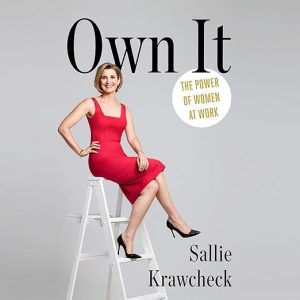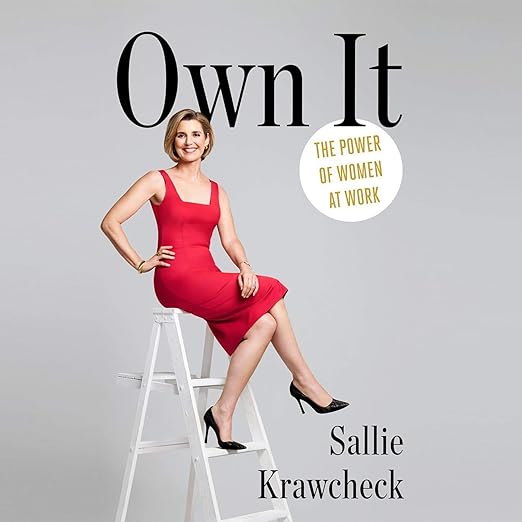
Sallie Krawcheck opens this audiobook with a question that most career books are too polite to ask directly: if women were supposed to have "arrived" by now, why hasn't that happened? Own It, written by Krawcheck and narrated by Diane von Furstenberg, runs just one hour and forty-four minutes - a deliberate choice that signals the book's philosophy. There is no padding here, no lengthy preamble, no throat-clearing before the argument begins. The book announces its thesis in the title and spends its runtime building the case that professional women have been playing by rules designed for someone else.
Krawcheck comes to this argument with unusual authority. She spent years at the highest levels of Wall Street finance, in rooms where she was frequently the only woman, and her perspective is shaped by that specific experience rather than by generic empowerment rhetoric. She is not arguing that women should behave more like men, or that resilience and grit will close every gap. The argument is more interesting than that: the business world is changing in ways that actually reward traits that women have historically been told to suppress, and the opportunity lies in recognizing and acting on that shift before anyone else does.
What separates Own It from the large shelf of similar titles is Krawcheck's willingness to name the structural realities while still being relentlessly practical. She doesn't spend the runtime complaining about the game; she explains how to change which game you're playing. Her discussion of emotional intelligence as a strategic asset rather than a soft liability is well-grounded in her own Wall Street experience, and she brings in specific moments from her career to illustrate what she means by "courageous conversations" in the workplace. One reviewer described getting inside her head as the book's chief value, and that's accurate - this is not a book that hides behind data and case studies. Krawcheck shares the texture of her own choices, including the ones that cost her.
The brevity is both a strength and a limitation. Krawcheck covers a lot of ground in under two hours, and the result is that some sections feel like outlines of chapters that could have existed rather than fully developed arguments. The discussion of entrepreneurship and investing one's own economic muscle in building something new is genuinely compelling, but it comes and goes quickly. The section on forging non-traditional career paths - leaving companies that don't respect your worth rather than working endlessly to change them from within - is the sharpest practical advice in the book, and it would have benefited from another ten minutes. Listeners who want a more granular framework for any single idea will need to look elsewhere. What Own It gives you is a clear orientation - a direction of travel rather than a turn-by-turn map.
Furstenberg's Settled Confidence Doesn't Need to Announce
The audio format genuinely suits this material. Diane von Furstenberg's narration brings a particular quality to Krawcheck's words: her voice carries the kind of settled confidence that doesn't need to announce itself, and that tone mirrors the book's core message about owning the power you already have. There is no performative urgency in the delivery, no motivational speaker cadence. Von Furstenberg reads as if she is telling you something that is simply true, and that restraint is the right call. For a book about professional authority, having a narrator who sounds like she possesses it is a meaningful choice.
The audio format also solves the pacing problem that sometimes afflicts business books of this length. At under two hours, Own It does not overstay its welcome, and listening rather than reading means the direct, conversational prose lands closer to how it was intended. Krawcheck is not an academic writer; she writes the way she presumably talks in a meeting. Audio captures that register precisely. The format also makes the book easy to revisit - at under two hours, a second listen to the specific sections most relevant to your current career moment is a low-friction investment.
More Concrete Than the Future Is Female Framing
Listeners should pay particular attention to the structural argument Krawcheck makes about technology changing the business landscape in women's favor. This is not a claim she makes loosely - she ties it to specific shifts in how organizations are run and what skills are becoming more valuable as automation and data transform traditionally hierarchical industries. Whether you find her argument fully convincing or not, it is more concrete than most of the "the future is female" framing that circulates in this genre. Similarly, her discussion of non-traditional career paths and the option of leaving companies that undervalue your contributions deserves more attention than it gets. For anyone at a crossroads, that section alone is worth the runtime.
Also worth noting: the book was released in 2017, and some of the cultural reference points reflect that moment - the specific political framing, the optimism about certain forms of institutional progress. None of this undercuts the core argument, but listeners should contextualize accordingly. The structural analysis of how women can leverage shifting business conditions is durable; the political specifics are of their time. Krawcheck has continued to build on these ideas through her work at Ellevest, and listeners who find this audiobook useful will find her subsequent writing a natural next step.
Naming the Game Instead of Urging Try Harder
Professional women at any career stage who want a brisk, grounded perspective on building a career on their own terms will find this valuable. It is especially well-suited to those in corporate environments who feel they have been trying to meet standards that were not designed with them in mind. Listeners who prefer long-form business books with extensive research chapters may find the pace too quick. Men in leadership roles who want a frank view of the obstacles their female colleagues navigate would benefit - Own It is specific enough to be instructive rather than abstract. And anyone who has read generic professional development books and felt they were being advised to simply try harder will appreciate Krawcheck's willingness to name the game before suggesting how to play it differently.
Key Details
- Narration: Diane von Furstenberg reads this short audiobook with the confidence of someone who has lived every principle on the page - her voice is authoritative without being remote, which suits the rallying-call tone perfectly.
- Themes: Women in business, redefining professional success, leveraging feminine strengths
- Mood: Energizing and direct
- Verdict: Sallie Krawcheck's career manifesto is at its sharpest in audio form, and at under two hours it earns its place in any professional woman's rotation.
A Few Questions About Own It
Is Diane von Furstenberg the author or the narrator of this audiobook?
Diane von Furstenberg narrates the audiobook, but Own It was written by Sallie Krawcheck, the former Wall Street executive and entrepreneur. Von Furstenberg's involvement is as the voice talent, and her delivery adds considerable weight to Krawcheck's arguments.
At under two hours, does this audiobook cover enough ground to be worth the time?
The brevity is intentional and suits the material. Krawcheck covers her core thesis efficiently, and the 1 hour 44 minute runtime means there is no filler. Listeners who want deep dives into any specific topic may want to supplement with her other work, but as an orientation to her thinking it delivers real value.