Quick Take
- Narration: Sally Shaywitz narrates her own work, and the authority this lends the material is unmistakable, a Yale neuroscientist describing her own research in her own voice carries a weight no professional narrator can replicate.
- Themes: Dyslexia neuroscience, early and late diagnosis, grade-by-grade intervention strategies
- Mood: Authoritative and genuinely hopeful, grounded in decades of laboratory research
- Verdict: The definitive audiobook on dyslexia for parents, educators, and dyslexic adults seeking a scientific foundation, Shaywitz’s self-narration transforms what could be a textbook into something more personal.
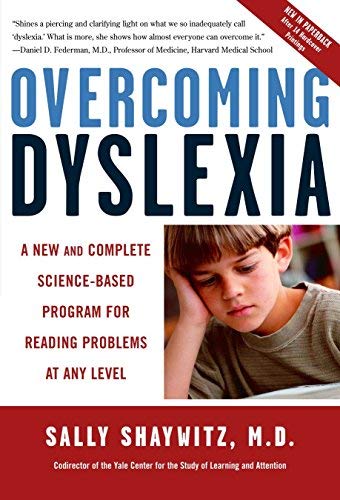
I was halfway through a run one October morning when this audiobook shifted something in how I understood the entire category of learning differences. Shaywitz is describing the phonological processing model of dyslexia, the idea that it is not a visual problem, not a matter of seeing letters backward, but a very specific difficulty in the brain’s language system at the level of sound, and she is doing so with the calm assurance of someone who has spent thirty years proving it. Ten hours and forty-six minutes suddenly felt entirely reasonable.
Overcoming Dyslexia was first published in 2003 and updated with what this edition calls recent breakthroughs, including new brain imaging data from Shaywitz’s own lab at Yale. The self-narration is unusual for a book of this scope, most academic medical authors hand their text off to a professional voice artist, and the result is distinctive. Shaywitz does not read with the polished cadence of a trained narrator. She reads with the authority of someone who has sat across from hundreds of dyslexic children and adults and knows exactly what information they needed and didn’t have.
The Neuroscience in Plain Language
The opening section on the brain mechanisms underlying dyslexia is the strongest argument for the audiobook format. Shaywitz has spent a career translating functional MRI findings into accessible language, and her descriptions of the reading circuitry, specifically the disrupted pathway between the left hemisphere’s posterior and anterior language regions, are remarkably clear. She names the specific brain areas involved, explains why the visual processing theory of dyslexia is wrong, and accounts for the persistent myth about seeing words backward without condescension. One reviewer who is a dyslexic adult and a scientist described finally understanding why he scored average to low on multiple-choice tests but high on reading comprehension, a disconnect Shaywitz explains precisely through the processing model.
This is the kind of scientific grounding that most parenting and education guides gesture toward without actually delivering. Shaywitz delivers it, and the effect is that the intervention strategies in the later chapters feel derived from understanding rather than compiled from best practices.
The Myth-Correction Work
Three chapters of the book are devoted explicitly to correcting harmful myths about dyslexia, and this is where Shaywitz’s tone carries particular weight. The belief that dyslexia primarily affects boys, that it is linked to lower intelligence, that it can be outgrown with sufficient effort, she dismantles each of these with research citations and without the hedging that often softens these corrections in educational materials. For parents who have been told by teachers or counselors that their child just needs to try harder, these chapters are important listening.
One reviewer described this as “the bible for dyslexia,” which reflects the esteem in which the book is held in parent communities. That language also signals its limitations: it is comprehensive and authoritative, but some of the website resources and specific program recommendations mentioned in the text have aged since the original publication. A volunteer reading coach noted that some recommended websites are outdated while the core guidance remains the most comprehensive available.
Grade-by-Grade and the Long Arc
The second half of the book operates as a practical guide organized by age and educational stage, from early identification in young children through support strategies for adults. This structure works well in audio format because it allows parents and educators to navigate to the chapters most relevant to their current situation, though the full arc rewards sequential listening. The sections on choosing schools, working with teachers, and preserving self-esteem are as carefully researched as the neuroscience chapters, which is unusual, most books on learning differences treat the emotional and relational dimensions as afterthoughts.
Shaywitz is clear about the central paradox of dyslexia: it cannot be outgrown, but its effects can be substantially overcome with appropriate support and hard work. That framing, honest about the permanent nature of the neurological difference while genuinely optimistic about functional outcomes, is one of the book’s most important contributions to the conversation.
Who Should Listen, Who Should Skip
Listen to this if you are a parent of a child who has been diagnosed with dyslexia or who is struggling to read. Listen if you are a dyslexic adult who wants the scientific explanation of your own experience. Listen if you are an educator who works with struggling readers and wants a research foundation rather than just a toolbox.
Skip this if you want a brief, prescriptive guide to specific reading programs, this book is comprehensive and requires sustained engagement. The program-specific recommendations may also need updating; pair this with current guidance from the International Dyslexia Association for the latest interventions.
Frequently Asked Questions
Does Shaywitz’s self-narration work for a 10+ hour academic audiobook, or would a professional narrator have served better?
Shaywitz’s narration is not polished in the way professional narrators are, but it carries authority that is difficult to replicate. She brings the clinical and personal intimacy of someone deeply inside this work. Most listeners who are coming to this with genuine need report that the author’s voice adds rather than detracts, though listeners who prioritize production quality over authority may prefer a different format.
Is the updated edition substantially different from the original 2003 publication?
The updated edition incorporates new brain imaging research and revised guidance, including current information on the DSM and diagnostic frameworks. Some specific resource recommendations and website links from the original are now outdated, but the core neuroscientific framework and intervention philosophy remain current and relevant.
Does this audiobook address dyslexia in adults, or is it primarily aimed at parents of children?
Both audiences are explicitly served. Shaywitz devotes substantial attention to late-diagnosed adults and to understanding why some intelligent adults read very slowly. The grade-by-grade sections are parent-focused, but the neuroscience and myth-correction material is directly relevant to dyslexic adults.
How does this compare to more recent books on dyslexia, such as those from researchers like Maryanne Wolf?
Shaywitz focuses on practical intervention and the phonological-processing model, while Wolf’s Proust and the Squid and Reader Come Home engage more with reading’s cultural and evolutionary dimensions. They complement each other well. For parents and educators seeking actionable guidance, Shaywitz remains the more practically oriented choice.