In Brief
- Performance: Virtual Voice delivers the text cleanly, though the synthetic delivery softens some of the memoir's rawer emotional peaks.
- What it covers: Addiction and recovery, grief and resilience, community and reinvention
- Feel: Raw and unflinching, yet ultimately redemptive
- Our call: Julie D. Summers' memoir earns its place among addiction narratives not through shock value but through her stubborn refusal to stop rebuilding.
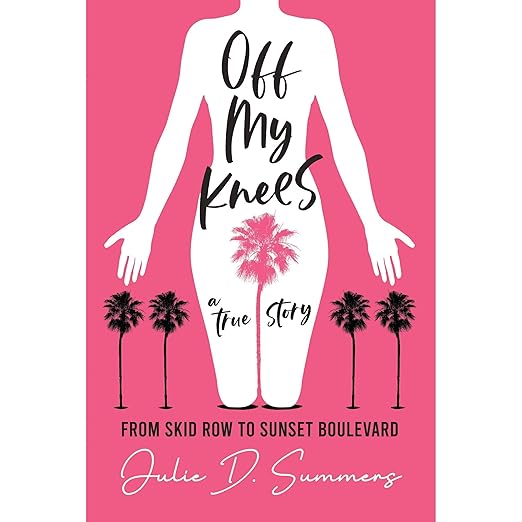
Julie Summers' debut memoir arrives as the kind of audiobook that makes you set down whatever you were doing and simply listen. The story opens with an act of forced separation - a teenage rape, an unwanted pregnancy, a coerced relinquishment - and within the first few minutes the scope of what this woman has survived begins to clarify. This is not a gentle story. It is not a story in which pain is tidied away between chapters. It is a 5-hour and 19-minute chronicle of one life coming apart and being reconstructed, more than once, from nearly nothing.
Before going any further, a note on format: the audiobook version is narrated by Virtual Voice, the AI-generated narration system used for a subset of titles. For a memoir this visceral, that matters. The delivery is technically competent - clear diction, appropriate pacing - but lacks the human grain of a trained performer. Moments that demand a catch in the voice or a beat of silence tend to pass without the emotional texture a human narrator would bring. Listeners accustomed to professional memoir narration will notice the gap, though the underlying story is powerful enough to carry through it.
A Life Built From Rises and Collapses
Summers structures her life not as a single fall and redemption arc but as a series of rises and collapses. The antique brokering career she builds after relinquishing her child - only to later self-destruct into drug addiction and imprisonment - reads almost like a second novel inserted into the middle of the first. When she rebuilds again after prison, landing as a large apartment building manager, readers might exhale too soon. Then comes the phone call. Her long-lost son finds her. They reunite. And then, just as life steadies, he dies by suicide.
That sequence is where the memoir separates itself from the standard recovery narrative. Summers does not use her son John as a narrative device. The reviewer on record, identified simply as an Amazon Customer, noted how hard reading about John was even as a father, and how lasting the impact proved. Summers honors that impact without converting his death into her heroism. The grief is allowed to be grief. Her political and philanthropic work with the unhoused in West Hollywood, begun in the aftermath of that loss, emerges not as convenient uplift but as the logical extension of a woman who has simply never known how to stop being useful to others.
The Pattern Underneath the Unraveling
Victoria Pynchon, one of the reviewers, called this memoir a raw account of just how shockingly life can unravel when drug addiction takes hold. That framing is accurate but incomplete. What Summers is really documenting is not the unraveling - that part she dispatches with unsentimental efficiency - but the pattern underneath it: the way trauma compounds, the way survival strategies that work in one context become liabilities in another, the way love can be simultaneously the thing that destroys you and the thing that saves you.
For listeners with personal experience of addiction, incarceration, or the particular grief of a lost child, sections of this memoir will land with real force. Summers writes without the defensive hedging that sometimes characterizes memoirs by people still negotiating their own culpability. She does not excuse herself. She also does not perform shame for the reader's benefit. Foreword Reviews called it a compelling account of confident personal reinvention, and that word - confident - is precisely right. She owns her story in a way that feels earned rather than performed.
The Compression Early, the Vagueness Later
The pacing in the middle section, covering the antique brokering years and the slide back into addiction, moves quickly. Summers covers years of her life in the span of a few pages, and the compression occasionally works against emotional depth. Readers who want more granular exploration of how the relapse happened may feel the book prioritizes breadth over close psychological analysis. This is not a therapy-adjacent memoir in the mode of contemporary trauma writing - it is closer to the tradition of the plainspoken life story, told sequentially and without a great deal of retrospective interrogation.
The West Hollywood advocacy work in the final section is described with genuine warmth but could use more specificity. We learn that Summers became a significant figure in that community over several decades, but the details remain impressionistic. Given how vivid the earlier sections are - the prostitution years, the prison experience, the reunion with her son - the relative vagueness of the philanthropic years creates a slight imbalance. It reads as though Summers is more comfortable narrating crisis than she is narrating quiet accomplishment.
Worth It Despite the Virtual Voice Narration
This audiobook is well suited for readers drawn to survivor memoirs that refuse sentimentality, particularly those with interest in addiction narratives, incarceration stories, or West Coast social history. If you appreciated books like Beautiful Boy or Educated for their unflinching accounts of family rupture and recovery, Summers' voice occupies a similar emotional register while covering distinct terrain. Recovery community members and professionals working with unhoused populations will find the final section especially resonant.
Listeners who need a narrator with strong vocal performance to stay engaged with audio memoir should be aware of the Virtual Voice limitation. The story is worth the investment; the listening experience is slightly diminished by the format. For those who can read the print edition alongside or instead, that may ultimately serve this particular memoir better. But if the audiobook is your chosen format, the story underneath the narration is one of the more honestly told lives you'll encounter this year.