At a Glance
- Narrator: Jonathan Davis brings Sacks' observational warmth and intellectual playfulness to the narration with characteristic skill, making the botanical digressions feel as companionable as the cultural ones.
- Subjects: Natural history and botanical obsession, the layered cultures of Oaxaca, travel as a form of thinking
- Tone: Unhurried, curious, and richly textured, like a long walk with someone who notices everything
- Bottom line: A slim but satisfying audiobook that rewards listeners willing to surrender to Sacks' specific mode of attention, which turns a fern-watching trip into a meditation on place, history, and the act of looking.
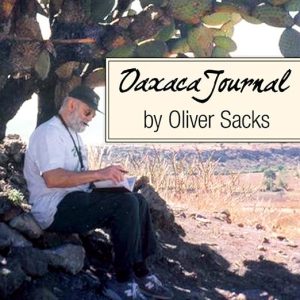
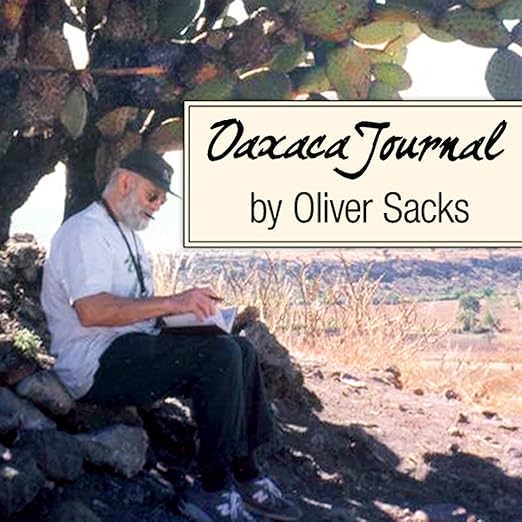
Oliver Sacks is best known for mapping the terrain of neurological difference, but Oaxaca Journal reveals a different kind of cartographer at work: the lifelong amateur naturalist, card-carrying member of the American Fern Society, who has been fascinated by ferns since childhood not because they are useful but because they are ancient and strange and survived when almost nothing else did. This audiobook, narrated by Jonathan Davis over four hours and ten minutes, follows Sacks on a group trip to Oaxaca, Mexico, and the result is one of the most unexpected pleasures in his catalog.
The Verdict, Briefly
Sacks wrote Oaxaca Journal in the mode of genuine travel writing, meaning he was not constructing a thesis about Oaxaca but recording what he actually noticed, in the order he noticed it, with the associative tangents that characterized the way his mind worked in print and in person. The structure is that of a journal rather than an argument, which means the audiobook rewards a particular kind of listening: the kind you bring to a long conversation with someone whose range of reference is broader than yours and whose enthusiasm for disparate subjects is contagious rather than exhausting.
What Sacks notices in Oaxaca is a great deal. The ferns, obviously, and their taxonomic variety, their deep evolutionary history, their capacity for survival in climates and conditions that eliminated more complex organisms. But also the ruins at Monte Alban, the chocolate market in the city, the specific quality of light in the Oaxacan landscape, the history of cochineal dye production, and the encounters with local scientists and guides who expand and complicate his initial botanical focus. Reviewer Katie Pickard Fawcett marveled at how "great references to Mexico's history are woven into the story without sounding like a history textbook," which captures exactly what Sacks achieves here: density of information that registers as a natural product of someone paying close attention, not as research deployed for effect.
Jonathan Davis is one of the most reliable narrators working in literary nonfiction, and his reading of Sacks serves the material with the right degree of warmth and intelligence. Davis has the ability to render academic or scientific content in prose without making it feel either dumbed down or unnecessarily elevated, and Sacks' mixture of botanical precision and lyrical digression requires exactly that calibration. The four-hour-ten-minute runtime is short enough that the audiobook can be consumed in a single long session, which suits the journal format: it reads as one continuous experience rather than a text that needs to be picked up and put down over days.
Reviewer elizabeth shapiro noted that Sacks' insights hold "into ancient cultures and botany in the context of today," and this is the audiobook's quiet achievement. Sacks never forces the connections between the ferns he is hunting and the human history surrounding them, but those connections emerge naturally because he brings the same quality of attention to both. Reviewer RTD, who was preparing for a trip to Oaxaca when they encountered the book, found it practically useful as a travel preparation resource, which speaks to the specificity of Sacks' observation. The landscape and attractions he describes are real and described with enough precision to orient a visitor and expand what they look for when they arrive.
Before You Commit to Oaxaca Journal
Listeners who come to this audiobook expecting the neurological case-study intensity of Awakenings or The Man Who Mistook His Wife for a Hat will need to recalibrate. Oaxaca Journal is a lighter piece in the best sense: less argued, more observed. The botanical content is genuinely technical at moments, and listeners with no interest in fern taxonomy may find those passages slow. Sacks does not assume botanical knowledge, but he also does not condescend to it. Reviewer RTD admitted to skipping much of the botanical information in pursuit of the landscape descriptions, which is a viable reading strategy in print but somewhat harder to execute cleanly in audio without missing surrounding context.
The publisher notes that some changes were made to the original manuscript with Sacks' permission. The alterations are not specified, but listeners comparing the audiobook to a print edition may encounter minor discrepancies. This is worth knowing for those who use audiobooks as companions to print texts. Sacks' characteristic footnote culture, dense and digressive in the best way, does not fully survive the transition to audio, and some of the richness of his prose annotation is simply not recoverable in this format.
The journal format also means the audiobook captures something that more constructed travel narratives lose: the texture of surprise. Sacks did not know what he was going to notice on any given day in Oaxaca, and the structure of the journal preserves that quality of genuine discovery. A passage about an unexpected species of fern encountered in a market leads, by association, to a digression on the trade routes that connected Oaxacan producers to the wider Mexican economy, which in turn connects to the colonial history of the region. These are not manufactured connections. They are the connections a prepared mind makes when genuinely paying attention to a new place, and that quality of genuine attention is what makes Sacks worth accompanying on a trip about nothing more momentous than ferns.
Who Will Get the Most From It
Sacks readers who want to encounter a different mode of his attention will find this audiobook genuinely rewarding as a piece of his broader work. Travelers planning a trip to Oaxaca who want cultural, historical, and natural-history context delivered through a singular sensibility rather than a guidebook will find it practically and aesthetically useful. Listeners who love natural history writing in the tradition of Robert Macfarlane or Richard Mabey will recognize the mode: precision of observation combined with a willingness to let the subject matter carry philosophical weight without forcing it. This is not an audiobook for those who need a driving narrative or a destination argument. It is for listeners who enjoy the experience of paying close attention alongside someone who does it exceptionally well, in a part of the world that rewards that quality of attention.
A Few Questions About Oaxaca Journal
Is this audiobook useful as a travel resource for someone planning a trip to Oaxaca, or is it primarily a literary experience?
Reviewers planning Oaxaca trips found Sacks' landscape and attraction descriptions genuinely useful as orientation. The audiobook is primarily a personal journal rather than a travel guide, but Sacks' observational precision means his descriptions of Monte Alban, the markets, and the Oaxacan landscape hold practical value alongside the literary one.
Do you need to know anything about botany or ferns to enjoy this audiobook?
No botanical background is required. Sacks writes for the curious general reader rather than the specialist, and while the fern taxonomy sections are technically specific, they are embedded in prose that makes the enthusiasm accessible rather than the content exclusive. Reviewers with no particular botanical interest consistently found the audiobook engaging and informative.
How does Jonathan Davis's narration serve Sacks' distinctive voice in this audiobook?
Davis has a long track record with literary nonfiction and brings the right combination of warmth and intellectual register to Sacks' prose. The botanical digressions and cultural observations require a narrator who can sustain attention through shifts in subject matter without jarring transitions, which Davis manages consistently throughout the four-hour runtime.