A Singer-Songwriter's Pacing Lets Silence Sit
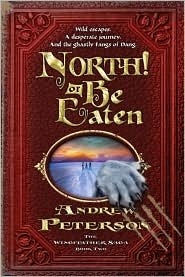
This is the audiobook where the Wingfeather Saga stops circling and starts sprinting, and Andrew Peterson's own narration is a big part of why that momentum lands. He's a singer-songwriter first, and it shows in how he paces a sentence, letting silence sit at the edges the way a good verse does rather than rushing to fill every beat with performance. Twelve hours is a serious commitment for a middle-grade audiobook, but by the time the Igiby children are fleeing toward the Ice Prairies, that runtime has earned itself rather than dragged. A 4.9 average across more than 2,700 ratings suggests this isn't just a devoted-fanbase outlier; the sequel genuinely holds up. That's a rare thing for a book two in any series, let alone one that started as bedtime stories Peterson told his own kids before he ever wrote a word down.
Janner, Tink, and Leeli Igiby spend this installment learning just how much their ordinary lives were never ordinary at all; they're the Lost Jewels of Anniera, heirs to a kingdom across the sea, and that revelation puts a target on all three of them. The plot pushes them north, away from the lizard-like Fangs of Dang who can't follow into the Ice Prairies, but getting there means surviving the monsters of Glipwood Forest, the thieving Stranders of the East Bend, and the genuinely dreaded Fork Factory along the way. Peterson gives the Fork Factory and Stranders sequences real atmospheric weight, not rushed transitions between bigger set pieces.
It's worth saying plainly that this is book two, not a standalone entry, and the emotional stakes here depend entirely on investment built in the first Wingfeather book. Series order matters more here than in a lot of middle-grade fantasy, since the family mythology, the nature of the Fangs, and the Igibys' own hidden identity all assume you already know the setup. If you're coming in cold, this isn't the place to start, however strong this specific installment is on its own technical merits.
Closer to a Father Reading Than a Performance
Peterson's self-narration is the single biggest reason this series works as well as it does in audio. He's not doing heavy multi-voice theater; character differentiation stays understated, with Grandpa Podo the most distinctive voice in the cast, but the overall effect sounds less like a performance and more like a father reading to his own children, which is close to literally true given Peterson wrote this for his kids originally. That intimacy carries real weight in the story's more emotionally consequential moments, the ones where a more theatrical narrator might overplay the sentiment instead of trusting the writing to do the work.
The adventure plotting itself earns its runtime too. Three distinct antagonist threats, the Fangs pursuing from behind, the Stranders threatening from the sides, the Fork Factory waiting ahead, give this installment a propulsive, escalating structure that a shorter book covering the same ground might have flattened into a single chase. Younger listeners get a genuinely thrilling story; older listeners, especially adults who grew up on Narnia or Redwall, will recognize a writer working confidently inside that same tradition of high-stakes fantasy adventure built for family listening.
A physical companion is also worth knowing about if this is a household purchase: the Wingfeather books include maps and illustrations that add real value alongside the audio, especially for a story this geographically driven, with the Ice Prairies, Glipwood Forest, and the East Bend all functioning almost as characters in their own right. Families listening together in the car may want the printed maps on hand at home for between-drive reference, even though the audio itself stands entirely on its own without them.
Peterson's own background as a singer-songwriter in Christian music circles quietly informs this saga's moral register, though the connection is far gentler and less didactic than that background might suggest. Themes of sacrifice, loyalty, and hidden identity carry an unmistakable resonance for listeners attuned to that tradition, but the storytelling never stops to preach; the Igiby children's choices read as earned narrative consequences rather than object lessons. That restraint is part of what has let the series cross over well beyond its original audience into general middle-grade fantasy shelves.
One Warm Voice Carrying Every Character and Scene
Don't mistake the middle-grade label for a ceiling on emotional complexity; this saga deals honestly with fear, loss, and the burden of a destiny none of the Igiby children asked for, and Peterson's restrained narration trusts even young listeners to sit with that weight rather than softening it. Adults listening alongside their kids, or entirely on their own, are a legitimate audience here, not an afterthought; the reading level is calibrated for younger ears, but the storytelling ambition is not scaled down to match.
That single-voice approach is worth knowing about going in if you're used to full-cast dramatizations built around a large roster of distinct performers. Nothing here replicates that kind of theatrical, multi-actor production; it's one warm, unhurried storytelling voice carrying every character and scene across all twelve hours. That's a deliberate choice suited to this particular saga's intimate, familial tone, but listeners expecting a heavily produced ensemble experience should recalibrate expectations before starting.
The Wingfeather Saga has built a genuine following well beyond a typical self-published fantasy series, spawning its own dedicated fan community and additional creative projects under Peterson's Rabbit Room banner. That kind of sustained cultural footprint is worth knowing about if you're wondering whether this is a hidden gem or an established modern favorite in family-friendly fantasy circles; by this point, it is unambiguously the latter, even for listeners encountering it for the first time through this specific audiobook.
For Adults Who Love Narnia, Redwall, or Fablehaven
This audiobook is an easy recommendation for families doing road trips or bedtime listening with kids roughly eight and up, and for adult fantasy readers who love Narnia, Redwall, or Brandon Mull's Fablehaven and haven't yet discovered Peterson's saga. The self-narration adds a genuine, personal warmth that a hired voice actor would have to work hard to replicate, and the strong rating here reflects a series that has earned real, sustained devotion rather than a one-book flash of enthusiasm.
Skip straight to book one, On the Edge of the Dark Sea of Darkness, if you haven't started this series yet; nothing about North! Or Be Eaten works as an entry point, and starting here will cost you most of the emotional payoff the earlier book built. It's also not the right pick if you specifically want a fully dramatized, multi-cast audio production rather than a single warm narrating voice carrying the whole saga.