Quick Take
- Narration: Lucy Price-Lewis brings warmth and genuine comic timing to Mecking’s observational writing, finding the tonal balance between cultural affection and gentle argument that this material requires.
- Themes: Purposeful idleness, Dutch cultural happiness, burnout prevention through non-doing
- Mood: Unhurried and quietly subversive, a five-hour argument that the most productive thing you can do is occasionally stop
- Verdict: A genuinely charming cultural and wellness hybrid that earns its counterintuitive premise through Dutch context, behavioral science, and an absence of the anxiety-inducing productivity framing it argues against.
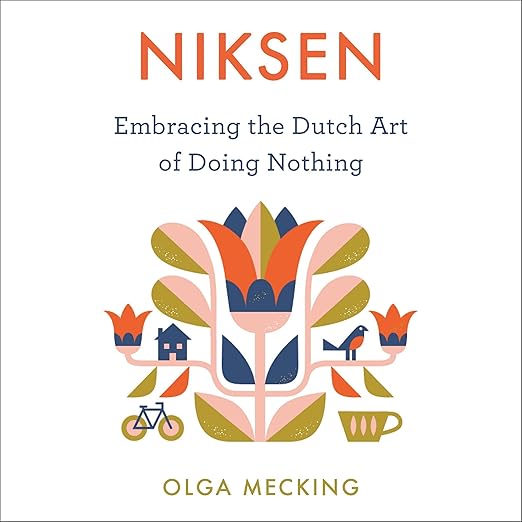
I listened to the bulk of Niksen on a Sunday afternoon when I had a list of things I was supposed to be doing. I cannot tell you whether this was irony or the intended use case. What I can tell you is that by the time I finished it, I had sat in a chair for a while without my phone, and that this felt both more difficult and more valuable than I had expected from an afternoon that had no particular ambitions. Olga Mecking’s book about the Dutch art of doing nothing had done the thing it was arguing for.
The concept of niksen is often reduced in popular summaries to do nothing, feel better, which undersells what Mecking is actually offering. The book is a thoughtful hybrid of cultural observation, happiness research, and genuinely funny personal writing about the experience of being a Polish woman living in the Netherlands and slowly understanding why the Dutch seem structurally unbothered in ways that puzzled and eventually converted her. That cultural layer is what lifts this above the standard wellness genre entry.
What Niksen Is and What It Specifically Isn’t
The definitional work Mecking does early in the book is genuinely useful and carefully made. Niksen is not meditation, which has an active cognitive goal. It is not mindfulness, which directs attention with intention. It is not the dissociative scrolling that passes for rest in most people’s lives. To niks is to be purposelessly present: looking out a window, sitting in a chair without an agenda, letting the mind wander without directing it anywhere. The distinction matters because many of the substitutes we have installed for rest are actually demanding: mindfulness apps have goals, meditation has technique, even leisure often has optimization pressure around it.
Reviewer Madam Stealth described buying the book for relaxation insights and unexpectedly getting deep, detailed insight into the unique Dutch culture and mindset, and this is an accurate account of what Mecking delivers. The Dutch sections aren’t decorative context. They’re evidence. The Netherlands consistently ranks among the world’s happiest countries, and Mecking builds a genuine argument that the cultural comfort with unproductive time is a contributing factor rather than a coincidence. The institutional trust, the school structure that doesn’t yet optimize young children for performance, the cultural directness that permits saying no without extensive social management: these are conditions that make niksen possible, and Mecking is honest that simply importing a word doesn’t import those conditions.
The Science Behind Doing Nothing
The middle section of the book draws on happiness researchers, productivity scientists, and experts in burnout to build a case that idle time is not wasted time. The default mode network research is here, including the evidence that mind-wandering states support creativity, memory consolidation, and emotional processing in ways that active task engagement does not. The burnout research contextualizes why people who cannot switch off are not just unhappy but cognitively impaired: constant activation without recovery degrades the quality of the activated states themselves.
Mecking’s touch in these sections is light. She is a journalist rather than a researcher, and she knows it. She cites her sources, summarizes the findings accurately, and trusts the reader to connect them to the lived experience she has already described. This is the right ratio for a book that is trying to change how people feel about doing nothing rather than providing a research review. Reviewer Kara described it as a reminder to reflect on how we spend our time, the illusion of busyness, and the rewards of doing less, which is a fair summary of the emotional experience the book produces.
Lucy Price-Lewis and the Pleasure of This Audio Version
The narration is a significant part of why this audiobook works as well as it does. Price-Lewis has a voice that sits in exactly the register this book needs: warm without being saccharine, authoritative without being lecturing, and genuinely capable of delivering Mecking’s drier observational humor with the timing it deserves. The Dutch cultural sections in particular benefit from a narrator who can distinguish between affectionate observation and mild self-deprecation and hold the tonal complexity that makes the book feel like a conversation rather than a lecture. The five-hour runtime is appropriate for the scope. At this length, the book has room to develop its argument properly, explore the cultural context, and include the practical section on niksen in specific life contexts without feeling rushed or padded. There are books in the wellness genre that would benefit from being shorter. This is not one of them.
Who Should Listen / Who Should Skip
This is for the chronically busy person who suspects that something is wrong with their relationship to productivity but hasn’t found a framing for it that doesn’t feel like another self-improvement project. The cultural lens is what makes the difference: Mecking is not telling you to be Dutch, but she is using Dutch culture as evidence that the relationship to idleness can be different, and that different produces better outcomes. Skip it if you are looking for a structured protocol, a heavy research review, or a practical productivity system. This is a gentle, smart, occasionally funny argument for giving yourself permission to stop, delivered in a form that earns that permission rather than just granting it.
Frequently Asked Questions
Is niksen the same as mindfulness or meditation, just with a Dutch name?
Mecking distinguishes these carefully. Meditation and mindfulness are active practices with cognitive goals: you direct attention, practice returning to an anchor, work toward a state. Niksen is explicitly purposeless. There is no technique to follow and no goal to achieve. The absence of agenda is definitional, not incidental, which is what makes it genuinely different from the mindfulness industry.
Does the book address whether niksen is actually achievable in busy modern life, or does it assume Dutch social conditions?
Mecking is honest about this tension. She acknowledges that niksen is easier within Dutch institutional and cultural conditions that most readers don’t share, including better work-life regulation and cultural directness that permits saying no without extensive social management. The practical section addresses adapting the practice to different life conditions without pretending that changing a behavior is the same as changing the environment that makes the behavior possible.
Is this book primarily a wellness guide or a cultural exploration of the Netherlands?
It is genuinely both, and reviewer Madam Stealth noted learning more about Dutch culture in 250 pages than expected from a relaxation book. The cultural material isn’t decoration; Mecking uses it as evidence for her wellness argument. Readers interested in either dimension will find the hybrid approach works, though it won’t fully satisfy someone who wants a comprehensive Dutch cultural study.
Does Lucy Price-Lewis’s narration suit Mecking’s writing style, which has humor in it?
Yes, notably. Mecking’s writing has a dry observational humor and tonal complexity that requires a narrator who can hold light comedy alongside genuine argument. Price-Lewis handles both with what sounds like genuine enjoyment of the material, which comes through clearly in the pacing and the delivery of the funnier passages about Dutch cultural behavior.