Savannah Guthrie reads her own picture book in roughly the time it takes to make coffee, and Mostly What God Does is Love You is built entirely around one simple, repeated idea: that children are loved by God before they do anything to earn it. This audiobook runs just five minutes, functioning less as a standalone listening experience and more as a bedtime companion piece to Guthrie's own adult bestseller of a similar name, extending that book's core message down to a much younger audience through simple, poetic language about stars, wind, and creation.
Controlled Reading Can't Replace the Missing Artwork
Guthrie built a substantial broadcast career before this book, first as NBC's chief legal correspondent and later as co-anchor of the TODAY show, and that background shows in how controlled and unhurried her reading is here. Nothing here rushes to fill five minutes with more incident or event; the book trusts a single idea, unconditional love, to carry the entire runtime, which is a harder discipline than it sounds for a broadcaster used to filling airtime with content.
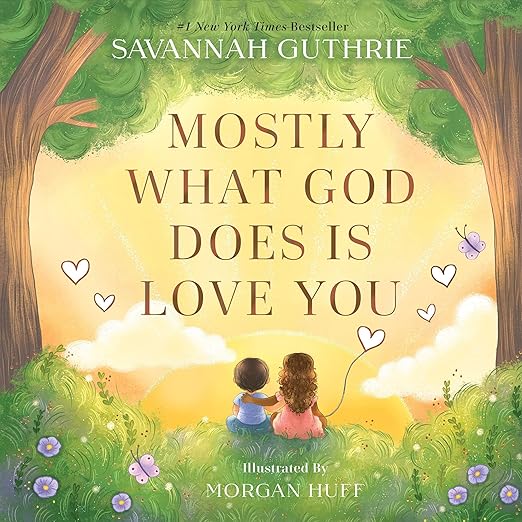
Every review attached to this listing praises the book's illustrations specifically, which points to an honest structural tension in the audio edition: this is fundamentally a picture book, and a five-minute audio track can't reproduce the visual half of what reviewers are responding to. The audio format has to succeed on Guthrie's voice and the text alone, without the artwork readers keep mentioning.
From Legal Correspondent to Gift-Book Author
The publisher clearly built this as a gift-book format first, explicitly marketed for birthdays, Easter, graduations, and other occasions rather than as a primary bedtime-story purchase, which matters for setting expectations about what kind of listening experience this actually delivers.
Guthrie's career before this book included years as NBC News's chief legal correspondent, covering the Supreme Court and major national legal stories, before she moved into the co-anchor chair at TODAY. A journalist with that specific background choosing to write devotional children's content is a notable pivot, and it's worth noting because it suggests real intentionality behind the project rather than a celebrity name simply licensed onto a ghostwritten book.
Read by the Author Comes Before the Story
The book's message doesn't stop at receiving love. The synopsis is explicit that the point is also teaching children to extend that same kindness and compassion outward to others, turning a simple reassurance into something closer to an ethical instruction wrapped inside a comfort message, which gives the short runtime a bit more substance than a pure feel-good bedtime read might suggest.
Read by the author appears almost as its own line in the synopsis, ahead of the description of the book itself, which tells you how the publisher expects this title to sell. The pitch isn't primarily the story content, it's the specific voice attached to it, and that framing choice turns out to be accurate to what the audiobook actually delivers.
Name Recognition Sells a Genre Built to Repeat
A broadcaster reading her own picture book aloud carries a specific, genuine warmth a professional voice actor working from a script for hire generally can't fully replicate, since the maternal sincerity here isn't a performance choice, it's Guthrie speaking as herself to an audience that already knows her from a national morning show. For this specific genre, unconditional-love content aimed at very young listeners, that authenticity matters more than technical vocal polish.
Self-narration by a recognizable public figure also means the five-minute runtime doesn't feel like a compromise so much as a deliberate, complete package: a short, sincere reading meant to be replayed at bedtime repeatedly rather than a longer story meant to be consumed once. Guthrie's pacing holds the format with real completeness rather than rushing to fill or pad the time.
Short, message-driven gift books like this one occupy a specific, well-established publishing category distinct from narrative picture books built around plot and incident. Many public figures with an established platform release exactly this kind of compact, occasion-driven title, designed less for a single complete read than for repeated, ritual use at bedtime or as a keepsake gift, and this audiobook fits squarely inside that convention rather than trying to be something else.
The specific gift occasions the publisher lists, birthdays, Easter, graduations, point to a title designed for repeated purchase across a child's early years rather than a single read-once story, which is a genuinely different use case than most narrative children's audiobooks and worth keeping in mind when deciding whether this fits what you're actually looking for.
Guthrie's built-in audience from a decades-long national broadcast career almost certainly drives a meaningful share of this book's purchases on name recognition alone, separate from any independent assessment of the content itself. That's not a criticism, plenty of beloved children's books arrive through a familiar public figure, but it's a fair thing to name honestly when weighing why a five-minute title has attracted hundreds of ratings.
The Adult Bestseller That Came Before This One
Five minutes is genuinely short, and listeners expecting a fuller bedtime-story experience with multiple scenes or a narrative arc should recalibrate expectations. This is closer to a spoken devotional or a short gift message than a traditional children's story with a plot.
Because the print edition's illustrations are central to how reviewers describe their experience of this book, families who want the full intended experience should strongly consider pairing the audiobook with the physical or ebook edition rather than treating audio as a complete substitute for the picture-book format.
This is explicitly Christian devotional content built around a specific theological claim about God's nature, so families looking for secular bedtime content, or content from a different faith tradition, should know upfront that the biblical framing is central to the book rather than incidental.
The gap between what reviewers praise, specifically the artwork, and what a five-minute audio track can actually deliver is worth naming plainly rather than glossing over. Families considering only the audio edition should know they're getting Guthrie's voice and the text itself, genuinely warm on its own terms, but not the visual half of the experience driving most of the enthusiasm in the reviews attached to this listing.
The adult book this children's edition extends, Guthrie's own Mostly What God Does, reached number one on the New York Times bestseller list in its own right before this companion piece existed, which is real evidence of audience demand for the underlying message well before the picture-book version was ever produced.
Christening Gifts and a Matching Children's Companion
This suits Christian families looking for a short, sincere devotional moment to share with very young children, especially those who already own or plan to gift Guthrie's adult book and want a matching children's companion. It also works well as a specific gift-occasion purchase for a christening, Easter basket, or new baby.
Skip it if you want a longer, plot-driven bedtime story, or if secular content is a firm preference for your family's reading routine. The five-minute runtime and explicitly religious framing make this a narrow, specific-purpose listen rather than a general children's audiobook pick.
In Brief
- Narrator: Savannah Guthrie's self-narration brings genuine broadcaster warmth and unhurried pacing to a very short format.
- Subjects: unconditional divine love, God's presence in creation, kindness taught from early childhood.
- Tone: Gentle and sincere, devotional rather than narrative.
- Bottom line: A brief, heartfelt gift-book listen for Christian families, best paired with the illustrated print edition for the full experience.
Common Questions
Does Savannah Guthrie narrating this audiobook herself make a difference compared to a professional voice actor?
It does. Her own broadcast career gives the reading a controlled, sincere warmth, and because she's a recognizable public figure speaking as herself rather than performing a character, the maternal tone reads as genuine rather than scripted.
Is the Mostly What God Does is Love You audiobook connected to Savannah Guthrie's adult book of a similar name?
Yes, the synopsis confirms this children's edition is designed as a companion piece for adults who already own Guthrie's bestselling adult book, extending the same core message to a younger audience.