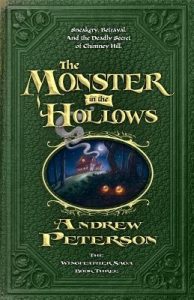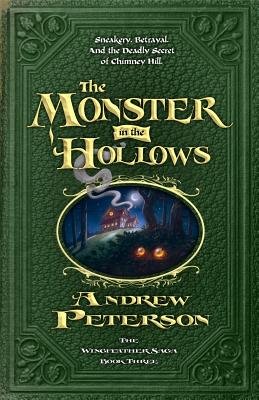
The synopsis for Monster in the Hollows is almost willfully uninformative, essentially a brief bibliographic note rather than a description of what happens in the book. But the reviews tell a different story, and together they paint a picture of a fantasy saga for young readers that has been quietly building something rare: genuine emotional stakes accumulated across multiple volumes, delivered by an author-narrator who reads his own work as if the story genuinely matters to him, because it clearly does.
Andrew Peterson's Wingfeather Saga is now four volumes, and Monster in the Hollows is the third. It continues the journey of the Wingfeather royals through a world of sea dragons, snake men, and the kind of violence that reviewers consistently describe as more substantial than they expected for children's fantasy. The Chronicles of Narnia comparison appears across multiple reviews, which is both a high compliment and a useful calibration: C.S. Lewis did not sanitize death, grief, or moral ambiguity from his stories for young readers, and Peterson appears to have made the same decision for the same reasons.
Is Monster in the Hollows Worth Your Time?
Series fiction for younger readers often reaches a structural crisis by the third installment. The initial world-building has been done, the characters are established, and the writer faces the challenge of escalating stakes without simply repeating the prior volumes' dynamics. Peterson, from all available evidence, handles this by going deeper into the characters rather than simply adding more plot. A thirteen-year-old reviewer noted that the family dynamic in this volume was pretty realistic and relatable, which is a striking observation for a book that features sea dragons and child abuse in the same narrative space.
That word combination, realistic and relatable, in the context of a fantasy saga is exactly the quality that separates books children return to from books they merely finish. The Wingfeather world is fantastic in the proper sense: it operates by rules that differ from our own. But the emotional logic of the family at its center is recognizable and honest. Janner, Tink, and Leeli face things that real children face: the weight of expectation, the experience of feeling different and dangerous, the terror of something happening to someone you love. Peterson does not resolve those things cheaply, and the third volume is where that refusal begins to carry genuine emotional weight.
The Best Parts of Monster in the Hollows
Author-narrated fiction is a gamble for the same reasons author-narrated nonfiction can fail: proximity to the material does not automatically translate into skill with the microphone. Peterson is an exception. His background as a musician and performer, he is also a singer-songwriter with an established career in Christian folk music, gives him a relationship with performance and audience that most writers lack. His narration of the Wingfeather Saga has the quality of a parent reading aloud at bedtime: invested, warm, willing to be vulnerable, unafraid of the moments that require genuine emotion rather than narrative distance.
The reviewers who describe the saga as reminiscent of Narnia are pointing at something real, and Peterson's narration is part of why. Lewis's own voice, in the recordings that exist of him reading, has a similar quality: the storyteller who believes in the story. That quality cannot be faked, and in Peterson's case it appears to be entirely genuine. At nine hours and eighteen minutes, this is a substantial listen for a middle-grade or young adult title, and the length reflects a story that is doing real work rather than filling time with incident.
Before You Commit to Monster in the Hollows
Several reviewers flag the violence and dark content as more significant than they anticipated, and this is worth addressing for parents and guardians making decisions about what their children are ready for. One parent who ordered all four volumes with the intention of reading them with children aged eight, ten, and twelve described being taken back by the violence in the first book and deciding to wait until the children were older. Another reviewer noted that the book introduces child abuse alongside sea dragons and snake men, and recommended it as a classroom read while acknowledging that some teachers may not approve of the weapons and violence.
Peterson is not writing gratuitous darkness. The violence is in service of a story that takes seriously what it costs to live in a world where terrible things happen. But the comparison to Narnia is apt here too: The Lion, the Witch and the Wardrobe has a genuinely terrifying sequence at its center, and parents who expect Christian-coded fantasy for young readers to be safe and gentle may find Narnia, and the Wingfeather Saga, more demanding than they expected. For children who are ready for it, and a thirteen-year-old who shed a few tears at the end and called it enthralling is good evidence that many are, Monster in the Hollows offers something that most contemporary middle-grade fantasy does not: real emotional consequence and the respect for young readers that comes from not pretending the world is safer than it is.
Should You Listen to Monster in the Hollows?
You should not begin the Wingfeather Saga here. This is the third volume of a continuous narrative with established characters, ongoing world history, and emotional threads that carry forward from the first two books. Starting here would mean missing the character development that makes the stakes of this installment feel real, and it would spoil significant events from prior entries. Start with The Wingfeather Saga Book 1 and work forward in sequence.
For families who have read the first two volumes together, this third entry is where the saga begins to feel like the kind of foundational reading experience that children remember decades later. Multiple reviewers describe the series as one of their all-time favorites, and the consistent theme across positive reviews is that Peterson's world combines genuine adventure with emotional honesty in a way that feels rare in contemporary children's fantasy. That reputation appears to be earned, and Monster in the Hollows is where the series makes its most ambitious case for why it deserves it.
In Brief
- Performance: Andrew Peterson narrates his own Wingfeather Saga with storytelling warmth and genuine investment. The author-narrator match is as natural as it gets for a saga this personal.
- What it covers: Family loyalty and sacrifice, belonging and difference, the cost of growing up in a world at war
- Feel: Adventurous and deeply felt, with real darkness handled honestly
- Our call: The third Wingfeather Saga entry is where the series earns its comparison to the Narnia chronicles. Emotionally demanding in the best sense, and built for the long haul.
Frequently Asked Questions
Is Monster in the Hollows accessible as a standalone entry to the Wingfeather Saga, or must you start with book one?
You should start from the beginning. This is the third entry in a continuous saga with established characters, ongoing world history, and narrative threads that carry forward from the prior volumes. Starting here would mean missing the character development and world context that make the emotional payoffs in this volume land the way they do.
Andrew Peterson is primarily known as a musician. Does that background noticeably affect the quality of his narration?
Positively, based on listener response. His performance background and comfort with audiences gives the narration warmth and genuine investment that author-narrated fiction does not always achieve. The emotional range required for a story that moves between adventure, humor, and genuine grief is handled with more confidence than most non-professional narrators manage.