Before You Press Play
- Voice: The reading is credited to the author of the book being discussed, which is either a coup or a copy-paste, and the page never says which.
- Big ideas: Mindset and success, self-motivation, teaching and managing other people, structured group discussion.
- Atmosphere: Brisk and instructional, assuming a book you have already met.
- Worth it?: Confirm what is actually in the file before buying, because this description sells two different products under one title.
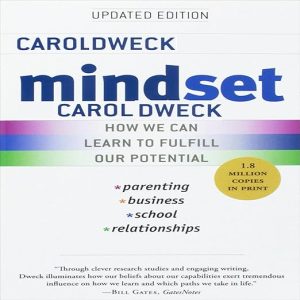
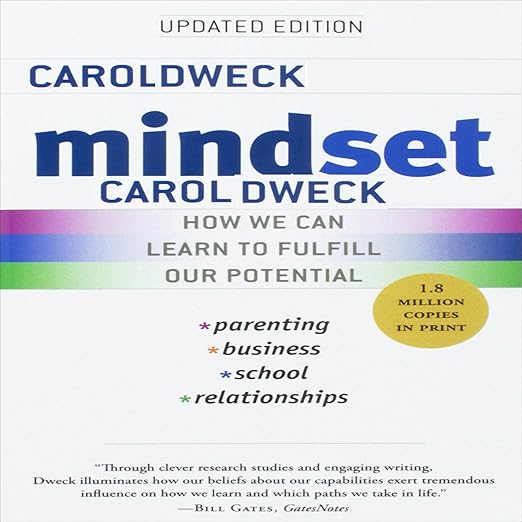
Stanford is the only institution this description names, and working out what the audiobook actually contains turns out to be harder than working out who produced the theory behind it. The listing is titled Mindset. The byline reads Carol S. Dweck. The opening line of the copy reads, in full, Mindset by Carol S. Dweck, Conversation starters. Everything after that spends half its length summarizing a famous psychology book and the other half describing a set of discussion questions built to accompany one. Those are two different products, and a buyer looking at a title, a byline and a five-star rating has no obvious way to tell which of them arrives.
What We Made of It
Outlook is the whole argument, at least as the description tells it: decades of research behind a theory about how mindset governs success in any field, applied to managers, teachers, athletes and parents alike, with equal weight given to motivating yourself and to inspiring other people. Critics called the book life-changing, the copy reports, and supporters described it as something everyone should read. All of that describes a work with an enormous reputation. None of it describes what a listener receives after pressing play on this particular record, and that gap runs through the entire page.
Conversation starters is the phrase that gives the game away, and it appears twice. Peppered with questions designed to bring us beneath the surface of the page, says the copy, before listing what those questions are supposed to accomplish: hours of conversation, deeper understanding, an atmosphere of discussion for groups, and help with study either individually or corporately. That is a companion guide. Companion guides are legitimate products with genuine uses, and they are not the book they accompany. A page that leads with the original title and the original author, then sells a question set underneath, never makes that distinction for anybody.
The Best Parts of Mindset
Groups are where a product of this kind earns its keep. A reading circle working through a dense nonfiction argument benefits from prepared questions, and a study group benefits more, because the hardest part of discussing research is turning a claim into something arguable. The copy is explicit that its questions serve study both individually and corporately, which is the vocabulary of organized learning rather than of casual listening. If that is what you are after, this record may well contain it. Nothing on the page actually confirms that it does.
Eight hours and thirty-four minutes is the runtime, and it is the most useful witness available here. A list of discussion questions does not fill eight and a half hours. A full nonfiction book does. Either the file holds a great deal more than the copy describes, or the duration was taken from a different product altogether. Both readings are troubling in their own way, and neither can be settled from this listing. Runtime is the one field nobody bothers to invent, which is exactly why it is worth checking against a description that does not fit.
Credit for the reading goes to Carol Dweck, which is one more element that sits awkwardly beside the others. The byline prints a middle initial and the narrator field drops it. More substantially, a companion volume of discussion questions read aloud by the author of the book it discusses would be an unusual arrangement, and the description never mentions any involvement by that author in this product. The copy refers to her research in the third person from beginning to end, which is not how an author introduces her own recording.
What Might Not Land
Typos are ordinarily noise, and on this page they are evidence. The copy contains must-rlisten, where a word ending in read plainly used to be, then enjoyablelisten with the space missing, then Assistin with the space missing again. Each is residue from a mechanical substitution that swapped a printed word for a listening one across an existing description while nobody read the results. The same pass left the copy describing a work of psychology as a novel. A page nobody proofread is a page whose other claims deserve slower reading, particularly the claims about what the file holds.
One rating stands behind that 5.0 badge, and not a single written response sits underneath it. The combination is at least internally consistent, since one five-star vote produces exactly this display. What it cannot do is inform anyone. No buyer has reported what arrived in the file, whether the questions are worth the money, or whose voice is speaking. The publisher field offers no reassurance either, reading CarolDweck Publsiher, misspelled, with the name run together, which is not how an established imprint completes a form.
The Right Listener for Mindset
Reading groups working through this particular psychology book are the only audience I can point at honestly, and only if they establish what is in the file before paying for it. The three genre categories on the record, business and careers, health and wellness, and relationships and personal development, are all defensible for the underlying theory, and not one of them describes a book of discussion questions. Anyone who wants the argument itself, first hand, should look for a recording whose description discusses that argument all the way through rather than pivoting halfway.
Buyers who already own the original and want a structured way to talk about it are the one group with a real reason to investigate further. Everyone else should treat this page as unfinished. The title, the byline, the runtime, the reading credit, the publisher spelling and the description each point somewhere slightly different, and no written response exists to reconcile any of them. A five-star average assembled from one vote is not evidence, and on a record this confused it works mainly as decoration.
Questions Listeners Ask
Is this audiobook the original Mindset or a companion to it?
The description does both at once, which is precisely the problem. Its first half summarizes the psychology book while its second half describes conversation starters built to accompany one, including questions for individual and group study. Title and byline point at the original; the copy's own vocabulary points at a guide. Establish which before you buy.
What exactly are conversation starters, and who buys them?
They are prepared discussion questions meant to push a group past surface summary. The copy claims they create hours of conversation, foster deeper understanding and support study alone or collectively. The format assumes you have already met the underlying book and that somebody in the room intends to lead a discussion about it.
Does the audiobook include the research itself, or only questions about it?
Nothing on the page settles this. The copy summarizes the research at length, then describes questions written to accompany the book rather than to replace it. A study guide normally restates enough of its source to anchor the questions, but this record makes no promise at all about how much of the original argument is present.
The description quotes critics calling the book life-changing. Whose verdict is that?
The copy attributes it to critics and to academics collectively, naming neither. It also reports supporters calling the book something everyone should read. None of those attributions carries a source anywhere on this page, and none of them concerns the recording itself: they belong to the reputation of the underlying work.