Quick Take
- Voice: Tina Tower narrates her own guide, and the practitioner's confidence carries the practical material well.
- Big ideas: Online course creation, knowledge monetization, entrepreneurship from scratch
- Atmosphere: Practical and encouraging, low on filler
- Worth it?: A genuinely step-by-step course-building guide, best for listeners starting from zero rather than already-established creators.
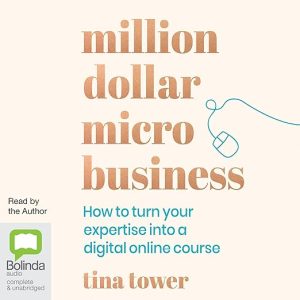
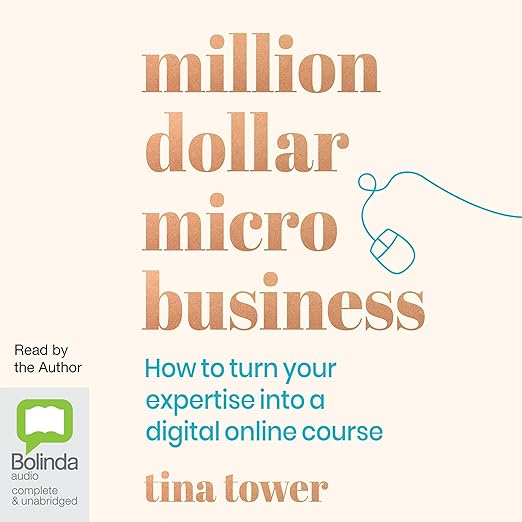
Online courses are one of the few businesses that can start on a kitchen table and scale to seven figures without inventory, shipping, or a storefront, and that gap between low overhead and high ceiling is exactly what this audiobook is built to close. Tina Tower narrates her own step-by-step guide to turning existing skills and knowledge into a profitable course business, walking through the full arc from figuring out what you actually know that's teachable through building the course website, launching to a real audience, and eventually automating growth. She frames it as a genuinely realistic path for people who've never built a business before, not just a case study of her own success.
No Independent Account Verifies the Seven-Figure Number
The five-part structure promised in the synopsis, discovering what you know, developing course material, building the learning website, marketing and launching, then growing through automation, maps directly onto the actual chapter progression, and that structural discipline is the book's real strength. Reviewer Sally singles this out specifically, writing that the book 'delivers on promise' and is not 'filled with BS story fillers,' noting that examples are limited to '1 or 2 per subject or segment' rather than padded with anecdotes. For a business how-to audiobook running over nine hours, that restraint matters more than it might sound; plenty of comparable titles stretch runtime with founder-origin-story chapters that this one mostly skips.
Reviewer Sonja Balzarolo makes a related point from a different angle, noting that despite an already crowded market of 'people with courses to teach you how to build an online business,' this one offers 'so many new ideas, concepts, ways of looking at building an online business' rather than repeating the standard advice. That's a meaningful claim in a genre where a lot of course-creation content recycles the same launch-funnel playbook. Tower's own background as what the synopsis calls an award-winning entrepreneur and educator gives the specific tactics some weight beyond generic business-book theory.
The synopsis's own closing line, pitching the book at 'all would-be entrepreneurs with unique skills or expertise just waiting to be shared with the world,' sets a notably wide net for a book candid enough elsewhere to admit its examples are deliberately limited to one or two per topic. That combination, a broad audience claim paired with narrow, disciplined execution, is consistent with what reviewers actually describe: a wide door in, and a tight, repeatable process once a listener is through it.
The synopsis's boldest claim, turning knowledge into a seven-figure business, is the kind of number that could easily read as inflated marketing language, and it's worth noting that neither Sally nor Sonja Balzarolo's reviews specifically confirm hitting that figure themselves; both praise the process and structure rather than reporting their own revenue results. That's a meaningful distinction for a business audiobook: the strategy sounds sound and the process appears legitimately followed by satisfied listeners, but no independent account in the available reviews actually verifies the top-line number the title promises.
Robin Hebert Found This in a Shipping Store
Self-narration is the right call for a book this practical. Tower is teaching a process she has personally executed, and hearing the actual entrepreneur explain her own framework, rather than a professional narrator reading it cold, adds a layer of lived confidence to sections that could otherwise read as generic advice. Reviewer Robin Hebert describes finding the book by chance, in a shipping store of all places, then downloading the audio version and listening 'twice start to finish,' ending up with a solid business concept as a direct result. That's a strong practical endorsement for the audio format specifically, not just the content.
The audiobook format suits the linear, step-by-step nature of the material better than a book a listener might otherwise skim for the parts that apply to them. Course creation genuinely does follow a sequence, since building a course before knowing what to teach, or marketing one before it exists, doesn't work, so listening straight through in order, the way audio naturally encourages, mirrors how the advice is meant to be applied rather than treated as a reference to jump around in.
The step-by-step structure also makes this a reasonable candidate for revisiting specific chapters later rather than only a single one-and-done pass. A listener still stuck on the ideation stage gets less immediate use from the automation-and-scaling chapters near the end, and can reasonably return to those specific sections months later once a course is actually live, rather than needing to sit through the full nine hours again from the start.
The 'build your digital learning website' chapter promised in the synopsis is a specific, often-skipped step in course-creation advice generally, since a lot of competing content assumes a listener will figure out the technical hosting and delivery platform on their own. Naming it as its own dedicated stage, distinct from both course design and marketing, signals a genuinely complete beginning-to-end path rather than advice that stops once the content itself is written.
Tagged for Women but Pitched at All Founders
This runs long for a business how-to release at over nine hours, and listeners should expect a genuinely comprehensive walkthrough rather than a quick-hit summary of course-creation tactics. That length is a feature for anyone planning to actually build a course alongside listening, since each stage gets real depth, but a listener hoping for a condensed weekend-length primer should recalibrate expectations before starting.
The book is tagged for women in business specifically, though the synopsis itself pitches the content at a much wider net of prospective founders. Worth flagging honestly: the actual content, based on the synopsis and available reviews, reads as general course-creation strategy applicable regardless of who's building the course, so listeners drawn in by the tag looking for gender-specific business challenges addressed directly may find the material more universally pitched than the categorization suggests.
For Listeners Who Tried Free Guides and Stalled
Anyone sitting on real expertise, a trade skill, professional knowledge, a hobby taken seriously enough to teach, who has never taken the concrete steps toward productizing it will get the most out of this. It's also a strong fit for people who've already tried and stalled on a course launch before, since the synopsis promises coverage all the way through to marketing and scaling, not just the ideation phase most course-creation content stops at.
Against a genre that's genuinely saturated with course-creation advice, much of it thin or recycled, the specificity reviewers describe here, real steps rather than vague encouragement, is a meaningful differentiator for anyone who has already tried a few free guides online and found them too shallow to actually act on.
Established course creators already generating consistent revenue are less likely to find fundamentally new material here; the strength of this audiobook is in taking someone from zero to a launched course, and reviewer feedback consistently praises the practical, non-padded structure rather than any advanced or contrarian strategy. Confirm the fundamentals-focused framing matches where you actually are in the process before committing the full runtime.
Common Questions
Does Tina Tower narrate this audiobook herself?
Yes, Tower narrates her own course-creation guide, and her direct, practitioner voice is part of what reviewers credit for the book's practical, non-padded feel.
Is this audiobook only useful for women entrepreneurs?
Although tagged for women in business, the synopsis and content frame the audience broadly as any would-be entrepreneur with teachable skills or expertise, not a gender-specific curriculum.
How long is this audiobook, and is that runtime justified?
It runs nine hours and eighteen minutes, which reviewers describe as earned by genuine step-by-step depth across ideation, course-building, launch, and scaling rather than padding.
Do I need existing business experience to follow this audiobook?
No, the book is built for people who have never taken concrete steps toward productizing their knowledge, walking through the process from the very beginning.