Quick Take
- Narration: Christy Hodson reads with warmth and dry comic timing, the right voice for a book that wants to be both a girlfriend conversation and a credible information resource
- Themes: Menopause and perimenopause symptoms, humor as coping mechanism, science-backed practical strategies
- Mood: Funny and grounded, the audiobook equivalent of a frank conversation with a knowledgeable friend who makes you laugh first
- Verdict: A genuinely readable and warmly narrated introduction to perimenopause and menopause that earns its 4.8 rating, the humor is deployed in service of the information, not as a substitute for it.
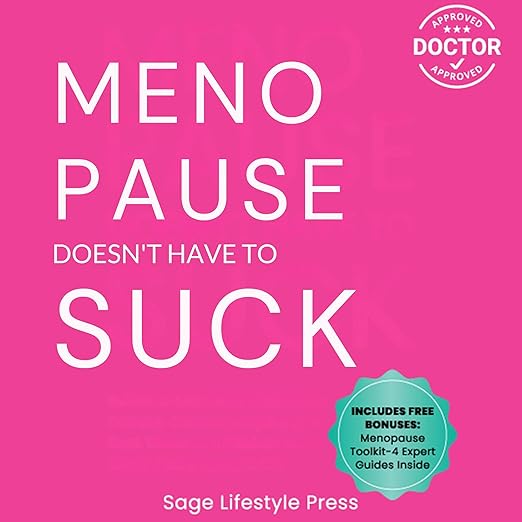
I picked up Menopause Doesn’t Have to Suck on a day when I’d spent most of the morning reading three different clinical menopause guides that were thorough and useful and somehow left me feeling more anxious than when I started. The Sage Lifestyle Press title has a different ambition: it wants you to finish feeling equipped and slightly lighter rather than comprehensively informed and slightly terrified. At four hours and fourteen minutes, it lands that goal more often than I expected it to.
The book opens with the extended metaphor of being a human furnace, the hot flash as nature’s way of saying you thought puberty was fun, hold my hot tea, and signals immediately that the tone is going to be self-aware, conversational, and deliberate about not treating the menopause transition as either a medical emergency or a shameful secret. That’s a legitimate aesthetic and pedagogical choice. Humor has historically been one of the few ways women have talked openly about experiences that the medical establishment tended to minimize or ignore, and this book operates in that tradition.
Perimenopause Coverage That Other Books Skip
One of the consistent themes across reviewer feedback for this title is gratitude for the depth of the perimenopause coverage. Multiple reviewers noted that perimenopause, the often years-long hormonal transition that precedes menopause itself, receives more detailed attention here than in many competing books. One reviewer described moving through perimenopause into full menopause with nearly every symptom mentioned and finding the specificity reassuring. Another noted that the book clarifies what’s physically, mentally, and emotionally real versus what is myth, which she found particularly valuable given the information overload and contradictions that characterize online perimenopause content.
Christy Hodson’s narration serves this material well. She has the professional warmth of someone who has voiced a lot of women’s wellness content without the overly bright affect that can make health audiobooks feel slightly patronizing. The tone is genuinely conversational, not performed intimacy but actual ease, and the dry comic moments in the text land rather than falling flat, which is a real narration skill when the humor is embedded in expository content rather than structured as jokes.
The Science-Backed Solutions and What They Actually Cover
The book is explicit about not being the snake-oil or magical-thinking variety of wellness writing, and it generally holds to that commitment. The strategies it covers for hot flashes, mood management, sleep disruption, brain fog, and the other canonical symptoms of menopause are grounded in research without being clinical in presentation. One reviewer with specific medical training noted a missing symptom (itchy skin) as an example of where completeness could be improved, which is the kind of substantive critique that tells you the book is being taken seriously rather than dismissed. This is not a comprehensive medical reference, it has neither the scope of The New Menopause nor the protocol depth of Hormone Havoc, but it covers what it covers accurately.
The PDF companion is available in the Audible library and contains supporting material that supplements the audio. Given the title’s lighter format, the PDF is less essential here than in the more clinical menopause books, but it adds reference value for readers who want to return to specific strategies.
What the Humor Is Actually Doing
It would be easy to dismiss the book’s comic register as packaging for a serious topic, but that would miss how the humor functions structurally. Several of the most medically significant passages in the book, on the link between estrogen decline and cognitive symptoms, on the real timeline of perimenopause beginning in the late 30s, on the emotional and relational dimensions of this transition, arrive after the reader has already been put at ease by laughter. That’s not a trick; it’s a recognition that shame and avoidance are genuine barriers to information absorption, and that defusing them with humor has practical health value. One reviewer described the book as a judgment-free zone, which is exactly the environment this kind of information needs to be received in.
Who Should Listen and Who Should Skip
Listen if you’re early in the perimenopause or menopause journey and want an accessible, warmly narrated introduction that doesn’t leave you feeling overwhelmed. Also excellent for women who have found clinical menopause books anxiety-inducing and want the same information in a lighter register. The perimenopause coverage specifically makes it worth the time for women in their late 30s who are beginning to notice changes and not yet finding answers elsewhere.
Skip if you need a comprehensive clinical reference, this is a strong starting point, not a full medical handbook. For HRT guidance and detailed disease risk information, follow this with The New Menopause. For a nutritional protocol, pair it with Hormone Havoc.
Frequently Asked Questions
Is the humor in Menopause Doesn’t Have to Suck a distraction from the practical content, or does it serve the information?
It serves the information. The book uses humor to reduce the shame and avoidance that can make menopause topics hard to engage with, and the serious content, on perimenopause timing, symptoms, and science-backed strategies, is well-covered after the rapport is established. Reviewers consistently describe finding both the humor and the information valuable, rather than treating them as competing.
How does this book handle the perimenopause phase specifically?
More thoroughly than most menopause books at this accessibility level. Multiple reviewers specifically highlighted the perimenopause coverage as a strength, distinguishing between what’s real and what’s myth, covering the timeline (which can begin as early as the late 30s), and addressing the physical, emotional, and cognitive dimensions of the transition rather than focusing only on classic menopause symptoms.
Is Christy Hodson’s narration a good fit for this material?
Yes. Hodson has the warmth and comic timing the material needs without the overly bright affect that can make wellness audiobooks feel slightly patronizing. The humor in the text lands through the narration rather than falling flat, which is not automatic when jokes are embedded in expository prose. Reviewers don’t separate narration from content negatively, suggesting the voice serves the book well throughout.
Should I start with this book or with a more clinical menopause guide like The New Menopause?
Start here if you’re early in your perimenopause or menopause journey and want a low-anxiety, accessible introduction. The New Menopause is the better choice if you need clinical depth, HRT guidance, or a reference you can use in medical appointments. Many listeners will benefit from both, this book as orientation and Haver’s book as the full clinical map.