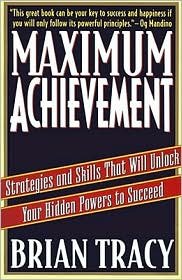
Brian Tracy's influence on the self-improvement genre is the kind that gets absorbed without attribution: ideas that began as specific frameworks in his seminars and books have migrated so thoroughly into the general vocabulary of personal development that encountering them in their original, fully developed form can feel both familiar and more substantial than the versions that reached you secondhand. Maximum Achievement, the audiobook that Tracy self-narrates across more than thirteen hours, is the foundational text of that influence. Published originally in 1993 and drawing on Tracy's years as a corporate trainer and seminar leader, this is the crystallization of a philosophy tested with hundreds of thousands of live participants before being committed to the written and recorded form most listeners will now encounter.
This entry arrives with no detailed synopsis at all and only a small review sample to work from instead, which means this review draws heavily on Tracy's well-documented career, his catalog of over forty books, the widely reported impact of this specific title, and the audio format's specific qualities for this type of material. What is established about Maximum Achievement is that it covers the architecture of high achievement systematically: goal-setting methodology built on clarity of purpose, mental programming techniques to identify and overcome self-limiting beliefs, self-discipline frameworks that convert intention into consistent behavior, and the relationship between inner self-image and outer performance. These are the subjects Tracy has returned to across decades of output, and Maximum Achievement is widely identified as the work where those ideas are developed with the greatest comprehensiveness and the most careful internal coherence.
At thirteen hours and twenty-five minutes, this is a substantial commitment, and the length is meaningful rather than a function of padding. Tracy does not deal in summaries or bullet-point checklists. The runtime reflects comprehensive, methodical development of each principle rather than the highlight-reel approach that much contemporary personal development audio favors for convenience and shareability. For listeners who find the condensed, fast-paced format of modern self-improvement audiobooks useful but ultimately too thin to produce lasting behavior change, the investment in a longer and more carefully developed argument is often the more valuable and durable experience. Tracy's framework has the coherence of a system built over many years rather than assembled to serve a market trend.
The Strengths
Tracy self-narrating his own material is the correct format for this book. The ideas in Maximum Achievement come from decades of live platform experience: corporate training sessions, public seminars, and coaching relationships where Tracy developed and refined his framework by observing what actually changed behavior in real participants under real professional pressure. The narration carries that history. He does not read the text so much as speak from within it, and the difference between an author narrating a book they wrote for the page and an author speaking ideas they have delivered in live contexts for years is audible throughout. The latter has a specificity and an earned authority that professional narration of the same text, however skilled, would not replicate in quite the same way.
The framework's durability across more than thirty years is its strongest single argument for an audio listener's investment of time. Achievement psychology has been studied, refined, and challenged considerably since Maximum Achievement was published, but the core insights Tracy built his system around, the relationship between self-image and performance, the mechanics of goal clarity and commitment, the discipline structures that convert repeated intention into established behavior, remain relevant and practically applicable in current professional contexts. Listeners who have worked through more recent entries in the personal development genre and found them useful will often find that tracing those ideas back to their fuller treatment in Tracy's work gives the concepts additional weight and context.
Things to Know Before Starting Maximum Achievement
The age of the material shows in certain ways that are worth noting before committing to thirteen hours. Tracy's default framing of success is largely anchored in professional advancement and financial achievement, which reflects the corporate self-improvement paradigm that was dominant when the book was written. Listeners who bring more nuanced contemporary frameworks for what constitutes a meaningful and successful life, frameworks that include health, creative work, relationships, community contribution, and environmental awareness alongside career and income, will need to do some interpretive work to apply Tracy's principles across that fuller range of human goals. The principles themselves translate well; the default assumptions about what success looks like do not always.
The thirteen-hour commitment is genuine rather than nominal. This is not content that can be processed effectively at double speed or in fragmentary listening sessions without losing the cumulative development of the argument. Tracy builds the later principles explicitly on the earlier ones, and the framework's coherence depends on the listener having absorbed the preceding material. Listeners who engage with Maximum Achievement as a single sustained study, giving it the kind of focused attention that serious non-fiction has historically required, will get substantially more from the investment than those who treat it as background audio. Completing it also functions as a kind of historical study of the personal development genre itself: understanding where many contemporary frameworks originated and how they were first articulated.
Recommended For
Listeners new to Brian Tracy who want the fullest and most systematic version of his framework before exploring his shorter and more targeted books will find this the right starting point for that project. Those who have read or listened to Tracy's more recent work and want to return to the source material will find Maximum Achievement the foundational text that everything else draws on. People who have sampled contemporary personal development audiobooks and found them too condensed, too anecdote-heavy, or too thin on coherent underlying system will find Tracy's methodical approach a genuinely satisfying contrast. Listeners looking for recent behavioral science research, habit formation studies, or contemporary psychology should supplement this with more current material, but for the architecture of personal achievement as a comprehensive and coherent system, Maximum Achievement remains a significant thirteen-hour argument worth the time it asks for.
A Few Questions About Maximum Achievement
Is Maximum Achievement the right Brian Tracy audiobook to start with, or should I begin with a shorter work to test his approach first?
Maximum Achievement is Tracy's most comprehensive single work and the foundation for much of his later output. It is the best place to encounter his complete framework in systematic form. Listeners who want a shorter introduction before committing thirteen hours might start with Eat That Frog or The Psychology of Achievement first.
Does Brian Tracy self-narrating Maximum Achievement change how the audiobook lands compared to a professional narrator reading the same material?
Significantly. Tracy has delivered this material in live seminar and corporate training contexts for decades, and the narration reflects that experience. He speaks from the framework rather than reading it off the page, which gives the audio a quality of direct delivery that professional narration would not fully replicate. For self-improvement content, the author's own voice carries additional credibility.
How does Maximum Achievement's thirteen-hour runtime compare to the depth of content it actually delivers?
The runtime reflects comprehensive development rather than padding. Tracy builds each principle methodically and sequentially rather than delivering a highlights version of his framework. Listeners who find contemporary personal development audiobooks too compressed will likely find the investment worthwhile. It rewards focused listening across multiple dedicated sessions rather than passive background consumption.
Is the content in this audiobook still relevant and applicable given that it was originally published in 1993?
The core principles on goal clarity, self-image and performance, and discipline architecture have proven durable across decades and continue to influence the genre. The default framing around professional and financial success reflects the era and may require interpretive work for listeners with broader definitions of a meaningful life. The principles translate; some of the cultural assumptions need updating by the listener.