Quick Take
- Narration: Grant Wahl narrates his own work with journalist’s clarity, direct and unshowy, which suits the analytical tone of the material perfectly.
- Themes: Tactical intelligence, position-by-position mastery, the gap between coaching orthodoxy and elite practice
- Mood: Insightful and brisk, with a slightly dated texture around the 2018 World Cup framing
- Verdict: A sharp positional breakdown of elite soccer thinking that rewards curious fans and coaches, though the 2018 focus has aged unevenly.
I was about halfway through my morning commute when Xabi Alonso explained his contempt for slide tackles, and I had to rewind the audio twice to make sure I had heard correctly. The argument, delivered through Grant Wahl’s matter-of-fact narration, was that slide tackles were essentially admissions of failure, evidence that the tackler had allowed the attacker to get ahead of them in the first place. It is the kind of insight that sounds obvious once stated but that you would never encounter in a standard broadcast or coaching session. That moment is a fair representative of what Masters of Modern Soccer offers at its best.
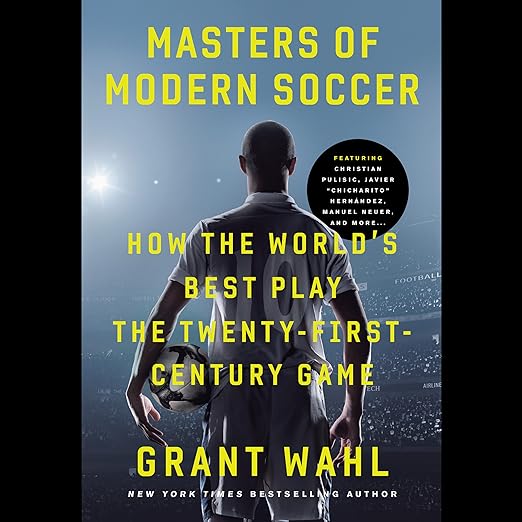
Wahl, who was America’s most prominent soccer journalist before his death in 2022, built this book around deep access interviews with a curated group of elite players and one manager. The position-by-position structure, moving from goalkeeper through defenders, midfielders, and forwards before landing on a manager and a director of football, gives the book a coherence that pure profile collections rarely achieve. Each chapter operates independently, but the cumulative effect is a genuine education in how the game is actually thought about at its highest levels.
Our Take on Masters of Modern Soccer
The individual insights are the book’s real currency. Manuel Neuer explaining the origin of the sweeper-keeper role he helped define, Christian Pulisic detailing why he wears his cleats a full size too small, Chicharito describing the synchronized run patterns the Mexican national team uses to manufacture space in the final third. These are not the kind of details you get from standard sports journalism, and Wahl earns them through a combination of access and the right questions. The Wall Street Journal called it a worthy addition to any soccer fan’s shelf, and that assessment is accurate, if modest.
The book does carry a significant caveat, flagged by at least one reviewer who made the same purchase I almost did: the content is largely identical to Wahl’s Football 2.0, an earlier, larger-format release. If you already own that book, Masters of Modern Soccer will give you little new material beyond a restructured midfield chapter and a useful index. Buy one, not both.
Why Listen to This Over a Coaching Podcast
Wahl narrates his own work, and the result is more relaxed than a performance. He knows these people; the interviews feel like conversations he was genuinely curious about rather than set pieces for publication. The audio format also works well because the book is fundamentally about how elite players think and speak about their craft, and hearing those observations delivered in Wahl’s voice creates something close to a radio documentary experience. At just under seven hours, it sits comfortably in the sweet spot for sports audio.
The pacing is brisk enough that you can absorb a full chapter during a commute and still feel like you have learned something concrete. Roberto Martinez on the differences between coaching clubs versus national teams. Michael Zorc on identifying players to buy low and sell high. These sections work regardless of your depth of tactical knowledge.
What to Watch For in Wahl’s Analytical Framework
The book’s weakness is also its central premise. By building the analysis around figures prominent ahead of the 2018 World Cup, Wahl locked himself into a specific moment in the sport. Several of the players he profiles have since faded from the elite level, and the tactical landscape has shifted enough that some observations now read as historical rather than current. The reviewer who noted this problem in 2019, just one year after publication, was identifying a structural issue that has only deepened with time. This is not a reason to avoid the book, but it means you should approach it as a portrait of a specific era rather than a timeless manual.
Who Should Listen to Masters of Modern Soccer
New and intermediate soccer fans who want to understand what they are actually watching will get the most out of this. Coaches at youth and amateur levels will find the position-by-position breakdown genuinely useful for framing conversations with players. Deep tactical obsessives who already consume significant soccer analysis may find the level of detail insufficient, and anyone who already owns Football 2.0 should skip it entirely. For everyone else, it is a compact, well-constructed introduction to elite soccer thinking from someone who had genuine access to the people at its center.
Frequently Asked Questions
Is Masters of Modern Soccer essentially the same book as Grant Wahl’s Football 2.0?
Largely yes. One reviewer who bought both confirmed the content is substantially identical. The midfield chapter has been restructured in Masters, and it includes an index that Football 2.0 lacks, but the core interviews and insights are shared across both titles. Buy whichever you encounter first and skip the other.
Has the book aged well given it was tied to the 2018 World Cup era?
Unevenly. The tactical frameworks and positional thinking remain useful, but several of the profiled players have since declined or retired, and the specific observations tied to those players now read as period pieces. Think of it as a snapshot of elite thinking circa 2017-2018 rather than a current reference.
Do you need deep soccer knowledge to get value from this audiobook?
No. Wahl pitches the analysis accessibly enough that newcomers can follow the logic, and multiple reviewers with limited soccer backgrounds described finding it genuinely illuminating. That said, listeners who already understand basic positional roles will absorb the finer points more readily.
Does Grant Wahl’s self-narration work for the audiobook format?
Yes, quite well. His journalist’s delivery is clear and unpretentious, and because these are his own interviews, the narration has a lived-in quality that a hired voice could not replicate. The conversational tone suits the material.