Quick Take
- Narration: Lynnda Nelson handles the material competently, maintaining a professional tone without the clinical distance that can make neurodivergent support books feel like they’re written about rather than for their audience.
- Themes: Autism in adulthood, relationship-building, career navigation, daily life management
- Mood: Practical and encouraging, though occasionally more framework than substance
- Verdict: A useful entry-level resource for autistic adults aging out of school-based support systems, or for families and practitioners who need an accessible starting point, those wanting deeper specificity may need to supplement it.
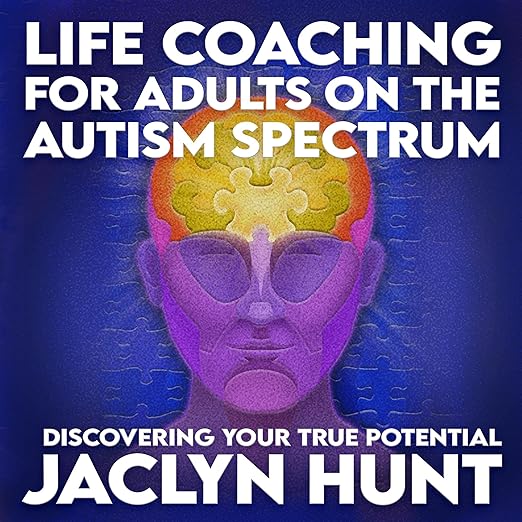
I spent a morning with this one, it’s just under six hours, a manageable length for the territory it covers, and what I kept returning to was a specific structural problem that a lot of support literature in the neurodivergent space runs into. The people who most need this content have often already spent years encountering advice that doesn’t account for how they actually think. The challenge for any author writing for this audience is to provide frameworks that are genuinely flexible rather than normative, tools rather than mandates. Jaclyn Hunt mostly clears that bar, though not without some qualifications.
The context that gives this book its reason for existing is real and poorly addressed by existing systems. Adults on the autism spectrum who graduated from school programs find that the services, accommodations, and supports that structured their educational experience largely evaporate once they age out. There is no adult equivalent of an IEP. Therapeutic services are expensive, often inaccessible, and frequently designed for younger populations or for the acute phase of diagnosis rather than the long-term project of building an adult life. Life coaching, as Hunt frames it, is a practical alternative, not a clinical intervention, but a structured approach to the concrete skills that adulthood requires.
Four Domains and What Each Delivers
Hunt organizes the content around four domains: relationships, career, daily life management, and personal development. Each domain gets a practical treatment rather than a theoretical one, the book is less interested in explaining why autistic adults face particular challenges in these areas and more focused on what to do about them. The relationship section covers building social connections from first contact through maintaining longer-term friendships, with attention to the specific gap between understanding social rules intellectually and applying them in real time. The career section addresses the job search process, workplace communication, and the particular challenge of translating genuine talents into positions that will recognize them.
One reviewer who identified as autistic described the book as providing insights into things he was only beginning to figure out in his late twenties when it came to talking to people. That specific resonance, the experience of finally having a framework for dynamics that you’ve been navigating without one, is what this kind of book is for. Another reviewer who works with autistic individuals professionally found it a useful resource for recent diagnoses and for practitioners new to the population.
Where the Depth Is Thinner
The honest critique is the one embedded in the reviews: one listener noted that the book’s overall message sometimes feels oriented toward suggesting professional coaching rather than fully delivering on the coaching itself. She wished there would have been more of it, describing wanting more specific examples of coaching in practice. At five hours and fifty-two minutes, the book covers its four domains with enough room for frameworks but not always for the granular specificity that would make the advice immediately actionable in a particular situation. It reads sometimes as a thorough introduction to each topic rather than a deep guide within any of them.
This is a scope problem rather than a quality problem. The material that is here is solid and accessible. But listeners dealing with specific, complex situations, workplace conflict involving sensory needs, relationship dynamics around disclosure, navigating long-term independent living with significant executive function challenges, will likely need to supplement this with resources that go deeper in their specific domain. The book works best as a starting point or a reorientation tool, not as a comprehensive practice guide for every situation it raises.
Lynnda Nelson’s Narration and the Audience Question
Lynnda Nelson narrates with a professional warmth that serves the material adequately. The challenge with this particular audience is register, autistic listeners are often acutely sensitive to condescension in how they’re addressed, and Nelson keeps the tone collegial rather than therapeutic. That’s the right call. The book is written for adults, not about them, and Nelson’s narration maintains that framing throughout.
A note on the title and framing: the book addresses itself to adults on the autism spectrum or anyone who considers themselves neurodivergent, which broadens the scope but also means it isn’t always tailored to the specific experience of autistic listeners as distinct from ADHD or other neurodivergent profiles. The practical content generally applies across profiles, but autistic listeners seeking autism-specific insight should know the framing is broader than the title suggests.
Who Benefits Most
Adults with a recent autism diagnosis who need an accessible overview of the adult life domains where autistic individuals often struggle will find this genuinely useful. Parents of autistic young adults approaching the transition out of school systems will get a practical framework for the conversations ahead. Practitioners and coaches who are new to working with autistic adults will find it a useful orientation. The limitation is for experienced listeners who have already worked through this terrain, there isn’t much here that will surprise them or go deeper than they’ve already gone.
Frequently Asked Questions
Is this book appropriate for someone with a recent autism diagnosis as an adult, or is it aimed at younger adults just leaving school?
Both. The content is organized around life domains that matter regardless of when the diagnosis arrived. Newly diagnosed adults at any age will find the relationship, career, and daily life frameworks useful. The book does address the transition out of school-based supports, but the practical content is not age-restricted and applies to anyone building or rebuilding their approach to adult life with an autism diagnosis.
Does Jaclyn Hunt address the specific challenges of workplace disclosure, whether to tell an employer about an autism diagnosis?
Yes, disclosure is addressed as part of the career section. Hunt covers the considerations around when and whether to disclose, how to request accommodations, and how to navigate workplaces where disclosure has or hasn’t happened. It is not an exhaustive legal treatment, but the practical framework is present.
How does this book differ from a general self-help title on social skills or career development?
The key distinction is that it is specifically designed for the neurological profile of autism and neurodivergence, it doesn’t ask readers to simply practice social skills that feel natural for neurotypical people, but to build conscious frameworks for dynamics that they may not process intuitively. The advice is adapted for how autistic adults actually learn and apply strategies, not just repackaged general advice.
Is there a companion workbook or structured exercises, or is it primarily explanatory text?
Primarily explanatory, with practical strategies embedded throughout each section. It functions more as a coaching orientation than a formal workbook with structured exercises. Listeners who want a more structured practice experience may want to use the book alongside a journal or formal coaching relationship.