Quick Take
- Narration: Nikola Williams reads clearly and with a patient, tutoring register that suits the repetition-based format, though the performance is necessarily limited by the workbook-style content.
- Themes: Times tables from 2s to 12s, learning through repetition, building math confidence
- Mood: Methodical and encouraging, built for short focused sessions rather than sustained listening
- Verdict: A narrow-purpose tool that does exactly what it describes, repetitive multiplication practice in audio form, but listeners expecting a story or rich engagement will find it bare.
My neighbor’s daughter was visiting one Saturday afternoon, sitting at the kitchen table with a stack of index cards, drilling her six times table with the resigned energy of someone performing a necessary chore. I mentioned I had been listening to an audiobook designed to make exactly that process less grim. She looked skeptical. Honestly, after spending time with Learning Multiplication for Kids, I think her skepticism was partially justified, but the book has a legitimate use case that is worth identifying clearly.
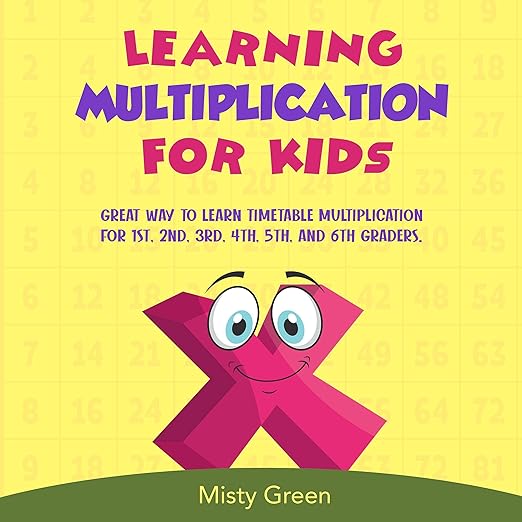
Misty Green’s audiobook is a focused, repetition-driven program for children working through their multiplication tables from 2s to 12s. At just under two hours, it is one of the shorter titles in the children’s educational audiobook space, and that brevity is appropriate to the format. This is not a book about mathematics. It is a practice tool in audio form, and understanding that distinction is the most important thing a parent or child can know before pressing play.
How the Repetition Method Works in Audio
The core approach here is deliberate redundancy. Green’s method works through each times table with enough repetition that the combinations move toward automaticity. Nikola Williams reads with a patient, consistent tone that avoids both the bright falseness of some children’s educational audio and the flat monotony that can set in when a narrator has to repeat numerical content for extended stretches. The performance is not going to win awards, but it is calibrated correctly for the material.
End-of-chapter quizzes give the listener a chance to pause and test retention before moving forward. That structure is sound pedagogically, and in audio it works reasonably well if the child is actively participating rather than passively listening. The fundamental challenge with any audio-based multiplication program is that the medium requires a listener who is doing something with the information, not simply receiving it. A child multitasking or daydreaming will not retain the content regardless of how clear the narration is.
What This Audiobook Cannot Replace
The book’s synopsis promises that children can master times tables without expensive tutoring resources, and that is true in the same way that any repetition practice is true. But the audiobook format has genuine limitations for pure rote-learning content. Flashcards, apps, songs, and games all engage different cognitive pathways that audio alone cannot access. A child who learns well through hearing may find this useful as a supplement. A child who needs visual reinforcement or hands-on manipulation will find the audio format insufficient on its own.
The single review available describes it working well for a sixth grader, which suggests the audience skews slightly older than the title implies. Children who already have some multiplication exposure and want to sharpen speed and accuracy are probably better served by this format than complete beginners who need multi-sensory introduction to the concept.
Short Sessions, Not Marathon Listening
The most effective way to use this audiobook is in short, focused bursts rather than a single sitting. Fifteen to twenty minutes per times table group, with active repetition and attempts at the end-of-chapter quizzes, produces more retention than playing the entire runtime at once. The chapter-based organization supports this kind of session listening: each table has its own section, and a parent and child can decide together when they are ready to move forward. That flexibility is one of the format’s genuine practical strengths.
Who Should Listen and Who Should Skip
This audiobook is suited to children aged eight to twelve who already understand what multiplication is and need drill-based practice to internalize the tables. It works best as a short, structured session tool during a commute or before a math test, rather than a single sit-through. It is not designed for children who need conceptual grounding in multiplication itself, and it is not a replacement for interactive practice. Parents looking for a richer, more narrative-driven approach to math education will want to look elsewhere. But as a repetition resource in audio form, it delivers on its modest promise.
Frequently Asked Questions
What age range is this audiobook designed for?
The book targets grades 1 through 6, though the repetition-based format and end-of-chapter quizzes are probably most useful for children aged 8 to 12 who already have some familiarity with multiplication and want to build speed and automaticity with their times tables.
Does the audiobook include any visual materials or printable worksheets?
No supplemental PDF or worksheet materials are listed for this title. The content is entirely audio-based, which is worth factoring in if the child you are working with is a visual learner who would benefit from seeing the equations alongside hearing them.
Is this audiobook designed to be listened to once or returned to repeatedly?
Repeated listening is where this kind of language audio earns its value. A single play-through will not produce retention. Parents who use it as a short, regular session, pausing to repeat and practice, will get significantly more from the format than those who listen through once and move on.
At under two hours, is this sufficient coverage of the multiplication tables?
The runtime covers 2s through 12s with enough repetition per table to build initial automaticity. It is not exhaustive, and children who need extensive drilling at a single table will benefit from supplementing with other practice methods. The audiobook is a starting foundation rather than a complete program.