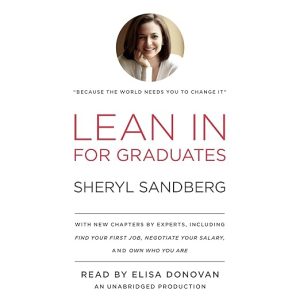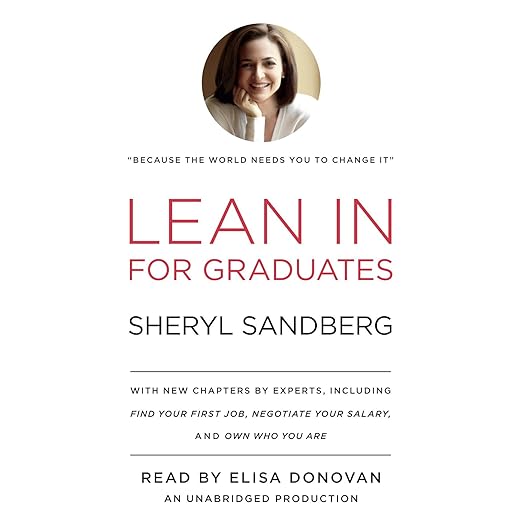
A stack of graduation cards still sat on my desk when I queued up this audiobook, and that timing felt right for Lean In for Graduates, the expanded edition of Sheryl Sandberg's best-selling book aimed squarely at listeners about to start their first real job. The original Lean In became a cultural touchstone more than a decade ago, spinning off circles, conferences, and a catchphrase that outlived most business-book buzzwords. This edition keeps the full original text intact but adds a graduation letter and six new chapters from outside contributors covering resumes, salary negotiation, and first-job survival. The question I brought into this listen was simple: does the graduate-specific material earn its place, or does it feel like a marketing add-on to a book that already did its job?
Written Before Remote Work and Pandemic Reassessment
The new material is where this edition either proves its worth or doesn't, and mostly it does. Mindy Levy's chapter on landing and getting the most from a first job reads like the advice a good manager gives a nervous new hire, not a motivational speech. Kim Keating, founder of her own advisory firm, walks through salary negotiation with enough specificity that a 22-year-old could actually use it in a real conversation with HR. Kunal Modi's chapter, addressed to millennial men about equality in the workplace, is the most unexpected inclusion and arguably the most necessary one, since the original book was written almost entirely to and about women. Rachel Thomas, Mellody Hobson, and Rachel Simmons round out the additions with material on foundation work, ownership of identity, and listening to instinct.
Sandberg's own letter to graduates opens the new material, and it carries more weight than the corporate-memoir tone might suggest, partly because listeners now hear it with the knowledge of everything that came after her original book's publication, including her departure from Meta in 2022 after fourteen years as chief operating officer. The original Lean In text itself holds up better than a lot of 2013-era business writing, mostly because Sandberg grounds her arguments in specific workplace scenarios rather than abstract theory. The twelve reader essays tucked into this edition function as a kind of proof-of-concept section, ordinary women describing how the book's advice actually played out in their own careers, which lands differently than another expert chapter would.
It is worth asking how well this material holds up against a job market that looks considerably different from the one Sandberg was writing into originally. The original Lean In predates widespread remote work, the post-pandemic reassessment of corporate loyalty, and much of the current conversation around burnout and boundaries that today's graduates are actively having. The six new chapters address some of this indirectly, negotiation advice and instinct-listening translate reasonably well across eras, but the book's underlying assumption, that leaning further into demanding corporate structures is usually the right move, gets less pushback here than a graduate raised on more recent workplace-culture conversations might expect. That gap is worth naming rather than glossing over.
Closer to a Mentor Than a Stack to Skim
Audio suits this particular book better than a straight read of the original might suggest, mostly because so much of the added material is direct address: a letter, essays, advice chapters written in second person to a graduate stepping into a new job. Hearing 'you' addressed aloud by a single consistent narrator creates an intimacy that a printed page doesn't quite manage, closer to a mentor talking you through decisions than a stack of chapters to skim. The negotiation and interview-prep sections in particular benefit from hearing the language out loud, since so much of Kim Keating's and Mindy Levy's advice is about how to actually phrase things in a live conversation, not just what to think.
A practical case for this format also exists at this specific runtime. Nine and a half hours is enough to get through during a week of commutes or gym sessions without feeling like a second job, and the chapter structure breaks cleanly enough that you can return to just the negotiation section or just Modi's chapter on men and equality without losing the thread. For a book explicitly positioned as a graduation gift, that modularity matters, because the person receiving it is unlikely to sit down and read cover to cover the way an established professional with more patience for career theory might.
Almost the Same Product Split Into Two Entries
One reviewer, Krystan, raised a fair criticism that listeners should go in aware of: the book doesn't meaningfully address women with disabilities, and its lens on the workforce still assumes a fairly narrow set of starting conditions. Sandberg has always written from her own vantage point as a highly resourced Silicon Valley executive, and this graduates edition doesn't fully correct for that limitation even with six new contributors added. If you're looking for career advice that accounts for a wider range of circumstances, disability, first-generation status, non-corporate paths, treat this as one voice in a larger conversation rather than the definitive word on entering the workforce.
Listeners who already own the original Lean In should know this edition reuses that entire text word for word before adding the new material, so the value really does rest on whether the graduation-specific content is worth paying for twice. The catalog data around this title and the original Lean In listing share enough overlap, same narrator, similar runtime, that the two can read almost like the same product split into two entries. If you've never read Sandberg's book at all, skip this ambiguity entirely and go straight for this graduates edition, since it gives you everything the original offers plus the added chapters.
Donovan's Businesslike Warmth Balances Memoir and Instruction
This is squarely built for listeners within a year or two of entering the workforce, and the reviewer who called it required reading for internship and leadership courses had the right instinct. College seniors, new graduates staring down their first offer letter, and anyone renegotiating a starting salary for the first time will get the most direct use out of the added chapters specifically. Elisa Donovan narrates with a clear, businesslike warmth that suits the material's mix of memoir and practical instruction, never overplaying the more personal passages or underplaying the negotiation scripts, exactly the tonal balance this kind of hybrid book needs from a narrator.
Skip this one if you're several years into your career already and looking for something more advanced than first-job advice, or if Krystan's caveat about limited representation is a dealbreaker for you specifically. Readers who found the original Lean In's premise dated or overly individualistic in its solutions won't find that critique resolved here either, the graduate framing narrows the audience further rather than broadening the argument. For everyone else standing at the actual threshold this book was written for, the audiobook format works well for a text meant to be absorbed once and returned to selectively rather than studied line by line.
Before You Press Play
- Voice: Elisa Donovan delivers clear, businesslike warmth that suits the hybrid memoir-and-instruction format without overplaying either mode.
- Big ideas: Career entry, workplace negotiation, women in leadership, generational advice.
- Atmosphere: Practical and encouraging, with a mentor-to-graduate directness.
- Worth it?: A worthwhile listen for anyone entering the workforce, though the added chapters matter more than the familiar original text.
Good to Know
Do I need to have read the original Lean In before listening to this audiobook?
No. This edition includes the complete original text, so first-time listeners get the full book plus the graduation-specific additions in one listen.
How is this audiobook different from the standalone Lean In edition?
It adds a personal letter to graduates and six new chapters from outside contributors on topics like salary negotiation, first jobs, and workplace equality for millennial men, plus twelve reader essays.
Does this audiobook address career advice for people with disabilities or non-corporate career paths?
Not meaningfully. One reviewer specifically flagged the absence of that perspective, and the book's lens stays fairly narrow throughout.
Who narrates Lean In for Graduates and how long is the audiobook?
Elisa Donovan narrates across 9 hours and 34 minutes, covering both the original text and all six new chapters.