Quick Take
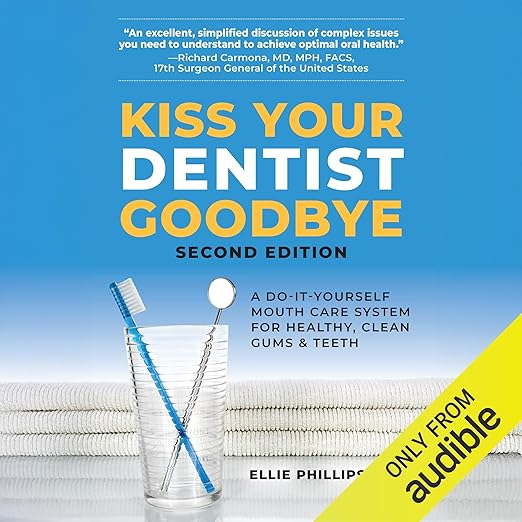
- Narration: Dr. Ellie Phillips narrating her own work is the correct choice, she comes across as a practicing clinician sharing hard-won knowledge rather than reading a prepared script, and that intimacy matters for material this personally invested.
- Themes: oral microbiome, cavity reversal, challenging conventional dental hygiene advice
- Mood: Quietly insurgent and practical, with the confidence of someone who has been proving this for decades
- Verdict: Listeners who have been frustrated by recurring dental problems despite following standard advice will find this a genuinely useful rethinking of daily oral care, though the anti-establishment framing occasionally overshoots the evidence.
I finished this one on a long drive through rural Connecticut, somewhere between mile 40 and mile 90 of what turned out to be a very dental audiobook afternoon. I had started it half-skeptically, the title suggests a certain genre of contrarian health content that sometimes delivers more attitude than substance. What I found instead was a dentist with fifty years of clinical practice behind her, a coherent theoretical framework, and a genuine frustration with a profession she believes has been giving patients the wrong tools.
Dr. Ellie Phillips is not an outsider critic. She is a practicing dentist who became convinced, over decades of clinical work, that the standard advice to brush, floss, and see your dentist every six months was failing a significant portion of her patients. Her argument is not that hygiene is unimportant, it is that the conventional approach addresses symptoms rather than the underlying bacterial ecology of the mouth, and that some standard interventions actively make that ecology worse.
The Bacterial Balance Argument
The central claim of this book is that oral health is a product of microbial balance, not the eradication of bacteria. Aggressive cleaning regimens, certain fluoride products, tooth whitening, bleaching, and dental sealants, Phillips argues these can disrupt the protective bacterial environment that healthy mouths depend on. This framing draws on genuine research into the oral microbiome, and Phillips is careful enough to distinguish between the bacteria you want to preserve and the specific acidic conditions that create cavities.
The two-part structure of the book reflects this logic clearly. Part one builds the conceptual case: why cavities happen, how teeth can naturally remineralize under the right conditions, what gum disease actually is at the microbial level. Part two delivers the practical program, a specific daily sequence of products and timing that Phillips argues can reduce plaque, strengthen enamel, heal early cavities, and reverse periodontal disease. One reviewer reported tooth pain resolving and two cavities halting progression after following the protocol. Another described it as information they wish they had known years before, specifically calling out whitening bleaches as something they would have avoided had they read this earlier.
Self-Narration as Clinical Credibility
At eight hours and nineteen minutes, this is a substantial listen, and the self-narration becomes important. Phillips does not read like someone performing their own manuscript. She reads like someone who has explained this material to patients hundreds of times and has distilled it to the version that actually communicates. The confidence is earned rather than projected, and it gives the more counterintuitive claims, particularly the argument against aggressive flossing and certain professional cleaning procedures, enough weight to be taken seriously rather than dismissed.
One reviewer noted finding extensive information on her YouTube channel, but described the book as valuable for pulling everything into a coherent single-source format. That consolidation function is real. The protocol she outlines involves specific products in a specific sequence, and the reasoning behind each step is not obvious without the underlying explanation the book provides.
Where to Apply Appropriate Skepticism
Phillips’s claims about cavity reversal are the part of this book that warrants the most careful reading. Early-stage remineralization, the process of reversing the beginning of a cavity before it has broken through enamel, is real and scientifically supported. The question is the degree of clinical severity to which her protocol applies, and Phillips is not always precise about drawing that line. Reviewers describing dramatic improvements are likely dealing with early-stage problems, and it would be a mistake to treat this as a substitute for clinical intervention for established cavities or advanced periodontal disease.
The anti-establishment framing also occasionally overreaches. Her critique of conventional dentistry is most compelling when it is specific, particular products, particular procedures, with evidence cited. It is less compelling when it gestures broadly at the financial incentives of the dental industry without engaging with the specific evidence for or against a given practice. Listeners who can separate the useful specific claims from the broader insurgent narrative will get the most out of this book.
Who Will Get the Most Out of This
Listeners who have experienced recurring dental problems despite following standard advice, anyone dealing with tooth sensitivity or early-stage gum issues, and people who want to understand the reasoning behind oral hygiene rather than just following instructions will find this genuinely useful. Those looking for a simple protocol without the conceptual framework, or listeners with advanced dental disease who need clinical intervention, are better served by consulting their dentist directly rather than expecting this book to substitute for professional care.
Frequently Asked Questions
Does Dr. Phillips’s daily protocol require specific branded products, or can it be adapted?
Phillips does recommend specific products in a specific sequence, and she is fairly precise about this in the book. Some reviewers note that identifying equivalent products requires additional research, and her YouTube channel provides some supplementary guidance on substitutions.
Is the claim that cavities can be reversed supported by evidence, or is this fringe dentistry?
Early-stage remineralization, the reversal of incipient cavities before enamel breakdown, is a recognized phenomenon supported by published research. Phillips’s protocol is built around creating conditions favorable to remineralization. The caveat is that this applies to early lesions, not established cavities with structural breakdown, which still require clinical intervention.
Does the audiobook cover gum disease and periodontal issues, or is it primarily about cavities?
Both are addressed in depth. Phillips frames gum disease as a bacterial balance problem rather than a hygiene failure, and her protocol is designed to address both cavity prevention and periodontal health simultaneously. Part two of the book covers the full program.
Is this book appropriate for someone who has already had significant dental work, or is it primarily preventive?
Phillips explicitly says it is never too late to start, and several reviewers describe benefit after years of ongoing dental problems. However, the protocol is most effective as a preventive and early-intervention tool. Listeners with existing restorations, implants, or advanced periodontal disease should discuss the protocol with their dentist before making changes to their care routine.