Quick Take
- Narration: B.J. Harrison delivers Hendrix’s Imago therapy framework with the calm authority the material needs. He’s a natural fit for long-form psychological nonfiction.
- Themes: Imago relationship theory, unconscious partner selection, childhood wound and relationship pattern
- Mood: Patient and illuminating, asking more of the listener than most relationship books do
- Verdict: For singles willing to do serious self-examination work before entering their next relationship, this is one of the more substantive guides available.
I spent a long train journey with this one, somewhere between London and Edinburgh on a trip I took for a festival appearance a few years back. I remember pulling out the notepad I always carry for exactly this kind of listening: the kind where the book keeps generating thoughts faster than I can process them passively. Keeping the Love You Find isn’t a gentle read. It asks you to look at your relationship history as a systematic record of an unconscious program running in the background, selecting partners not randomly but with a hidden agenda. For some listeners that framing is illuminating. For others it’s unsettling. For me it was both.
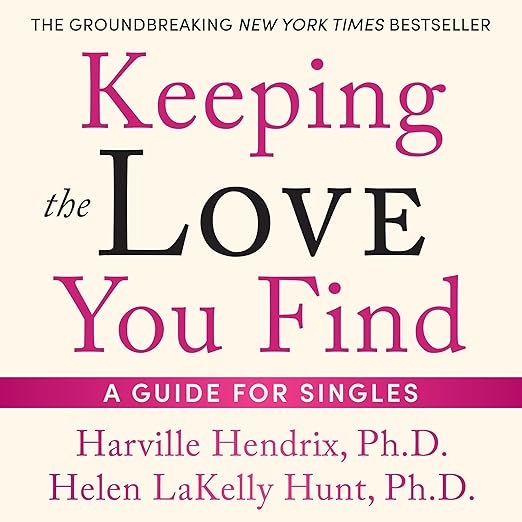
Harville Hendrix and Helen LaKelly Hunt are the architects of Imago Relationship Therapy, a framework that grounds adult romantic patterns in childhood relational experience. Getting the Love You Want, their first major book, addressed couples already in relationships. Keeping the Love You Find addresses singles, specifically the patterns that keep them from finding or sustaining the partnerships they want. At fourteen hours, this is a serious commitment, but the depth it reaches justifies the runtime in ways that shorter books in this category often can’t.
The Imago Concept Explained
The central concept is the Imago, described as the fantasy partner in your unconscious mind, composed from the negative traits of your primary caregivers combined with their positive qualities. This isn’t the partner you think you want consciously. It’s the partner your unconscious is programmed to seek, with the hidden agenda of completing unfinished developmental business from childhood. The thesis is that most adult relationship patterns, including choosing unsuitable partners, unconsciously sabotaging good relationships, and running from commitment, trace back to this programming rather than to random circumstances or bad luck.
One reviewer here takes the unusual step of sharing direct quotes from the book, including the William Blake epigraph: everything that lives, lives not alone nor for itself. That framing tells you something about the register of the book. This isn’t pop psychology with quick fixes. It’s relationship theory with genuine intellectual roots, drawing on developmental psychology, attachment research, and clinical therapy practice.
The Written Exercises and the PDF
The PDF companion that accompanies this audiobook is flagged in the product listing, and it genuinely matters. Hendrix and Hunt structure much of the developmental work around written exercises designed to help readers identify their Imago, trace their relationship patterns, and build the communication skills the framework requires. B.J. Harrison can read these exercises aloud, but the active engagement they require, writing things down, sitting with uncomfortable recognitions, returning to earlier exercises after later insight, is print-native work.
One reviewer is specific: after completing the many written exercises, you will know why the same stuff happens in all your relationships, and you will see how you have the power to unhook the patterns. That’s the intended outcome of full engagement. Passive listening will give you the framework. Active engagement with the exercises will give you the change.
B.J. Harrison’s Performance and the Runtime
Harrison is an experienced audiobook narrator with particular facility for nonfiction that requires measured delivery of complex frameworks without losing the emotional register underneath. He doesn’t flatten Hendrix’s material into a lecture. The sections where Hendrix and Hunt address loneliness, despair, and the hope of real love carry warmth in Harrison’s reading without tipping into sentimentality. The production, credited to Echo Point Books and Media with audio engineering by Sam Platt, is clean and professionally finished.
At fourteen hours, the Imago framework gets the full treatment it needs. Hendrix doesn’t compress. He builds the argument systematically and returns to core concepts with enough repetition to let them settle. Some listeners will find this pace slow. Listeners who come to the book with genuine questions about their relationship history will find the pacing exactly right.
Who Should Listen, Who Should Skip
Listen if you’re single and have noticed recurring patterns in your relationship history that you haven’t been able to explain through conscious choice, if you’re willing to do serious reflective work rather than looking for tips and techniques, or if the Imago framework from Getting the Love You Want already resonates and you want the companion volume for singles. Skip if you want a quick, practical guide to meeting and dating, or if the framework of childhood wound informing adult partner selection feels too deterministic for your worldview. This is a fourteen-hour commitment to looking honestly at yourself, and it requires that kind of intention to work.
Frequently Asked Questions
Is Keeping the Love You Find a sequel to Getting the Love You Want, and do I need to read that book first?
It’s a companion volume rather than a direct sequel. Getting the Love You Want addresses couples already in relationships. Keeping the Love You Find addresses singles working to understand their patterns before entering their next relationship. Hendrix recommends his earlier book for context, but the Imago framework is explained fully enough here that it can be followed without prior reading.
Is the PDF companion genuinely necessary or is it peripheral?
Genuinely important. The book’s value is realized most fully through the written exercises that help readers identify their Imago, trace relationship patterns, and develop communication skills. These exercises are print-native, and passive listening will give you the framework but not the experiential shift the exercises are designed to produce.
How does Imago Relationship Therapy compare to attachment theory as a framework for understanding relationship patterns?
Both trace adult relationship patterns to early relational experience, but the mechanisms differ. Attachment theory focuses on secure, anxious, and avoidant attachment styles formed in early caregiver relationships. Imago theory focuses specifically on the unconscious selection of partners who replicate negative caregiver traits with the goal of completing unfinished developmental work. They’re complementary rather than competing frameworks.
At 14 hours, is this significantly longer than necessary, or does the runtime serve the content?
The runtime serves the content. Hendrix and Hunt are building a complex psychological framework that requires systematic development and repetition to land properly. The written exercises and self-examination work that structure the book need space. Listeners who find the pacing slow are often listeners who came looking for tips rather than transformation. The full engagement is what the book is designed for.