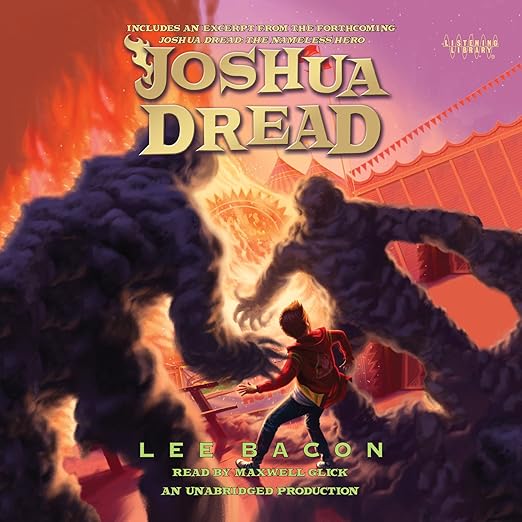
Quick Take
- Narration: Maxwell Glick captures Joshua’s deadpan middle-school voice well, the dry wit that runs through Lee Bacon’s writing translates cleanly into audio without overselling the jokes.
- Themes: Identity and belonging, family loyalty versus social survival, emerging superpowers
- Mood: Funny and fast, with genuine warmth underneath the comic chaos
- Verdict: A genuinely funny middle-grade audiobook that earns its comparisons to Rick Riordan without copying his formula, strong for ages 8 to 13 and not tiresome for adults reading along.
I listened to Joshua Dread on a long drive with my nephew in the back seat, and I want to say upfront that it was his enthusiasm for pressing the skip-back-30-seconds button, to re-hear the exploding pencil scene, that told me more about this audiobook than any critical analysis could. Lee Bacon’s debut novel for middle graders has been sitting in the shadow of the bigger superhero-adjacent children’s series for over a decade, and it deserves considerably more attention than it tends to get.
The premise is one of those satisfying inversions that sounds gimmicky until you see how seriously the book takes it: Joshua Dread is an ordinary middle schooler whose parents are supervillains. Not the tongue-in-cheek, wink-at-the-camera kind, the genuinely world-threatening kind, who happen to make his breakfast and argue about the dishes like everyone else’s parents. The comic tension between domestic normalcy and global menace is where Bacon does his best work, and Maxwell Glick’s narration understands that the joke works best when played straight.
Our Take on Joshua Dread
What makes this more than a one-note comedy is the genuine emotional core underneath the supervillain satire. Joshua is navigating all the usual middle-school territory, bullies, a best friend he is afraid of losing, a new girl (Sophie) who makes him feel seen in a way he cannot entirely explain, while also managing the existential pressure of his parents potentially being arrested by Captain Justice at any given moment. Bacon does not shortchange either layer. The comedy and the emotional stakes coexist without undermining each other, which is a harder balance to achieve than it looks.
A reviewer who teaches middle school students compared Lee Bacon favorably to Rick Riordan as a debut novelist, which is high praise in this particular corner of children’s fiction. The comparison holds in one specific way: Bacon, like Riordan, writes a first-person narrator whose voice is consistent and engaging enough that you would follow him anywhere. Joshua’s deadpan observations about the logistics of being a supervillain’s son land because they come from a kid who has had to make peace with an absurd situation through humor rather than denial.
Why Listen to Joshua Dread
The audiobook format suits this material especially well because so much of its comedy is rhythmic, it depends on timing, on the gap between setup and punchline, on the dry observation delivered without fanfare. Maxwell Glick reads Joshua’s narration with exactly the right register: not performing the jokes, not underlining them, just living inside Joshua’s voice and letting the writing do the work. The action sequences, which escalate satisfyingly through the Vile Fair attack, move quickly in audio and have a breathless quality that works better heard than read.
At five hours and forty-five minutes, this is an ideal length for a middle-grade listen, long enough to develop genuine attachment to the characters, short enough to complete in a weekend or across a few school commutes. Parents listening alongside younger children will find the humor holds up at adult speed, which is the real test of middle-grade comedy writing.
What to Watch For in Joshua Dread
One reviewer noted that the plot is somewhat predictable, the bones of the story follow a familiar arc, and attentive listeners will anticipate certain turns before they arrive. That is a fair observation. Bacon’s strength is character and comedy rather than structural surprise, and if your child has consumed a lot of middle-grade adventure fiction, they will recognize some of the shapes the plot makes. The book earns its resolution through character work rather than plot twists.
The dry wit is so constant, as one reviewer observed, that there are few genuinely tender moments, the emotional notes are real but they tend to be underplayed in keeping with Joshua’s narrative voice. Younger or more emotionally oriented listeners who want a story with more explicit feeling may find the consistent comic register slightly distancing.
Who Should Listen to Joshua Dread
This is a strong listen for children ages 8 to 13, particularly those who enjoy humor-forward adventure stories and have a taste for the absurd. Fans of the Riordan extended universe, the Wimpy Kid books, or Adam Gidwitz’s work will find familiar pleasures here. Adults doing a joint listen with younger listeners will not find themselves bored. Pure action-adventure readers who want their middle-grade books tense and serious rather than funny should look elsewhere, comedy is this book’s primary mode, and Bacon commits to it fully.
Frequently Asked Questions
Is Joshua Dread appropriate for listeners younger than the middle-school target age?
The content is suitable from about age 8 upward. The situations are absurd and comic rather than frightening, and the family themes are accessible to younger listeners. The humor skews slightly older, so it lands best in the 8 to 13 range.
Does Maxwell Glick differentiate between the various characters clearly enough to follow in audio?
Yes. Glick handles Joshua’s first-person narration consistently and adjusts register for other characters without doing overly theatrical voices. The cast of characters is manageable enough that audio-only tracking works well.
Does the story work as a standalone, or does it end on a cliffhanger requiring the next book?
The main plot of book one resolves satisfyingly. There is clearly more story to come, Sophie’s mysterious past is not fully explained, but Bacon gives the first installment a proper ending rather than a pure setup cliffhanger.
How does the comedy hold up for adult listeners who might co-listen with a child?
Quite well. Bacon’s humor works on multiple levels, there is enough satirical edge to the supervillain-parenting dynamic to entertain adults, while the middle-school social anxieties are universal enough to feel genuine rather than condescending.