Quick Take
- Narration: Elisabeth S. Rodgers reads Fett’s trimester-by-trimester guide with clarity and authority, handling supplement and lab-test data without making it sound like a package insert.
- Themes: Evidence-based prenatal nutrition, supplement optimization, pregnancy after IVF or over 35
- Mood: Calm and methodical, reassuring without being falsely cheerful
- Verdict: A well-researched pregnancy companion that extends the It Starts with the Egg framework into the gestational period, particularly strong for those navigating pregnancies outside the standard demographic assumptions.
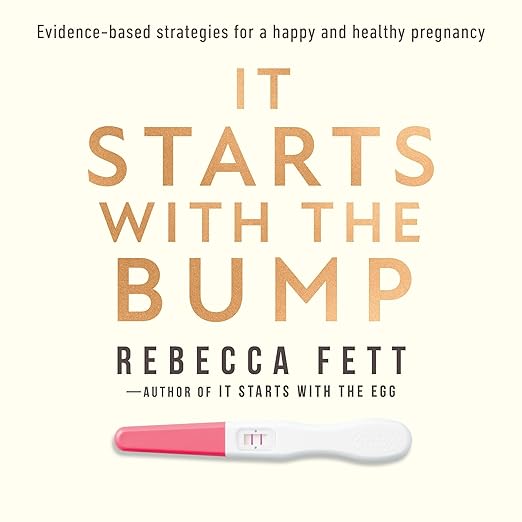
There is a particular kind of relief that comes from picking up a pregnancy book and finding that the author has actually read the studies she is citing rather than summarizing someone else’s summary of them. Rebecca Fett built that reputation with It Starts with the Egg, which became a reference text for women navigating fertility challenges, particularly around egg quality. It Starts with the Bump applies the same methodology to pregnancy itself, and the result is genuinely useful in the way that more popularized pregnancy guides often are not.
I listened to most of this on a weekday afternoon, and what struck me immediately was the absence of hedging. Fett names specific supplements, specific doses, and specific lab tests by trimester. That level of specificity is rarer than it should be in pregnancy literature.
The Sequel That Earns Its Existence
Pregnancy sequels to fertility books can feel forced, as though an author is extending a franchise beyond its natural scope. This one does not feel that way. It Starts with the Egg focused on the preconception window, and this book picks up logically where that one ends: once the pregnancy is confirmed, what does the evidence actually say about protecting and supporting fetal development? Fett moves through each trimester with the same framework she applied before: what does the research show, what is the practical implication, and what can you actually do about it?
The supplement chapter is the most detailed section, and for good reason. Prenatal nutrition advice is often either too vague to be actionable or subtly driven by commercial relationships with supplement brands. Fett walks through prenatal vitamins, iron dosing, omega-3 sources, calcium timing, and vitamin D with citation-backed specificity. She explains not just what to take but why current standard recommendations may be insufficient for some populations, particularly women over 35 or those who conceived via IVF.
Where the Book Differentiates Itself
One reviewer, a woman who had been told for over twelve years that she might not be able to carry a pregnancy, credited both Fett books as foundational resources for a pregnancy she describes as genuinely life-changing. That kind of response points to something specific about this book: it takes seriously the cohort of pregnant women who arrived at this pregnancy through a complicated path. The chapter on pregnancy after fertility treatment and the section on advanced maternal age are not afterthoughts. Fett addresses what is actually different about these pregnancies, from aspirin recommendations to different induction timing considerations, without catastrophizing them.
The section on nausea is also worth noting. Rather than offering the standard crackers-before-you-get-up advice, Fett examines recent research on the biological mechanisms driving pregnancy nausea and whether targeted interventions can address it more effectively. It is a small example of the book’s larger habit: treating the reader as someone who can handle a real explanation rather than a simplification of one.
Microbiome, Breastfeeding, and the Final Chapters
The closing sections cover ground that not all pregnancy books reach: supporting the newborn’s microbiome, breastfeeding challenges, and formula selection when breastfeeding is not possible or chosen. These chapters are shorter than the core trimester content, but consistent in approach. Fett does not advocate for one parenting position over another; she presents what the research shows and lets the reader decide how to apply it. That consistency of tone and method is what makes this book feel trustworthy across its full runtime of just under six and a half hours.
Who Should Listen and Who Should Skip
Listen if you are currently pregnant or planning pregnancy and want supplement and nutritional guidance grounded in actual studies rather than generalized wellness advice. Particularly valuable for pregnancies involving IVF, prior pregnancy loss, or maternal age over 35.
Skip if you are looking for a narrative or emotionally supportive pregnancy companion rather than a data-oriented reference. If you are still in the preconception stage, Fett’s first book It Starts with the Egg is the better starting point.
Frequently Asked Questions
Do I need to have read It Starts with the Egg before this book, or does it stand alone?
It Starts with the Bump stands alone as a pregnancy guide and does not require familiarity with the first book. However, if you used It Starts with the Egg during a fertility journey, you will recognize Fett’s research methodology immediately and the sequel will feel like a natural continuation.
How specific is the supplement advice, and should I follow it without consulting my OB?
Fett is quite specific, naming supplements, dose ranges, and the reasoning behind them. She also recommends discussing specific changes with your healthcare provider. The book is most useful as preparation for those conversations, not as a replacement for them.
Does Elisabeth S. Rodgers’ narration handle the technical content clearly?
Rodgers narrates the medical and nutritional sections with professional clarity. The supplement chapters, which involve dosage specifics and lab marker names, come through without the rushed pacing that can make dense nonfiction hard to follow in audio form.
Is there specific content for women who experienced pregnancy loss before this pregnancy?
Yes. Fett includes a section on pregnancy after a difficult path, addressing both the emotional reality of anxiety in a subsequent pregnancy and specific considerations around monitoring and supplementation. It is among the more thoughtful treatments of this topic in mainstream pregnancy literature.