Quick Take
- Narration: Elizabeth Ruelas delivers a warm, steady presence that suits the book’s tone of self-compassion, clear and calm without being clinical.
- Themes: Hormonal transitions, metabolic adaptation, breaking diet culture cycles
- Mood: Supportive and grounding, like advice from a knowledgeable friend
- Verdict: A practical, compassionately framed guide that goes well beyond fasting schedules to address the full picture of midlife health.
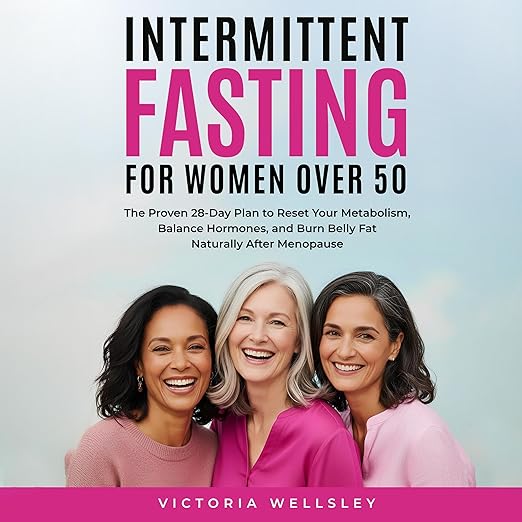
I picked this one up on a Tuesday afternoon when I was already two cups of coffee deep and vaguely researching why my sleep had become so unpredictable. I did not expect to stay with it for three hours straight. But that is what happened. Intermittent Fasting for Women Over 50 opens with a scene most listeners will recognize immediately: waking up to find that the same routines that worked for years have quietly stopped working, with no explanation offered and no roadmap provided. It is a disarmingly honest opening, and it sets the tone for a book that never once talks down to its audience.
Victoria Wellsley positions this less as a fasting manual and more as a recalibration guide. The distinction matters. By the time you are in the second chapter, it is clear that the fasting framework is the vehicle, not the destination. What the book is actually about is understanding why the body changes at this stage of life and how to stop fighting those changes with tools designed for a different hormonal reality.
When Fasting Becomes Flexible Rather Than Rigid
One of the book’s strongest contributions is its insistence that intermittent fasting for women over fifty looks and feels different from the approach popularized by younger, predominantly male-tested protocols. Wellsley walks through specific fasting windows, 12:12, 14:10, and 16:8, and explains not just how they work but when each one is appropriate given where you are in the menopausal transition. This is practical information that is often absent from general IF books, and it is presented here with enough nuance that listeners can actually tailor it to their own situation rather than defaulting to a one-size formula.
The chapter on metabolic adaptation is particularly well done. Wellsley explains the relationship between declining estrogen, cortisol sensitivity, and metabolic rate without reducing it to a grim progression of inevitable decline. Her framing throughout is that the body is not broken; it is shifted, and the task is to shift your approach with it. Reviewer Karen specifically highlighted the Reset Plan section, which encourages decluttering and reorganizing the pantry before beginning any dietary changes. It sounds almost too simple, but the logic is sound: environment shapes behavior, and reducing friction at the start matters.
Beyond the Eating Window
The book earns real credit for its scope. A reviewer going by AngelGT6 noted that the book made IF feel genuinely manageable rather than punishing, and I think the reason for that is the surrounding architecture Wellsley builds around the fasting framework itself. There are substantial sections on sleep restoration, stress management, strength-bearing exercise for bone density, and what she calls a nourishing relationship with food. None of these sections feel like padding. They feel like honest acknowledgments that fasting in isolation, without addressing the sleep disruption and cortisol spikes that characterize this life stage, is unlikely to produce lasting results.
The cravings chapter deserves a mention. Rather than framing sugar cravings as a failure of willpower, Wellsley traces them to specific hormonal dynamics and offers practical counter-strategies. This is the kind of reframing that can genuinely change how a listener relates to their own body, and it lands much better in audio than it might on the page, precisely because Ruelas’s narration keeps it from tipping into lecturing.
What the PDF Companion Adds
The listing notes that a PDF companion is available in your Audible library alongside the audio, and it is worth using. Based on the reviewer mentions of recipes and the structured Reset Plan, the PDF likely contains meal templates, fasting trackers, and nutritional guidance that would be difficult to follow by ear alone. The audio works on its own as a conceptual and motivational foundation, but if you are planning to actually implement the protocols, downloading the companion before you start will save you a lot of backtracking.
At just under five hours, this is a tight listen. Ruelas keeps the pacing consistent, and the structure is organized clearly enough that you could return to specific sections without losing context. There is no dramatic narrative arc here, no story of a dramatic physical transformation. What there is instead is a clear-eyed, generous, and genuinely useful framework for navigating a stage of life that too many health books treat as either irrelevant or as pure damage control.
Who Should Listen, Who Should Skip
Listen to this if you are a woman in perimenopause or post-menopause who has tried standard dietary approaches and found them no longer effective, or if you are curious about IF but want guidance tailored to your hormonal profile rather than generic protocols. It is also well-suited to anyone who has been caught in the diet culture cycle and wants an approach that starts from self-compassion rather than self-punishment.
Skip it if you are looking for a strict meal plan or calorie tracking system. This book is not that. It is a framework for thinking about your relationship with food and your body during midlife, and its value lies in that philosophical and practical breadth rather than in specific dietary prescriptions.
Frequently Asked Questions
Does the book explain how intermittent fasting differs for women over 50 compared to general IF advice?
Yes, this is one of the book’s main strengths. Wellsley specifically addresses how declining estrogen and increased cortisol sensitivity affect how different fasting windows interact with the female metabolism at this stage, and she recommends gentler starting points like 12:12 rather than jumping straight to 16:8.
Is the PDF companion necessary, or does the audio stand alone?
The audio works as a complete conceptual guide, but the PDF companion, which appears to include recipes and the Reset Plan tracker, adds significant practical value. If you plan to implement the protocols, downloading it alongside the audio is recommended.
How much of the book is actually about fasting versus general midlife wellness?
Roughly half the content covers the broader wellness framework: sleep restoration, stress management, muscle and bone preservation, and emotional resilience. Wellsley’s argument is that IF is most effective when embedded in a supportive lifestyle structure, so the wider scope is intentional rather than filler.
Does Elizabeth Ruelas’s narration suit the material?
Yes. Ruelas brings a calm, warm quality to the narration that matches the book’s compassionate tone. She avoids both the clinical flatness that can make health audiobooks feel dry and the over-enthusiastic energy that makes wellness content feel like a sales pitch.