Quick Take
- Narration: Patricia Bullock delivers a warm, unhurried read that matches the book’s compassionate, coach-to-listener register. Her pacing signals genuine care rather than clinical distance.
- Themes: Menopausal weight management, hormonal rebalancing, sustainable fasting protocols
- Mood: Supportive and practical, with the specific warmth of something written for a friend
- Verdict: A focused four-hour entry point into intermittent fasting for post-50 women, Bullock’s narration makes the compassionate framing land, and the protocol guidance is actionable without being prescriptive.
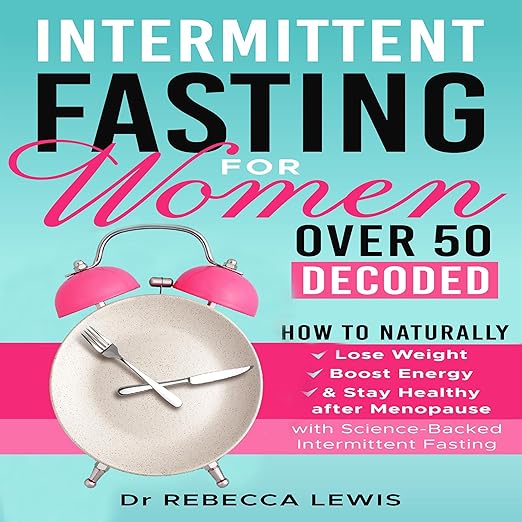
I listened to this one on a Saturday morning walk, the kind where you’re not really exercising so much as thinking. A friend had been asking me about fasting protocols after her doctor raised the topic at her annual checkup, and I wanted to understand what the post-50, post-menopause specific literature actually said before I pointed her anywhere. Rebecca Lewis’s title came up repeatedly in forum discussions, and at just over four hours, it fit a single morning commute neatly.
The first thing you notice is that Patricia Bullock’s narration doesn’t treat the listener as a problem to be fixed. This matters more than it sounds. A lot of the health and wellness audiobook space addresses women over fifty in a slightly corrective tone, here’s what you’ve been doing wrong, here’s the system you should have known about. Lewis’s text avoids this, and Bullock reads it in a way that amplifies the compassion without sentimentalizing it. The opening framing, that the listener is “not failing” but simply dealing with a body that is changing, doesn’t feel like a marketing affirmation when Bullock says it. It feels like a real thing someone is telling you.
The Hormonal Specificity That Separates This From Generic Fasting Guides
What Lewis does well is acknowledge that intermittent fasting guidance written for men in their thirties, or even for younger women, doesn’t map cleanly onto what happens to a body navigating perimenopause and its aftermath. The audiobook covers the top fasting methods specifically as they interact with changing hormonal profiles, not just the mechanics of the eating window but the question of what those windows do to cortisol, estrogen decline, and the particular tendency toward abdominal fat accumulation that menopause accelerates.
Reviewer Candice Benson noted that this was eye-opening and transformative even while managing a chronic illness, which speaks to the book’s attempt to offer protocols that accommodate rather than bulldoze real-life variables. Lewis builds in modifications for energy level, health status, and social context in a way that most fasting audiobooks don’t. The section on navigating social situations without derailing progress is practical and unsentimental, exactly the kind of content that separates books genuinely written for adult women from books written for an idealized version of someone who has no dinner invitations or family obligations.
What the Mind-Body Integration Section Actually Adds
Lewis includes breathwork and movement recommendations alongside the fasting protocols, and this could have felt like filler or padding toward a wellness word count. In practice, these sections function as honest acknowledgment that fasting without addressing cortisol and sleep will produce inconsistent results for this specific population. The integration is functional, not decorative. A reviewer described walking away “feeling motivated” without feeling pressured, which captures the register Lewis and Bullock are aiming for, practical encouragement rather than evangelical enthusiasm.
The audiobook sits at four hours and one minute, which is short for a health nonfiction title but appropriate for its scope. The Wellness Series branding suggests additional volumes will follow, and this first entry functions as a solid foundation without feeling artificially truncated. Lewis earns the brevity by staying focused on the specific intersection of intermittent fasting and post-menopausal physiology rather than trying to be a comprehensive nutrition guide.
What It Promises and What It Delivers
The synopsis promises anti-inflammatory recipes, which several reviewers mention approvingly, and hormone-balancing strategies. The strength of the audiobook is actually less in the recipes themselves and more in the framework it gives listeners for understanding why certain foods and patterns support rather than stress the hormonal environment specific to this life stage. One reviewer described it as an “empowering roadmap,” which is honest, this is a map, not a guarantee, and the tone maintains that distinction carefully.
At 163 ratings and a 4.7 average, the audience response is unusually consistent for a health title in a crowded category. That consistency suggests the book is landing exactly where it aims: at women who’ve tried other protocols and found them misaligned with their actual experience.
Who should listen: Women over fifty navigating weight, energy, or hormonal changes in the context of perimenopause or post-menopause, anyone who found generic fasting protocols unworkable or unsustainable, listeners who respond to compassionate coaching over prescriptive instruction.
Who should skip: Listeners looking for deep clinical evidence review or comparative analysis of fasting protocols, anyone wanting detailed nutrition science rather than applied guidance, people for whom a four-hour runtime feels insufficiently comprehensive for a topic they want to study thoroughly.
Frequently Asked Questions
Does this audiobook include specific fasting schedules, or is it mostly general principles?
Lewis covers specific fasting methods, including the 16:8 and other window protocols, tailored to the post-50 physiology and hormonal context. The guidance is actionable rather than purely conceptual, though it includes enough reasoning that listeners understand why each approach is recommended for this population.
How does Patricia Bullock’s narration handle the more technically dense hormonal content?
Bullock maintains a consistent warmth throughout, including the sections on estrogen, cortisol, and metabolic adaptation. She doesn’t over-modulate for drama but keeps the pacing even and accessible, making the science feel like conversation rather than lecture.
Is this suitable for women who have never tried intermittent fasting before?
Yes, Lewis explicitly frames it as a beginner-accessible guide and builds in modifications for different starting points. Multiple reviewers note that the book made fasting feel doable rather than intimidating, specifically for readers who’ve found other approaches overwhelming.
Does the book address intermittent fasting for women with chronic illness or specific health conditions?
Lewis acknowledges health variables and builds in modifications, and at least one reviewer with a chronic illness found the protocols manageable and useful. However, the audiobook is not a substitute for medical guidance for specific conditions, it functions as a framework that listeners should evaluate with their healthcare providers.