Quick Take
- Narration: Virtual Voice. This is a workbook with journaling prompts, CBT exercises, and trauma-processing reflections. The format mismatch between AI narration and therapeutic workbook content is significant.
- Themes: Betrayal recovery, self-worth rebuilding, forgiveness and its limits
- Mood: Structured and therapeutic, organized around 90-day progress
- Verdict: The workbook methodology is solid, but the audio format is the wrong delivery mechanism for exercises that require pen, paper, and private reflection.
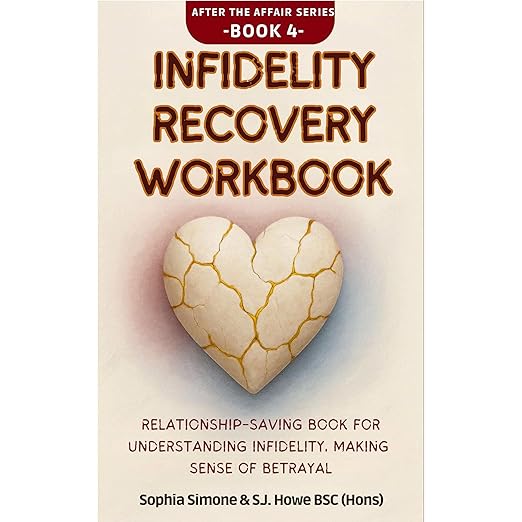
I want to start with an honest structural note: the Infidelity Recovery Workbook is, as the title clearly states, a workbook. It’s organized around exercises, journaling prompts, CBT techniques, and structured reflection practices spread across 90 days of healing work. It’s also the fourth entry in Sophia Simone’s After the Affair series, which means it’s designed to function alongside companion volumes rather than entirely on its own. And it’s narrated by Virtual Voice.
That combination of factors creates a format problem worth being direct about. A workbook in audio form, particularly a therapeutic workbook dealing with betrayal trauma, intrusive thoughts, and the rebuilding of self-worth, depends for its value on active engagement that the listening format doesn’t enable. You can’t write in your feelings about the self-doubt exercises on page 18 while driving. You can’t pause a Virtual Voice narrator to sit with the forgiveness framework in silence the way that kind of processing requires. The 103 reviews and 4.6 rating tell me the content has found a genuine audience, and I think that audience is primarily using the print edition.
The Methodology Underneath the Format Problem
Setting aside the format question, the therapeutic framework Simone has built here is legitimate. She draws on trauma recovery, cognitive behavioral therapy, and mindfulness in ways that are consistent with how therapists actually work with betrayal trauma. The chapter sequence is thoughtful: navigating overwhelm comes before reclaiming self-worth, which comes before transforming anger, which comes before addressing intrusive thoughts. That progression respects the clinical reality of how betrayal trauma presents and resolves.
The section on forgiveness, which appears late in the sequence around page 109 as referenced in the synopsis, takes the careful position that forgiveness is not mandatory and that understanding its nuances is different from forcing its occurrence. That’s the psychologically sound position, and it’s one that less carefully written books in this genre often miss. Simone frames forgiveness not as a requirement for healing but as a dimension of healing that some people reach and some don’t, and she offers tools for both paths.
What the Reviews Actually Describe
The three reviews available here speak to the content quality in terms that are consistent and credible. One reviewer describes it as one of the most thoughtful and supportive tools available for navigating betrayal aftermath. Another specifically praises the balance of empathy and practicality, noting that the exercises on communication and self-compassion are concrete rather than vague. A third reviewer, who describes having read it quickly in print, found it compassionate in its framing and useful in its journaling prompts. None of the reviewers describe a listening experience. They describe a reading experience. That gap is the clearest signal available about how this book actually works.
The Series Context
As book four in the After the Affair series, this workbook is designed to work alongside or following the earlier volumes. Simone notes it can function as a standalone resource, and the structure supports that claim. But listeners who’ve engaged with the series from the beginning will find the therapeutic arc more coherent. If you’re new to this author’s approach to infidelity recovery and considering this as an entry point, it will work, but starting with book one in the series may provide more contextual grounding for the exercises here.
Who Should Listen, Who Should Skip
Skip the audio format for this title and invest in the print or PDF instead. The workbook’s value is in the exercises, and exercises you can’t write in don’t work. If you’re committed to audio-only consumption, this will give you the conceptual framework and the theoretical structure of the recovery process, which isn’t nothing. But if you’re in genuine pain from a recent betrayal and looking for active tools to work through it, Simone’s content deserves to be used the way it was designed: with pen in hand and space to sit with what comes up.
Frequently Asked Questions
Can this workbook be used without reading the earlier books in the After the Affair series?
Yes. Simone explicitly designs it as a standalone resource, and the structure supports that claim. Listeners new to the series will find the therapeutic framework accessible without prior context. That said, beginning with book one provides more grounding for the specific exercises and recovery stages covered here.
Is the Virtual Voice narration particularly problematic for therapeutic workbook content?
Yes, for two reasons. First, workbook exercises are print-native and require active writing rather than passive listening. Second, therapeutic content dealing with betrayal trauma benefits from the warmth and human presence that an AI narrator cannot provide. The mismatch here is as significant as it gets in this category.
Does the book advocate for staying in relationships after infidelity, or does it work for people who have left?
The framework is designed for the individual navigating betrayal, regardless of whether the relationship continues. The exercises on self-worth, intrusive thoughts, and rebuilding narrative apply whether you’re reconciling with a partner or processing the end of a relationship. The forgiveness section specifically acknowledges both paths.
At 1 hour and 46 minutes of audio, is this actually a full workbook or a condensed overview?
The runtime suggests a condensed audio version of print workbook content. A 90-day program with the exercises and prompts described in the synopsis would run considerably longer in a fully narrated format. This is consistent with workbook-to-audio conversions that tend to compress or summarize the interactive elements. The print edition is almost certainly more substantial.