Quick Take
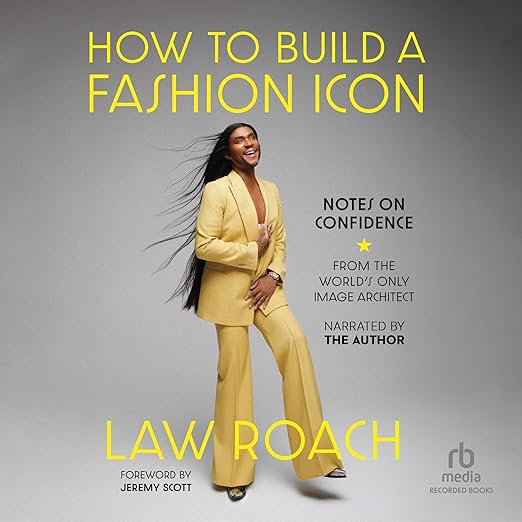
- Narration: Law Roach reads his own book, and that decision is correct, his voice carries the South Side of Chicago origin story and the Zendaya-at-the-Met-Gala confidence with equal authenticity.
- Themes: confidence as the foundation of style, outsider-to-industry trajectory, fashion as self-creation
- Mood: Propulsive and warm, with flashes of genuine emotion
- Verdict: More honest and more interesting than the celebrity-stylist format usually allows, largely because Roach refuses to pretend his journey was easy.
I started this one expecting a coffee-table book read aloud, gorgeous names, memorable outfits, insider access dressed up as advice. What I got instead was something considerably more personal. I was on my second cup of coffee when Roach started talking about his childhood in the South Side of Chicago, and I put the cup down and just listened. The origin story earned everything that came after it.
Law Roach is, by most reckonings, the most celebrated stylist working in contemporary celebrity fashion. The résumé is hard to argue with: Zendaya at the Met Gala, Anya Taylor-Joy at the Golden Globes, Lewis Hamilton’s streetwear transformation, Céline Dion’s entire visual reinvention. Two consecutive Stylist of the Year awards from the Hollywood Reporter and the Council of Fashion Designers of America’s inaugural Stylist Award in 2022. He calls himself an Image Architect, and the title is not empty branding.
From Chicago Vintage Stores to the Front Row
The trajectory from South Side of Chicago to sitting front row at Paris Fashion Week is the emotional spine of this audiobook, and Roach doesn’t tell it with false modesty or calculated humility. He’s clear about where he started, clear about what he had to learn that nobody taught him, and clear about what it cost. The industry-outsider-who-remade-the-industry narrative is familiar in fashion memoir, but Roach earns his version of it through specificity. The details of how he first styled Zendaya, how he understood her instinctively in a way that shaped both their trajectories, land differently in his own voice than they would on a page.
Self-narration is always a gamble, and Roach’s delivery is not the polished control of a trained narrator. But that slight rawness is, in this case, exactly right. When he’s excited, you hear the excitement. When he’s describing something he still finds genuinely beautiful, you hear that too. Céline Dion’s description of his talent, that he knows when it’s time to do something, plays back in your head as you listen to him talk about his process.
The Confidence Argument
The practical exercises threaded through the book center on a single claim: that iconic style is not about clothes, it’s about confidence, and confidence is a skill that can be developed rather than a trait you either have or lack. This is not a new argument in self-help or style writing, but Roach makes it specific to the fashion context in ways that distinguish it from generic confidence literature. The exercises aren’t abstract affirmation prompts, they’re grounded in the physical reality of getting dressed and asking yourself why.
The part-self-help, part-manifesto framing the synopsis promises is real. The book moves between personal narrative and coaching register fluidly, and the transitions work because Roach’s authority comes from lived example rather than credential. When he says wear what makes you feel most like yourself, the preceding chapters have given him the standing to say it.
Where the Book Has Limits
At five hours and fifteen minutes, this is a lean audiobook, and some of what that compactness costs is depth on the styling mechanics themselves. Listeners hoping for the equivalent of a masterclass on how to create a specific kind of visual identity will find less here than they want. Roach gestures toward the process but rarely opens it up fully. The book is more memoir and manifesto than manual, and it’s better for knowing that going in.
The reviews from listeners are uniformly enthusiastic, and one in particular stands out: the note that the book helped someone find their way to their next big opportunity beginning with confidence. That’s the pitch, and based on the consistency of the response, it appears to land.
Who Should Listen, Who Should Skip
This works for anyone who finds fashion interesting as a form of self-expression and wants a framework that starts with the internal rather than the external. It also works for anyone who responds to origin stories told by people who earned the right to tell them. If you’re a longtime Zendaya observer who has wondered how that visual identity was built from the inside, this gives you the answer directly from the architect.
Skip it if you want a practical styling guide with outfit formulas and specific advice on cuts and colors. This book is about the philosophy and psychology of iconic style, not the mechanics. Those wanting the manual version will need to look elsewhere.
Frequently Asked Questions
How much of the audiobook covers Law Roach’s specific celebrity styling work versus general style advice?
Roughly a third focuses on specific celebrity moments and the backstory behind them, Zendaya, Anya Taylor-Joy, and Céline Dion’s reinvention feature prominently. The remaining two-thirds blend personal origin story with the confidence-based framework and practical exercises Roach developed from his career.
Is Law Roach’s self-narration effective for someone who hasn’t followed his career closely?
Yes. The self-narration is accessible even without prior knowledge of his work. The authenticity of his delivery actually helps orient listeners who are unfamiliar with the celebrity context, you understand why the work matters through his voice before you understand it through the résumé.
Does the book address the pressures and darker sides of the fashion industry, or is it primarily aspirational?
Roach doesn’t dwell on the industry’s shadows, but the origin story is honest about what it cost to break in from the outside. The aspirational tone is genuine rather than manufactured, because it’s grounded in a trajectory that started from a real distance.
How does this compare to other celebrity stylist books in terms of practical takeaways?
It’s more personal and philosophical than most celebrity stylist books and less technically specific. If you want practical exercises that connect clothing choices to internal states and self-image, this delivers. If you want specific outfit-building advice or a behind-the-scenes procedural of how styling shoots work, other books will serve you better.