Quick Take
- Narration: Mimi Black delivers the material with a polished warmth that matches the book’s register, confident enough to give the advice credibility, approachable enough to prevent it from sounding preachy.
- Themes: Social etiquette, feminine comportment, navigating interpersonal situations with grace
- Mood: Brisk and charming, like a well-organized afternoon with someone who knows exactly how things should be done
- Verdict: A pleasant two-hour listen that covers its etiquette territory efficiently, best understood as a reminder rather than a revelation.
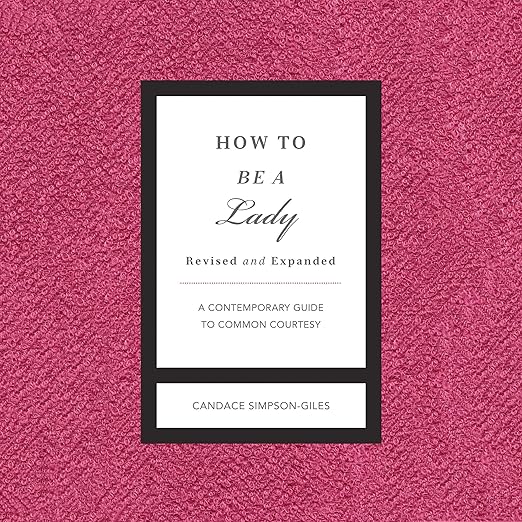
I listened to this one on a weekday morning when I had an hour free between calls. How to Be a Lady is, as its title honestly suggests, a book about social etiquette and comportment, the kind of guide that used to be called a finishing book, though Candace Simpson-Giles approaches the subject with more warmth and less rigidity than that framing might imply. The revised and expanded edition extends the original with updated guidance on digital communication and workplace interactions, which prevents the book from feeling entirely archival.
Mimi Black narrates with a pleasant, assured quality that suits the material. She does not sound like she is reading from a manual; she sounds like someone who has internalized these principles and is sharing them from genuine conviction. That vocal posture is the right one for this kind of content, etiquette guidance delivered with uncertainty or irony tends to undermine itself.
What the Book Actually Covers
The structure is short-entry rather than chapter-based, and the range of topics is genuinely wide. Simpson-Giles addresses conversational conduct, how to gracefully exit an awkward exchange, how to decline an invitation without leaving the inviter feeling rejected, how to handle beauty salon gossip without participating in it. She covers dining etiquette, written correspondence, telephone conduct, and the specific social dynamics of workplace and social gatherings. Each entry is compact, and the cumulative effect is a survey rather than a deep treatment of any single topic.
One reviewer bought this book for a young daughter and then kept it for herself, which captures something true about the book’s dual usefulness. Much of the material is genuinely applicable to adult situations, even if the framing occasionally echoes the kind of guidance books aimed at teenagers in the twentieth century. The section on cocktail party etiquette, for instance, is more practically useful for adults than for adolescents. Simpson-Giles’s voice is not condescending about this, she writes with the assumption that her readers are intelligent women who may simply not have had occasion to think through some of these situations systematically.
Etiquette as Consideration, Not Performance
The most useful reframe in the book is Simpson-Giles’s insistence that being a lady is fundamentally about being mindful of the effect you have on others, not about adherence to a rigid social code. This distinction matters because it shifts the ethical basis of etiquette from rule-following to genuine consideration. The guidance on handling gossip, on navigating social discomfort, and on poise in difficult situations all flows from this central idea, and it makes the older advice feel less dated than it otherwise might.
That said, the book is operating within a fairly specific cultural frame, one that assumes a certain kind of social context, a particular aesthetic of femininity, and a set of social environments that not every listener will inhabit. Simpson-Giles does not explicitly acknowledge the limits of this frame, and listeners from different cultural backgrounds may find some of the guidance more culturally specific than universal.
The Short Format Question
At two hours and ten minutes, this is a very short audiobook, and some listeners have noted that it functions less as a comprehensive guide than as a charming item to have. That is a fair description of what it is. It is not trying to be comprehensive; it is trying to be a reminder and a prompt. The short-entry structure means it works well as listening you can pause, return to, and dip into rather than as a sustained argument you need to follow from beginning to end.
Who Should Listen, Who Should Skip
This is the right listen for anyone who enjoys etiquette and comportment content and wants a light, pleasantly curated version of it. It also works well as something to share with a teenager navigating social situations for the first time, with appropriate parental preview for the sections on adult social occasions.
Skip it if you are looking for a comprehensive, culturally inclusive etiquette reference, or if you want sustained depth rather than a pleasant survey. This is a sampler, and a charming one, but it is not a manual.
Frequently Asked Questions
Is How to Be a Lady revised and expanded significantly different from the original edition?
The revised edition adds updated guidance on digital communication and contemporary workplace conduct. The core content covering dining, conversation, and social etiquette remains similar to the original, but the additions make it more applicable to contemporary situations than the first edition.
Is this appropriate to listen to with an older child or teenager?
With parental preview, yes. One reviewer bought it for a young daughter but found that some sections, including guidance on cocktails at social gatherings, were more appropriate for adults. The bulk of the conversational and social etiquette content is appropriate for teenagers, but a quick listen-through before sharing is advisable.
How does Mimi Black’s narration handle the more prescriptive sections of the book?
With confidence and warmth. She avoids the lecturing quality that etiquette content can sometimes acquire in audio, maintaining a tone of engaged suggestion rather than instruction. The pacing is brisk without feeling rushed.
Does the book address digital etiquette and social media conduct?
The revised edition adds guidance on digital communication, though it is not as extensive as the older sections. The core of the book is interpersonal and social etiquette in face-to-face situations; the digital material is a supplement rather than a central focus.