Quick Take
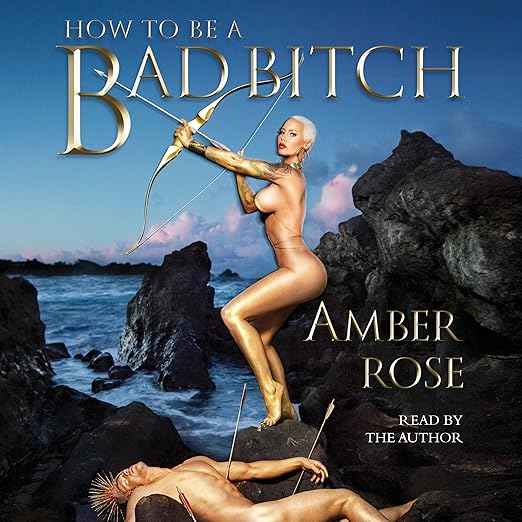
- Narration: Amber Rose narrates her own book and the self-narration is entirely the point, her South Philly cadence, the pauses and warmth underneath the bravado, none of it could be replicated by a professional narrator.
- Themes: self-confidence and financial independence, female sexuality and authenticity, building an identity outside other people’s definitions
- Mood: Brash and warm in equal measure, like advice from someone who genuinely wants you to succeed and does not care what anyone thinks of how she says it
- Verdict: More substantive than the title and packaging suggest, Amber Rose is an unexpectedly precise thinker about self-worth, and her narration makes this feel like a conversation rather than a lecture.
I almost skipped this one three times. The title is designed to provoke, and it works, I kept mentally filing it away as something I could assess later, which is exactly the kind of reflexive dismissal the book is arguing against. It took a recommendation from someone whose taste I trust before I actually sat down with it, and by the forty-minute mark I was taking notes.
Amber Rose is a more careful thinker than her public persona suggests, which is probably the point. She grew up poor in South Philadelphia, built a modeling career out of a distinctive aesthetic at a time when that aesthetic was not the dominant standard, became a public figure through relationships that were never entirely under her control, and then, this is the part the book is actually about, developed a coherent framework for how to build a life on your own terms. Her opening definition sets the agenda precisely: “A self-respecting, strong female who has everything together. This consists of body, mind, finances, and attitude.” That is not a bad organizing principle.
From South Philly to the Framework
The biographical sections are the strongest. Rose is direct about her early years in a way that does not wallow, she describes poverty, limited options, and the specific texture of growing up in a neighborhood where the paths available to you are narrow, without using any of it as an excuse or as proof of exceptional suffering. It is a storyteller’s instinct: here is context, here is what I did with it, here is what you can do with yours.
The career narrative is similarly clear-eyed. She understood early that her appearance was an asset and that assets require management. The chapters on beauty and fashion are not about vanity, they are about professionalism in an industry where appearance is the product, and about the discipline required to maintain that professional tool. Rose makes no apologies for treating her body as something to invest in strategically, and the lack of apology is what makes the advice land.
Where the Practical Guidance Actually Lives
The middle third, covering finances and career, is surprisingly granular. Rose talks about negotiating fees, understanding contracts, building multiple income streams, and the specific financial vulnerabilities that come with fame tied to a relationship rather than independent work. Reviewer Samantha called this “real wisdom about how to hold your own in a world of double standards,” and that characterization is accurate. The advice is not generic empowerment language, it is specific to the situations Rose navigated and extrapolated outward with care.
The love and relationships section will be the most contentious part of the book for some listeners. Rose has views about female sexuality and how to deploy it strategically that will not align with every feminist framework. She is not interested in the framework debates. She is interested in outcomes, and she speaks from her own outcomes rather than from theory. That pragmatism will resonate with some listeners and frustrate others, and knowing which camp you fall into is a reasonable filter for whether this book is for you.
The Self-Narration as Proof of Concept
At four and a half hours, this is a relatively compact audiobook, and the compression serves it well. Rose does not over-explain or pad, and her narration carries the authenticity that reviewers consistently cited as the book’s primary appeal. The reviewer who described it as “great therapy book for every grown adult” was responding, I think, to exactly this: Rose’s refusal to hedge, her comfort with her own experiences as evidence, and the genuine warmth underneath the attitude. Published in 2015, some specific cultural references are dated, but the core argument, that self-respect is something you build actively, that financial independence is non-negotiable, that other people’s definitions of you are not binding, remains as functional as it was a decade ago.
Who Should Listen and Who Should Skip
Listen if: you are interested in a self-help framework built from lived experience rather than theoretical scaffolding; you appreciate directness and do not need your advisors to hold credentials that match the institutional definition of expertise; you are curious what a genuinely self-made career looks like when the person building it is honest about the mechanics. Skip if: the title’s register is a deal-breaker for you regardless of content; you are looking for a book that engages with feminist theory rather than operating independently of it; you need advice that ages better than 2015-specific pop culture references.
Frequently Asked Questions
Is this book specifically about beauty and fashion, or does it cover other areas of life?
Fashion and beauty are one section among several. The book covers finances, career building, romantic relationships, self-confidence, and personal branding. Rose is explicit that ‘bad bitch’ refers to having your body, mind, finances, and attitude in order, it is a holistic framework, not a style guide.
Does the self-narration add substantially to the listening experience?
Yes. Multiple reviewers noted that Rose’s candor and warmth come through specifically in the audio version. Her South Philly delivery, the pauses and emphases she places in her own sentences, and the moments of genuine reflection are things that belong to the audio format in a way they would not survive on the page.
Is the content still relevant, given the book was published in 2015?
The core arguments about financial independence, self-worth, and building a career on your own terms are not time-sensitive. Some pop culture references and platform-specific advice date the book, but these are incidental to the central message rather than structural to it.
Does Rose discuss her high-profile relationships, and if so, how?
Yes, but with more discretion than tabloid coverage of those relationships might suggest. She uses her personal experiences as evidence for broader points about financial vulnerability, identity, and the importance of independent income. She is candid without being sensationalist.