Before You Press Play
- Read by: Patrick Williams' delivery is warm and personal, matching the confessional tone of the material, though the density of content occasionally outpaces the audio format's natural pacing.
- At its heart: Emotional vulnerability as practice, authentic self-disclosure, releasing self-protective patterns
- Vibe: Introspective and encouraging, occasionally overwhelming in its breadth
- Short version: A comprehensive emotional vulnerability framework that rewards listeners who engage with the exercises, but risks feeling like a firehose for those who prefer a single guiding idea.
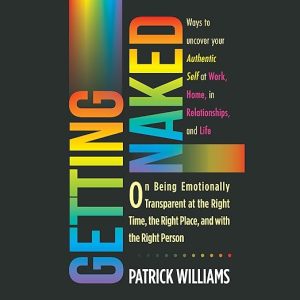
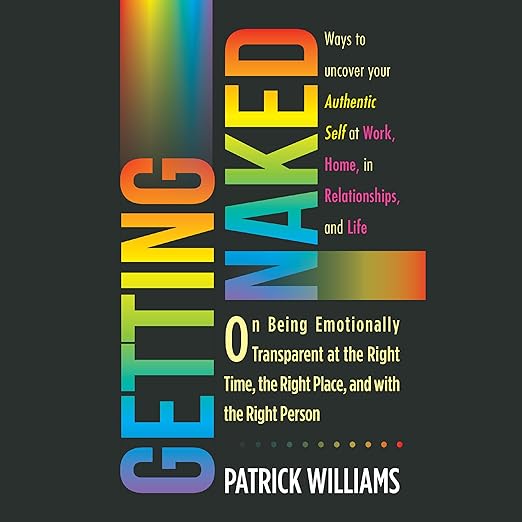
I picked up Getting Naked on the recommendation of someone who said it had changed how they thought about emotional self-disclosure. That's a specific kind of claim, and I've learned to be moderately skeptical of it in the self-help space. What I found was something more interesting than the title suggests and more complex than the promotional copy prepares you for: a genuinely thoughtful exploration of vulnerability as a learnable practice, written by someone who has clearly thought hard about the subject and perhaps tried to say too much about it in one sitting.
The book, authored by Patrick Williams, not to be confused with Patrick Lencioni's business fable of the same title, uses the metaphor of nakedness as emotional transparency throughout. It's a metaphor that works better than it has any right to, partly because Williams is careful about it: he specifies, repeatedly and usefully, that emotional vulnerability is not the same as indiscriminate disclosure. The key phrase from the synopsis, "the right place and the right time with the right people," is not a disclaimer but a genuine structural argument. Williams is making a case for discernment, not exposure.
The framework Williams builds draws on a range of sources: his own experience, personal stories from clients and subjects, and a notable thread of children's literature references that several reviewers flagged with something like affection. The Velveteen Rabbit appears as a genuine example of what becoming real costs, not as a cute rhetorical flourish. The children's literature habit gives the book a particular texture, it's using stories we encountered when we had less armor to make arguments about the armor we've built since.
The shadow self material, rooted in Jungian adjacent territory, asks listeners to acknowledge the parts of themselves they've hidden from public identity. Williams is careful here too: the goal isn't to perform vulnerability but to integrate what's been compartmentalized. One reviewer described this as what he'd take from the chapter on self-disclosure, though they also flagged that the sheer volume of material can make prioritization feel impossible.
What Makes Getting Naked Worth Hearing
Patrick Williams reading his own work creates an intimacy that suits the material. The confessional elements, his personal experiences with hiding, with the cost of self-protective patterns, land with more weight when you're hearing them in the author's voice. This is the kind of self-help audiobook where author narration matters, because the argument depends partly on the writer's willingness to model the vulnerability he's asking for.
The exercises embedded throughout the text are another asset in audio form. Unlike some self-help books where exercises feel like afterthoughts, Williams integrates them into the narrative in a way that's hard to skip past entirely, which is the point. The "pointed questions and exercises" one reviewer praised are designed to interrupt the reading experience in a productive way.
Things to Know Before Starting Getting Naked
One reviewer used the phrase "sipping from a firehose" and it's the most accurate description of the book's primary limitation. Williams has clearly been thinking about emotional vulnerability for a long time, and he has a great deal to say about it. What the book lacks is a single organizing question or through-line that a listener can hold onto as an anchor. The chapters cover emotional vulnerability in career, relationships, parenting, health, and various other domains, and the sheer breadth means the book is more encyclopedic than it is personally applicable at any one moment.
For audiobook listeners specifically, this diffusion of focus is more pronounced. On the page, you can navigate to the section most relevant to your current situation. In audio, you're carried through the full span, which can feel like you're accumulating more than you can absorb. Williams is generous with his material, and that generosity is also the book's challenge.
Who Patrick Lencioni Is Writing For
This is well-suited to listeners who are encountering vulnerability as a framework for the first time and want comprehensive grounding. Williams covers the subject with genuine depth and doesn't shy away from its complexity. For readers who have already worked through Brene Brown or similar vulnerability literature, some of the foundational material will feel familiar, but Williams' specific clinical and personal framing offers its own perspective.
The book is less effective as a narrow-focus action guide and more effective as an orienting text. If you're looking for a single thing to change, you may need to do the work of extracting it from the larger framework. If you want to understand emotional vulnerability as a coherent practice with multiple dimensions, Williams gives you that picture in full.
Good to Know
Is this the Patrick Lencioni Getting Naked about business consulting vulnerability, or a different book?
This is a different book entirely. The author here is Dr. Patrick Williams, and the focus is personal emotional vulnerability and authentic self-disclosure across all life domains, career, relationships, parenting, health. Lencioni's Getting Naked is a business fable about client service. They share only the title.
The synopsis mentions exercises and tools, are these usable in audiobook format, or do they require a print copy?
Williams integrates the exercises into the text rather than isolating them as appendices, which makes them reasonably followable in audio. However, the more involved self-reflection exercises benefit from having something to write on. Consider having a notebook nearby if you listen.
For someone who has already read Brene Brown's work on vulnerability, does Getting Naked offer substantially different material?
Williams comes from a clinical coaching background rather than a research sociology background, so the framing and source material are genuinely different even when the core subject overlaps. The shadow self material and the emphasis on discernment over disclosure are areas where Williams extends beyond Brown's primary arguments.