Quick Take
- Narration: Virtual Voice delivers this narrative-nonfiction hybrid with notable flatness, the fictional character of Ananya deserves a human storyteller, and the meditative passages lose their texture entirely.
- Themes: Prenatal parenting, ancient Indian wisdom traditions, consciousness and the developing fetus
- Mood: Aspirational and spiritual, though the Virtual Voice flattens the intended warmth
- Verdict: The framework is compelling and the narrative device is well-chosen, but the Virtual Voice narration undercuts both the story and the spiritual resonance this subject demands.
I came to Garbh Sanskar knowing almost nothing about the practice. A colleague had mentioned it in passing, the Indian tradition of conscious prenatal parenting, the idea that the environment a mother creates during pregnancy shapes the child she carries. That premise alone made me curious enough to spend nearly six hours with it, which is not nothing for a book in a subject area I had never explored.
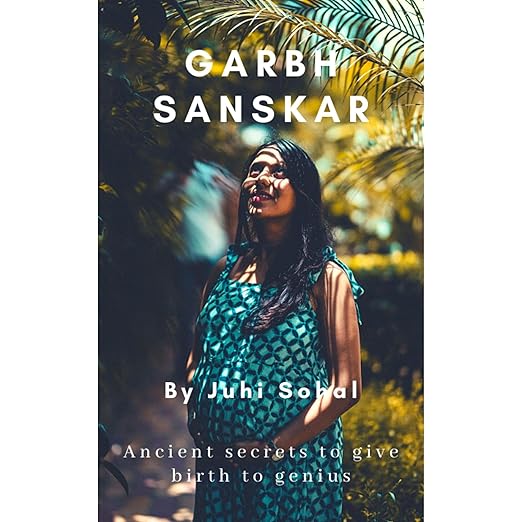
Juhi Sohal’s approach to the material is genuinely distinctive. Rather than writing a conventional guide or a clinical text, she structures the book around a fictional character named Ananya, described as one of the finest corporate lawyers in India, who discovers her pregnancy and becomes determined to understand everything about Garbh Sanskar. This narrative device is smart: it gives Sohal a way to introduce concepts through a character’s discovery rather than through instruction, and it makes the information feel lived-in rather than abstract. Ananya’s journey through pregnancy becomes a vehicle for explaining the practice to readers who, like her, may be encountering it for the first time.
Ancient Practice, Contemporary Frame
The core claim of Garbh Sanskar, that the developing baby receives and responds to the mother’s emotional, mental, and spiritual environment, sits at an interesting intersection of ancient Vedic tradition and contemporary neuroscience. Sohal is not the first to note that modern prenatal research on fetal learning and maternal stress hormones has begun to validate aspects of what this tradition claimed centuries earlier. She draws the connection without overreaching: the book does not pretend that ancient wisdom and clinical science are identical, but it takes both seriously, which is a more nuanced position than many wellness books manage.
The specific practices Sohal recommends, music, meditation, positive affirmations, dietary awareness, emotional regulation, are presented as rituals with both spiritual and physiological rationale. She is careful to acknowledge that these are complements to medical prenatal care rather than replacements for it, which is an important framing given how quickly integrative health content can slide into territory that discourages appropriate medical engagement.
The Story of Ananya and Where It Works
The fictional framing is this book’s greatest strength and, when it works, its most effective vehicle for making ancient practices accessible to contemporary readers who might otherwise find a purely instructional text dry. Ananya’s arc through the nine-month journey allows Sohal to pace the information naturally, introducing each practice at the stage of pregnancy where it becomes relevant rather than front-loading everything into a conventional chapter structure.
Where the device becomes strained is in the later sections, where the fictional narrative occasionally feels like it is being used to pad transitions between content blocks rather than to genuinely advance either the story or the instruction. A critical reviewer noted that the whole book could have been condensed significantly, and while I think that underestimates the value of the narrative framework, there is a real point buried in the critique: the pacing is uneven in places, and some passages repeat ideas that have already been established.
The Virtual Voice Problem
This is a book that should not be narrated by Virtual Voice. The reasons are structural: Garbh Sanskar involves meditative passages, prayer-adjacent content, and a fictional character whose inner life is meant to create an emotional resonance. All three of those elements require a human voice to function. The meditative passages in particular feel hollow when delivered by a synthetic narrator, the practice of Garbh Sanskar is inherently about presence, about the quality of consciousness a mother brings to her pregnancy, and the audiobook is supposed to embody some portion of that quality. Virtual Voice cannot do that. It produces a document, not an experience.
With 283 ratings averaging 4.4, the book has found a substantial audience, and the enthusiastic reviews suggest that listeners who encountered it in print or ebook form found it genuinely meaningful. The audio version, unfortunately, does not serve the material as well as it deserves.
Who Should Listen and Who Should Skip
Pregnant listeners with interest in Ayurvedic or Vedic traditions, or in the intersection of ancient practice and contemporary prenatal science, will find the content rewarding regardless of the format limitation. Listeners for whom the spiritual and meditative dimensions of the practice are central to the appeal should strongly consider the print or ebook version instead. Those entirely new to Garbh Sanskar will get a thorough introduction here. Critical thinkers expecting peer-reviewed citations should note that the framework is tradition-informed and philosophically grounded rather than clinical in its evidentiary approach.
Frequently Asked Questions
Is Garbh Sanskar relevant for non-Hindu readers, or is it primarily addressed to a specific religious community?
The book frames Garbh Sanskar as a set of practical principles, conscious presence, positive emotional environment, mindful nutrition, that Sohal presents as accessible regardless of religious background. The Vedic origins are acknowledged, but the practices themselves are not presented as requiring any specific faith tradition.
Who is the character Ananya, and how much of the book is fiction versus instruction?
Ananya is a fictional corporate lawyer whose pregnancy journey frames the entire book. The fictional narrative and the instructional content are interleaved throughout, Ananya’s discoveries become the vehicle through which Sohal introduces each aspect of the practice. It is closer to narrative nonfiction than to a novel, but the fictional frame is present from start to finish.
Does the book address fathers and partners, or is it focused exclusively on the mother’s role?
The primary focus is on the mother’s experience and practice, consistent with the tradition’s emphasis on the mother as the primary environmental influence on the developing fetus. Partners are addressed in some sections, particularly around the importance of a peaceful home environment, but this is not a co-parenting guide.
With a 4.4 rating across 283 reviews, what do negative reviewers typically criticize?
The most pointed critical review suggested the content could have been condensed significantly. Listeners expecting a tightly structured practical manual may find the narrative pacing slow. The book is not aiming for efficiency, it is aiming for immersion in a process, but that distinction is worth knowing before you begin.