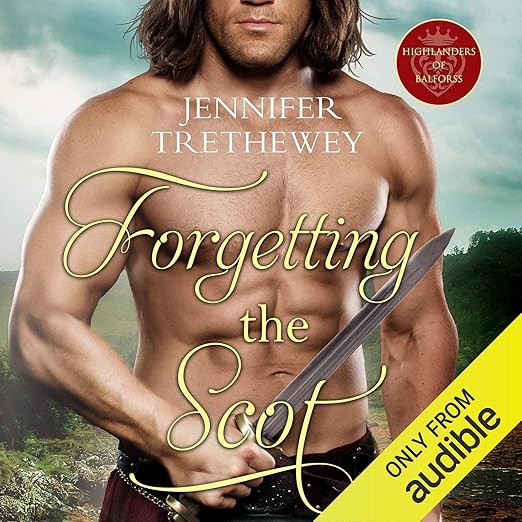
Quick Take
- Narration: Ruth Urquhart is well cast for this setting – her performance carries both the warmth of the Highlanders and the sharper register required for the London society scenes.
- Themes: Escaping an abusive marriage, outsider navigating hostile territory, love that crosses social barriers
- Mood: Warmly romantic with genuine stakes, touched with humor and the specific charm of Scottish-English culture clash
- Verdict: The third book in the Highlanders of Balforss series delivers everything the first two established – warmth, humor, heart, and a hero worth spending eleven hours with.
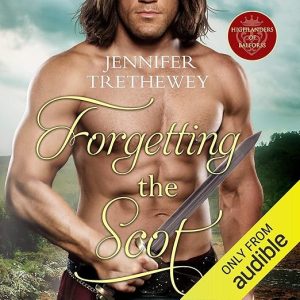
I came to Forgetting the Scot midway through a run of historical romances that were competent and forgettable, and I needed to remember what the genre could actually feel like when the characters were alive. Magnus Sinclair turned out to be exactly the correction I needed. He is enormous, uncivilized by London’s standards, armed with his clan’s particular blend of loyalty and stubbornness, and completely certain that he will not survive this trip to England. The combination is irresistible.
Jennifer Trethewey’s Highlanders of Balforss series follows a group of Sinclair cousins through their own romances, each book technically standalone though the family connections enrich the experience for listeners who begin at book one. Forgetting the Scot is the third entry, pairing Magnus with Virginia Whitebridge, a woman escaping circumstances that are considerably darker than the series’ general warmth might suggest. Virginia is recovering from an abusive marriage, her inheritance stolen and her life threatened by the husband the law considers entirely in the right. She finds safety in the Scottish Highlands and something else in Magnus – before the necessity of reclaiming her fortune forces them both south into a society that has no idea what to do with him.
Our Take on Forgetting the Scot
Trethewey earns the stakes by making the threat real. Virginia’s husband is not a melodrama villain so much as a creature of the actual legal structure of the early nineteenth century, which gave husbands near-total authority over their wives’ persons and property. That historical accuracy gives the danger a texture that purely fictional villainy cannot replicate. The sequence in London, where Magnus must navigate a social code as foreign to him as another language while simultaneously trying to keep Virginia alive, generates both genuine tension and genuine comedy – which is harder to balance than it sounds.
Reviewer Laurel called Virginia “a woman who goes through hell and back but has an inner strength that shines through,” and the detail she adds – Virginia stumbling around without her spectacles, colliding with furniture, maintaining dignity through sheer determination – is the kind of character specificity that makes a romance protagonist feel like a person rather than a type. Reviewer saradee’s appreciation for “a heroine who wears glasses, is bookish and unafraid to follow her dreams” points to the same quality: Trethewey gives her women interiority and purpose beyond the romance plot.
Why Listen to Forgetting the Scot
Ruth Urquhart’s narration is one of the consistent pleasures of this series. Her Scottish voices are warm and recognizable without tipping into parody, and the London society scenes give her the opportunity to contrast Magnus’s directness against the elaborate indirection of Regency social performance. The humor in Trethewey’s writing – the Scottish slang, Magnus’s private bewilderment at English customs, the cousins’ cheerful chaos – depends on timing, and Urquhart has it.
At eleven hours and fifteen minutes, this is a substantial historical romance, and the runtime is earned. Trethewey takes her time establishing the Balforss world and the Sinclair family dynamics in ways that pay off when the London sequences require both Magnus and the reader to understand what he is leaving behind by following Virginia south.
What to Watch For in Forgetting the Scot
Listeners new to the series will benefit from starting with Tying the Scot to understand the family dynamics, though the book functions as a standalone. Several reviewers specifically named this as their favorite entry in the series, which suggests it has enough independent strength to reward a first-time encounter. The darker backstory – Virginia’s abuse and the genuine danger posed by her husband – is handled with appropriate seriousness, but this is fundamentally a warm and hopeful novel. The darkness exists to make the safety and love that follow mean something, which is exactly the correct use of those elements in historical romance.
One note on Virginia’s dream of establishing a home for orphaned or homeless children: it is a meaningful plot element, not a passing detail. Her commitment to that project is what creates the most interesting tension in the final act – the question of whether love is compatible with purpose, or whether she has to choose. Trethewey’s answer is satisfying.
Who Should Listen to Forgetting the Scot
Historical romance listeners who want a Scottish Highlands setting with genuine emotional depth, a hero whose outsider status is a genuine characterization rather than a superficial appeal, and a heroine with a life beyond the romance plot will find this series one of the better options in the genre. Listeners beginning the Highlanders of Balforss series at book three will not be lost, but starting from the beginning adds significant enjoyment. Readers looking for explicit content will find this series on the warmer but more restrained end of the historical romance spectrum – there are passionate scenes, but the emphasis is on character and plot. Fans of Tanya Anne Crosby’s Scottish romances or the early Julia Quinn Regency novels will find a very comfortable home here.
Frequently Asked Questions
Can Forgetting the Scot be read as a standalone, or should I start the Highlanders of Balforss series from the beginning?
Trethewey designed each book to stand alone, and Forgetting the Scot is self-contained. However, the Sinclair cousins from the first two books appear as supporting characters, and their established relationships add emotional texture that new readers will miss. Starting from Tying the Scot will significantly enhance the experience.
How dark is the backstory involving Virginia’s abusive marriage?
It is presented directly and taken seriously, but not graphically detailed. The abuse is primarily financial and physical threat rather than depicted violence; Trethewey treats it with the weight the subject deserves without making the novel itself dark in tone. The emotional aftermath shapes Virginia’s character throughout, and her recovery is handled with care.
Does Ruth Urquhart narrate all three books in the Highlanders of Balforss series?
Yes, Ruth Urquhart narrates the series consistently, which contributes to the listening experience feeling like a sustained world. Her vocal familiarity with the Sinclair family’s voices and the Scottish register is noticeable and appreciated by series listeners.
Is this series appropriate for readers who prefer less explicit historical romance?
Yes. The Highlanders of Balforss series sits in the more restrained end of historical romance – there is romantic and physical tension and some passionate scenes, but the explicit content is moderate. The series emphasis is on character, humor, and emotional stakes rather than explicit sequences.