- Narration: Kristi Leonard brings direct, encouraging conviction to Allolding's coaching-style delivery, exactly what this material needs.
- Themes: imposter syndrome, gender bias in leadership, confidence-building strategy
- Mood: Direct, motivating, no-nonsense
- Verdict: A tight, practical listen for women early-to-mid career, though it trades depth for brevity at just four hours.
Nine strategies anchor this concise audiobook, and Marguerite Allolding wastes no time getting to them: Fearless Female Leadership skips the usual parade of case studies about famous leaders and gets straight into imposter syndrome, self-doubt, and the specific tightrope women walk in leadership roles. At 4 hours and 7 minutes, this is a direct, action-oriented listen built for women who already know what's holding them back and want tools, not inspiration for its own sake.
Reader JEM's Account From a Male-Dominated Division
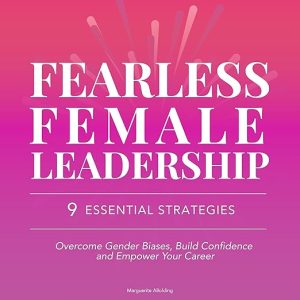
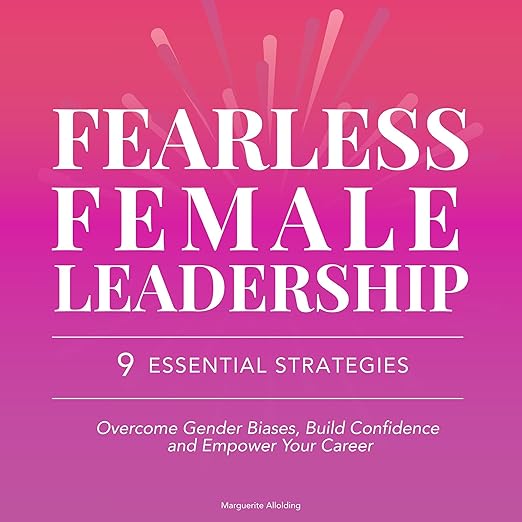
The full subtitle, revealed through listener reviews rather than the main title alone, is '9 Essential Strategies to Overcome Gender Biases, Build Confidence and Empower Your Career,' and that framing matches the book's actual approach closely. Allolding moves through authenticity, confidence-building, and specific strategies for navigating gender bias without padding the material with lengthy histories of other leaders first; per the synopsis itself, 'it does not bog you down with stories and histories of other leaders.'
Reader JEM grounded the book's relevance in specific lived experience, describing being 'the only woman sales rep' in a 'male dominated division' early in her career, and dealing with being 'yelled at, belittled' by colleagues. That kind of concrete, specific workplace scenario is exactly the audience Allolding is writing for, women who recognize this dynamic immediately rather than needing it explained in the abstract.
Imposter Syndrome Treated as a Systemic Pattern
The synopsis names the specific barriers the book targets directly: a nagging feeling of self-doubt, a lack of confidence that keeps women from sharing ideas or taking risks, and the exhaustion of feeling overwhelmed, overworked, and burned out. Naming these plainly, rather than talking around them in vaguer leadership-book language, sets a direct, practical tone that carries through the rest of the book.
Allolding frames leadership explicitly as both a challenge and an opportunity, a balancing act between personal growth and responsibility for the people you lead, and that dual framing, inward development alongside outward responsibility, structures how the nine strategies build on each other across the book rather than functioning as a disconnected list of tips.
Imposter syndrome gets treated here as a systemic pattern many women encounter rather than an individual failing to overcome through willpower alone, which is a meaningfully different, and more useful, framing than some older leadership advice offers; Allolding's strategies aim at the pattern itself rather than just coaching individual confidence in isolation. The book's brevity is itself an argument about respecting a busy leader's actual time constraints, practicing exactly the efficiency it preaches rather than asking for a much larger reading commitment before delivering value. That efficiency won't suit every reader, but it's a coherent choice rather than an accident of scope.
Leonard's Narration Keeps That Coaching Immediacy Intact
Kristi Leonard brings direct, encouraging conviction to material written largely in second-person coaching language, which is exactly what this format needs. A flat or overly formal delivery would undercut a book built to sound like direct, one-on-one career advice, and Leonard's narration keeps that immediacy intact across the short runtime.
Reader Eric called it 'an inspiring and empowering guide for women (and female allies) aspiring to make their mark in leadership,' crediting Allolding's perspectives as 'backed by real-world and relatable examples' that 'provide a roadmap for navigating challenges.' That explicit inclusion of male allies as part of the intended audience is worth noting; this isn't framed as a women-only conversation.
Refusing to Be All Things to All Listeners
At 4.4 stars from 160 ratings, this sits solidly within the range of well-received, if not blockbuster, business and career titles, a reasonable signal for a shorter, more tightly scoped book competing against much longer, more exhaustively researched leadership titles in the same category.
The book's insistence on action over inspiration is worth taking at face value; per its own synopsis, it honors and embraces the idea that leadership is fundamentally about doing rather than feeling ready first, which gives listeners specific tools to apply immediately rather than motivational language to sit with before eventually taking action.
For a book this short, the density of concrete strategy per minute is genuinely high; Leonard's brisk, focused pacing matches that density well, moving through material efficiently without making the four hours feel rushed or the strategies feel underexplained given the format's real time constraints.
Positioned against the broader shelf of general leadership audiobooks, this one distinguishes itself by refusing to be all things to all listeners; narrowing specifically to women's leadership challenges, rather than offering generic advice with a few gender-specific asides, is what gives the book its practical edge.
The Book's Scope Stops Short of Intersectional Analysis
Four hours and seven minutes is genuinely short for a leadership development book, and that's a deliberate choice rather than an oversight; per the synopsis, the book prioritizes 'action' over 'stories and histories.' Calibrate your expectations accordingly: this is a tactical primer built for quick, repeatable application, not an exhaustive academic deep dive.
This audiobook edition includes a downloadable PDF, and given how action-oriented the content is, it's worth grabbing alongside the audio rather than skipping; a book this focused on specific strategies benefits from something to reference back to later, beyond what you can hold in memory after one listen.
Because the book explicitly avoids case studies and historical leader profiles by design, don't expect the kind of extended real-world business narratives that longer leadership books often build chapters around; the tradeoff for that brevity is less illustrative storytelling and more direct, compressed instruction throughout.
Listeners looking for material specifically addressing intersectional dynamics, how gender bias compounds with race, disability, or other factors, should know this book's scope stays focused on gender specifically rather than broadening into a fuller intersectional analysis; it's a real, if narrower, scope worth knowing before you start.
A Same-Day Listen Before a Promotion Push
Recommended for women early-to-mid career who are dealing with specific confidence or imposter-syndrome barriers, especially in male-dominated environments similar to what reviewer JEM describes. It's also a reasonable listen for male colleagues and allies genuinely interested in understanding those dynamics better, per Eric's framing of the intended audience.
It's also worth a listen for anyone specifically preparing for a promotion or a new leadership role and wanting a quick, focused refresher rather than a lengthy new deep dive; the short runtime makes this realistic to finish in a single day if you want fast, actionable input before a specific moment. Women returning to the workforce after a career break, or moving into a leadership role for the first time in a new industry, may find the confidence-specific material especially relevant to that particular transition.
Skip it if you've already worked through several leadership books and are looking for deep case studies, extensive research citations, or long-form analysis rather than direct, action-oriented coaching. Also skip it if four hours feels too brief for the scope of career advice you're hoping to get in one sitting.