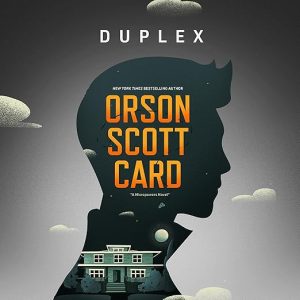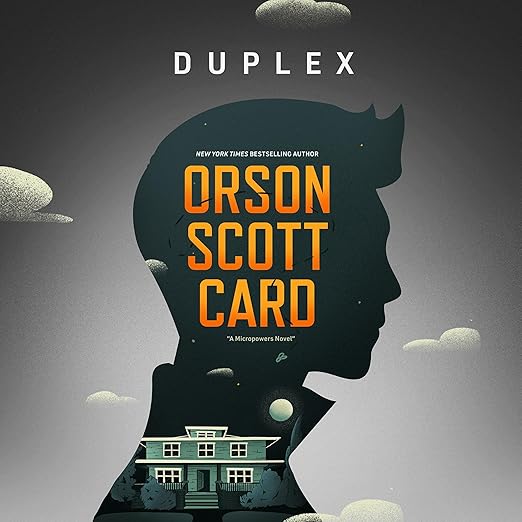
I came to Duplex expecting the second book in Orson Scott Card's Micropowers series to be either a lazy cash-in on the first or a deliberate pivot into territory he had not explored before. It turned out to be genuinely the latter. This is a YA novel that wears its YA identity without apology, which means readers looking for the dense geopolitical chess of Card's more celebrated work should adjust their expectations before the first chapter ends. I finished it on a Saturday afternoon while the rain did what rain does in late October, and I found myself pleasantly absorbed in a story that is far more interested in community and belonging than in spectacle. Card has been writing across genres for decades, and Duplex demonstrates that he can operate with equal conviction in a register that is lighter, more domestic, and more deliberately optimistic than his most famous work.
The setup is specific and a little odd in the best way. Ryan wakes up one morning to find his father converting their family home into a duplex. The family that moves into the newly divided other half includes Bizzy Horvat, a girl from school Ryan has a quiet crush on. Bizzy's mother, it emerges, is what you might call a witch, and Bizzy herself has been granted astonishing beauty through her mother's power. When Ryan instinctively acts to protect Bizzy from a bee sting and attracts the attention of a group called micropotents, people with small but real abilities, the story opens into something considerably more complicated than a neighborhood romance. Witch hunters have followed the Horvats from their native country, and the micropotent community must decide how to organize around protecting them. The shift from suburban domestic comedy to actual physical danger is managed with more care than it initially appears.
Where This One Lands
The concept of micropowers is doing a lot of thematic work in this novel, more than it initially appears. These are not superheroes. They are people with abilities that are small, strange, and sometimes difficult to explain even to themselves. Ryan's power involves extraordinary physical reaction speed in moments of genuine urgency. Others in the group have similarly limited but consequential gifts. Card is interested in what people do with minor differences, how a community of slightly unusual individuals forms, argues, protects its members, and decides what it owes to one another. One reviewer appreciated that the group needed to act together, and that collective dynamic is where the book earns its most interesting moments. This is not a story about one extraordinary hero solving everything. Ryan matters because of what he does in relation to others, not despite them. The social architecture of the micropotent community is sketched efficiently and with the kind of internal consistency that makes Card's world-building satisfying even at this lighter scale.
Why Duplex Works as an Audiobook
A reviewer compared this unfavorably to the writing style of Ender's Game, and I understand what they mean while disagreeing with the implied criticism. Card is writing for a different audience with a different goal here. The prose is deliberately accessible, the pacing brisk, the emotional registers close to the surface. The romantic tension between Ryan and Bizzy is handled with a kind of earnest sweetness that never tips into saccharine, largely because Card keeps inserting moments of genuine awkwardness. His dialogue is witty, humorous at times, and an honest picture of each character's inner self, as one reader described it, and I would agree. The humor lands lightly. Where the book stumbles is in the middle section, which one critic called slow before the plot ratchets up. The pacing does sag slightly before the threat from the witch hunters crystallizes, and some listeners will feel the tension is too long in building before the story commits to its more dramatic second half. That said, the setup work in the first half pays off in ways that a faster-paced version would not.
What Gives Us Pause
Stefan Rudnicki is one of the most reliable narrators in genre audiobooks, and his work here is no exception. His voice carries a natural authority that keeps the story grounded even during its more outlandish moments. He handles the younger characters with genuine empathy rather than condescension, which matters enormously in a YA novel where the narrative perspective is an adolescent boy navigating feelings he does not entirely understand. Rudnicki's pacing is deliberate without being slow, and the nearly ten-hour runtime passes more comfortably than you might expect. He is particularly effective during the action sequences, where his composed delivery prevents the chaos from feeling cartoonish or rushed. One reviewer compared the book and its Micropowers predecessor to stories about young adults growing into adulthood, with adults who guide them in that journey. That description captures something true about Card's intentions here, and Rudnicki's voice, mature but warm, fits that authorial disposition perfectly. The free audiobook availability via Audible makes this an easy experiment even if you are uncertain about whether Card's YA register is for you.
Should You Listen to Duplex?
Readers who enjoyed the first Micropowers book, Lost and Found, will find this a natural and satisfying continuation. Listeners coming to Card for the first time and expecting Ender's Game-level complexity should start elsewhere and return to Duplex when they want something lighter but still crafted. The one reviewer who found the book predictable and cheesy in the third act is not entirely wrong about certain plot beats, but those beats feel deliberate rather than lazy. Card believes in earned resolutions and in community as the mechanism of resolution rather than individual heroism, and in the current genre landscape, that is actually a distinctive choice worth appreciating. The free audiobook availability makes it easy to test your tolerance for the YA register before committing to the full listening time.
In Brief
- Voice: Stefan Rudnicki brings his signature warmth and measured authority to Orson Scott Card's YA material, lending the story more weight than its lighter premise might otherwise carry.
- Big ideas: Coming-of-age, micropowers and belonging, community over individual heroism
- Atmosphere: Warmly adventurous with a gentle romantic undercurrent
- Worth it?: A charming YA entry in Card's Micropowers world that offers something different from his science fiction: a story about ordinary-ish people finding their place together.
Do I need to read Lost and Found before listening to Duplex?
Duplex is book two in the Micropowers series, and while it introduces its own cast and premise with enough context for new readers, familiarity with the micropowers concept from the first book adds dimension. Most readers report it works reasonably well as a standalone entry, but starting from book one gives the characters more weight.
Is Duplex appropriate for younger YA readers, or is it pitched at older teens?
The content is suitable for a broad YA audience. There is action and some threat, but no graphic violence or explicit content. The romantic thread is sweet and age-appropriate, and Card's accessible prose style makes it readable for middle-grade readers on the older end as well.
Is Duplex available as a free audiobook on Audible?
Yes, Duplex is available as a free audiobook on Audible. The nearly ten-hour runtime, combined with Stefan Rudnicki's skilled narration, makes it a generous free listen for fans of YA fiction and Card's broader work.