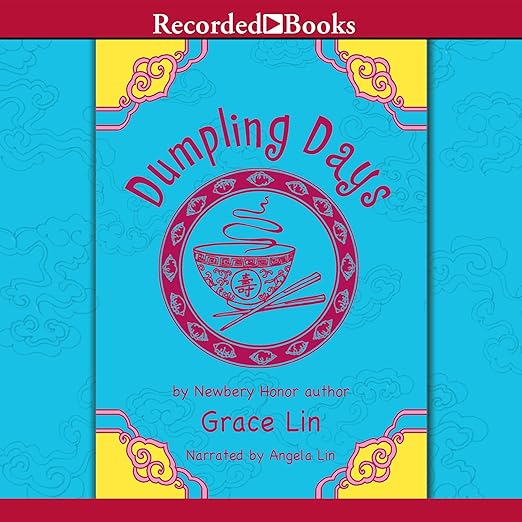
Pacy's family touches down in Taiwan for a month-long trip that overwhelms her almost immediately, from a language she can barely speak to an art teacher whose instructions she can't quite follow, and this audiobook spends its opening chapters letting that culture shock feel genuinely disorienting rather than softening it for a young audience. This is Pacy's first visit to the country her parents grew up in, and Grace Lin, drawing on her own Geisel Honor and Newbery Honor pedigree, doesn't rush past the awkwardness of not fitting in even somewhere that's supposed to feel like home. Norm Cash's review specifically names the sisters making this trip together, Lissy, Pacy, and Ki-Ki, and captures one of the book's funniest culture-shock details, the girls accidentally eating fried chicken feet without quite realizing what they'd ordered off the menu. The book holds a strong 4.7 rating across 340 ratings, and that consensus tracks with Lin's broader reputation, her body of work has already earned both a Geisel Honor and a Newbery Honor, credentials that signal genuine craft rather than just a pleasant premise.
Lin Gives Each Family Member Its Own Rhythm
Angela Lin narrates, and this is the third book in the Pacy Lin series she's carried from the start, which shows in how naturally she handles the family's rhythms and inside jokes without needing to over-explain them for new listeners. Her performance keeps Pacy's voice warm and age-appropriate without slipping into a generic child-narrator register, and she navigates the Mandarin vocabulary woven through the text cleanly, an important detail given how much of this specific story hinges on Pacy's discomfort with a language she feels she should already understand. Heidi Grange's review calls Lin one of her favorite authors and specifically praises how beautifully she introduces Taiwan to readers who've never been there themselves, and that sense of place comes through just as clearly in audio as it would on the page, arguably more so given how much of the humor in Norm Cash's review depends on hearing the family's actual conversational back-and-forth rather than reading it silently off a page. With three sisters, Lissy, Pacy, and Ki-Ki, plus parents and extended family all speaking across the same scenes, narrating requires real vocal differentiation to keep young listeners oriented, and Angela Lin's consistency across three volumes now means she's had time to settle each family member into a distinct, recognizable rhythm rather than reinventing their voices book to book.
An Identity She's Supposed to Already Have
What makes this a stronger listen than a typical fish-out-of-water story is that Pacy isn't a foreign visitor in any obvious sense, given that she is ethnically Taiwanese American visiting her parents' home country for the first time, which means the alienation she feels is specifically about not living up to an identity she's supposed to already have rather than encountering something entirely foreign to her. That's a more complicated, and more honest, kind of culture shock than most middle-grade travel stories attempt to capture. Pamela's review, from an adult reader rather than the book's target age group, calls it easy to read, accessible, and full of humorous situations balanced against some real narrative tension, and specifically credits the book with bringing back her own childhood memories of family visits abroad. That crossover appeal, a book written for young readers that genuinely lands with adult listeners too, says something about how well Lin balances specific cultural detail against universal family dynamics that don't need a Taiwan connection of their own to resonate deeply. Pacy's struggle to follow her art teacher's instructions carries extra weight given how central drawing and art-making are to her identity throughout the series, failing to understand a lesson in a language class is frustrating, but failing at the one thing she's always been confident about cuts considerably deeper.
Getting Both Classes and Observances Wrong
This is the third entry in the Pacy Lin series, and while the trip-to-Taiwan premise is self-contained enough that new listeners can follow along without the prior books, some of the family dynamics and Pacy's established friendships back home land with more weight if you've already spent time with the earlier volumes first. At just over six hours, this is a brisk listen well suited to a family road trip or a string of bedtime chapters rather than a single sitting. Norm Cash's review mentions the sisters getting things wrong in both their classes and their religious observances during the trip, which points to a book willing to let its young characters genuinely fumble rather than learn every lesson gracefully on the first try, a realistic touch some younger listeners may find funnier than others depending on temperament. Parents should also know this leans more toward quiet family-bonding moments than a plot-driven adventure, so kids expecting constant momentum may need some encouragement to stick with the slower stretches between the funnier set pieces. At six hours split across a month-long trip, the pacing mirrors real travel more than a tightly engineered plot, several chapters cover single afternoons or single meals, which suits episodic bedtime listening better than a single long sitting.
A Fitting Art Tag for Her Teacher Trouble
Kids already attached to Pacy from the earlier books will slide right into this one immediately, and newcomers can follow along without much trouble given how self-contained the Taiwan trip itself really is. Families with their own connection to a parent's or grandparent's home country will likely find Pacy's specific brand of not-quite-belonging especially resonant, since that particular flavor of cultural displacement, feeling foreign in a place you're supposed to call home, doesn't get explored often in middle-grade fiction aimed at this age group. Young listeners who enjoyed Lin's Newbery Honor-winning Where the Mountain Meets the Moon will recognize her gift for warm, specific detail here too, even though this book trades fantasy elements for straightforward, memoir-adjacent family storytelling grounded in a real place. The Art tag attached to this listing is a fitting one too, given how much of Pacy's own arc runs through her attempts to satisfy a demanding new teacher.
Don't expect a big plot engine here, the pleasures are quieter than that, built from small embarrassments and small bonding moments rather than one clear central conflict, which won't suit every young listener equally well. Kids who prefer fast-moving adventure stories may find the pacing slower than they're used to, so this works best as a patient listen or a shared family experience where adults can help draw out what makes the quieter moments land.
Do I need to listen to the earlier Pacy Lin audiobooks before this one?
Not strictly. The Taiwan trip in this third series entry is self-contained, though some family dynamics land with more weight if you've already heard the earlier books.
Is this audiobook only for kids who have visited Taiwan or have Taiwanese heritage?
No, though listeners with their own connection to a parent's home country may find Pacy's specific culture-shock experience especially resonant, the family-bonding themes work regardless of background.
How does Angela Lin handle the Mandarin words used throughout the audiobook?
Reviewers and the story itself lean on real Mandarin vocabulary tied to Pacy's discomfort with the language, and Lin integrates those words cleanly into her narration without disrupting the flow.
Is Dumpling Days more of an adventure story or a family memoir in tone?
It leans toward quiet family bonding and small, realistic embarrassments rather than a plot-driven adventure, so listeners expecting constant momentum should adjust expectations.