- Read by: Virtual Voice handles the kinetic pacing adequately but lacks the warmth and character differentiation that a human narrator would bring to Ben and Maya's dynamic across 11-plus hours.
- At its heart: Dragon bonding and rider legacy, noble house politics, the cost of being different in a tradition-bound world
- Vibe: Propulsive and adventurous, with a Hogwarts-adjacent magic school energy and genuine stakes
- Short version: DB King builds a genuinely engaging first series entry through character work that feels more considered than the progression fantasy genre often demands.
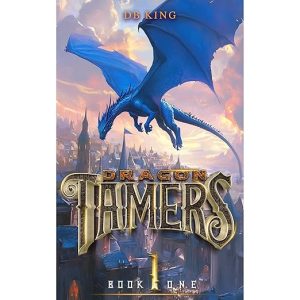
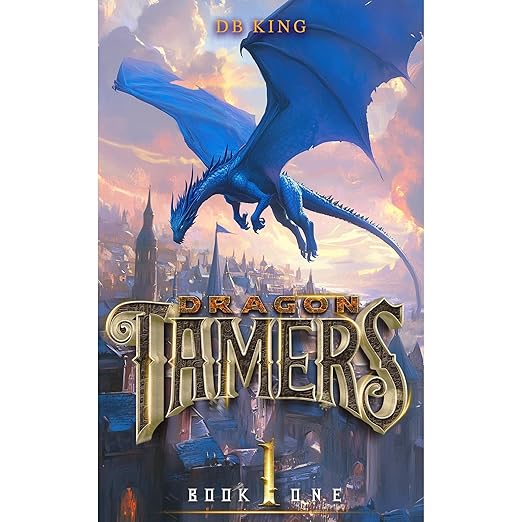
Dragon Tamers 1: A Magic Academy Progression Fantasy arrives in a crowded corner of the fantasy audiobook market, but DB King earns his place in it through character work that feels more considered than the genre often demands. Ben Stormwind's situation is immediately legible: he comes from a prestigious line of dragon riders, he has bonded with a dragon named Zephyr who behaves unlike any other, and the academy he attends is not going to let him follow the path everyone assumed he would take. That setup is familiar, but the execution has enough specificity to hold attention across 11 hours and 34 minutes without coasting on premise alone.
The central question the novel poses is what it costs to be an outlier in a tradition-bound world. Ben's bond with Zephyr is described as something that pushes beyond anything the Stormwind family has seen before, and the narrative traces how that difference creates both opportunity and danger in a setting where noble house conflicts shape every interaction. The comparison readers and reviewers have reached for is Eragon and the Songs of Chaos series, and those references are accurate as far as they go: this is dragon fantasy that is genuinely interested in the texture of the rider-dragon relationship as much as in the action sequences that surround it, and the world-building is patient enough to let that relationship develop rather than treating the bond as a granted asset from the opening chapters.
The Review
The magic academy frame does a lot of structural work that readers familiar with the subgenre will recognize immediately. The academy provides social conflict, a cast of supporting characters Ben must navigate alongside his dragon training, and a series of escalating tests that function as both plot and character development. One reviewer drew the comparison to Hogwarts "but with dragons," and the parallel is genuinely useful: the school setting provides human texture that pure wilderness adventure would not, and the noble house conflicts within the academy give the social dynamics a political dimension that extends beyond personal rivalries.
Ben's relationship with Maya is one of the stronger elements of this first volume. Reviewers note that both characters receive enough development to feel like people with interior lives rather than functional plot pieces, which is not a given in a subgenre that often subordinates character to power progression. The progression element in the title is meaningful and visible: this is a story invested in measurable growth, in the accumulation of abilities and understanding, in the sense that each challenge exceeds the one before it. Readers who find static protagonists frustrating will appreciate that Ben is genuinely changed by what happens to him over the course of this first volume.
The ending, which multiple reviewers describe as leaving a clear desire to continue the series, does its structural job correctly. The arc of this volume closes on a meaningful beat, but the larger questions about Ben's destiny and the changing nature of magic in this world remain productively open. That balance, completion without full resolution, is harder to achieve than it looks, and King manages it without either cheating the reader or manufacturing a cliffhanger that demands an immediate sequel.
What Makes Dragon Tamers 1: A Magic Academy Progression Fantasy Worth Hearing
The story's momentum is its strongest argument for the audio format. Virtual Voice narration, while lacking the textural richness of a skilled human performer, does not significantly impede a narrative this kinetically plotted. The pacing of the novel carries the listening experience more than the performance does, and at 11 hours and 34 minutes, it fills a satisfying weekend session without overstaying its welcome. The action sequences translate well to audio because King writes them with physical clarity rather than relying on visual spectacle that would require illustration to land.
The world-building is introduced gradually rather than front-loaded in expository passages, which is a meaningful structural choice for audio. Listeners who bounced off other progression fantasy titles because of information-heavy openings will find this more patient in its construction. The Stormwind family history, the political landscape of the noble houses, and the mechanics of dragon bonding are layered in over multiple chapters, allowing each piece to feel like discovery rather than orientation.
The Caveats
Pay attention to the moments when Zephyr's behavior diverges from what the academy considers normal for a bonded dragon. DB King plants the seeds of the larger series arc in those deviations, and the suggestion that the very fabric of magic is changing is more interesting than it initially appears. The novel's later reveals depend on the reader understanding what makes Ben's situation genuinely anomalous rather than merely unusual within an already exceptional family tradition.
The noble house conflicts function on two levels simultaneously: as immediate social pressure that shapes Ben's daily experience at the academy, and as a larger political canvas that the series will presumably develop across subsequent volumes. Readers who find those conflicts primarily interesting as social texture may be surprised by how seriously King takes their structural implications for the world's power dynamics.
Who Should Listen to Dragon Tamers 1: A Magic Academy Progression Fantasy
Young adult and adult listeners who love dragon fiction and want something with genuine character investment rather than pure power escalation will find this a rewarding first entry. Fans of Eragon, The Name of the Wind, and the Songs of Chaos series will find familiar pleasures rendered with enough originality to stay interesting across the full runtime. Skip it if you are firmly opposed to Virtual Voice narration: the story is strong, but the performance ceiling is lower than with a skilled human narrator, and the character differentiation suffers most in emotionally nuanced scenes. Those who can look past that limitation will find a series opener that delivers on its considerable promise.
Before You Listen
Is Dragon Tamers 1 a complete story, or does it end on a cliffhanger that requires book 2?
The first book closes its primary arc satisfyingly. Ben's academy journey reaches a meaningful conclusion, though larger questions about his destiny and the changing nature of magic remain open as series setup. It reads as a complete first act rather than an abrupt cliffhanger.
How does the Virtual Voice narration affect the listening experience for a series with strong character relationships?
Virtual Voice handles the plot-driven and action-heavy sections well enough, but the emotional nuances of Ben and Maya's dynamic are less effective without a human performer's range. Listeners who prioritize narration quality may prefer the ebook edition. Those focused primarily on story will find the audio workable across the full runtime.
Does this audiobook require familiarity with other DB King series or works?
No. Dragon Tamers 1 is a fully self-contained entry point. No prior knowledge of the author's other work is needed, and the world-building is introduced from the ground up with no assumed familiarity.
Is this audiobook appropriate for younger listeners, or is the content aimed at older YA readers?
The content is appropriate for middle-grade readers and older. The themes of belonging, legacy, and finding your own path are handled without graphic violence or mature content, making it accessible to a broad age range within the YA and upper middle-grade categories.