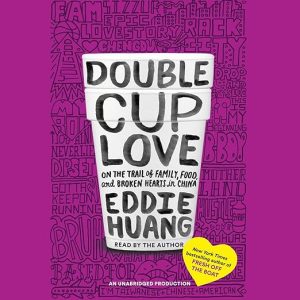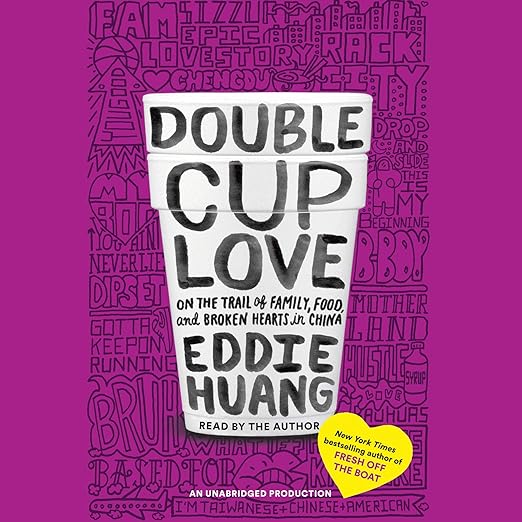
Chinese restaurant, American fame, and a relationship he cannot categorize: that is the tangle Eddie Huang flies to China to sort out at the start of this audiobook. Huang had already written a bestseller and watched it become the ABC sitcom Fresh Off the Boat when this memoir picks up, and by his own account he was 'finally happy.' Sort of, he immediately qualifies. Then he fell for a woman he calls an All-American white girl, and the relationship forced a question he narrates with real discomfort: how Chinese was he, actually, once you took the restaurant and the book deal away?
So he books a flight to reverse his parents' migration, bringing his two brothers along to test his cooking on Chinese palates and test his own belonging in a country he had only visited, not lived in. I went into this one already familiar with Fresh Off the Boat and wondered whether the sequel could sustain that same voice without the underdog restaurant story as its spine. It mostly does, though the shape of this book is closer to a travelogue crossed with a breakup memoir than a straightforward food story.
All-Caps Dialogues Delivered in Huang's Own Voice
Huang narrates his own book, and this is a case where self-narration is not just a nice-to-have but close to essential. His prose runs hot, digressive, and confrontational on the page, full of what one reviewer accurately describes as 'all-caps dialogues and hilarious side-commentary,' and hearing Huang deliver his own volume shifts and comic timing removes any risk of a professional narrator softening the rougher edges of his voice into something more palatable. The New York Times critic Jon Caramanica called Huang's writing 'wry and zippy' and noted that he 'regards the world with an understanding of its absurdities and injustices and with a willingness to be surprised,' and that willingness to be surprised comes through audibly in how unresolved Huang lets his own reactions sound in real time.
The Chicago Tribune's review calls this an 'engaging storyteller' who is also 'a great listener, especially in the language of food,' and that dual skill, talking and listening, is exactly what the audiobook format rewards. Reviewer J. Holloway puts it plainly in a four-star review: 'Eddie's books are not for everyone,' a fair warning that applies just as much to the narration style as the content. If Huang's confrontational, hip-hop inflected voice on the page appealed to you already, hearing him perform it himself only sharpens that appeal.
Listing the Wins Before Dismantling the Happiness
The New Yorker's review credits Huang with being 'determined to tease out the subtle and not-so-subtle ways in which Asian-Americans give up parts of themselves in order to move forward,' and that thesis runs under every scene here, from Michelin-starred dinners in Shanghai to street-side soup vendors in Chengdu. One reviewer, posting as Amazon Customer, frames the book's central tension as a direct question: what does it mean to be Chinese, in America, and separately, in China? That question does not resolve cleanly, and Huang does not pretend it does, which is more honest than a tidier memoir would manage.
The New York Daily News review notes that Huang 'connects in Chengdu the same way he assimilated in America, through food, hip-hop and a never-ending authenticity,' and that continuity between his New York restaurant chapters and his China travel chapters is what keeps this from feeling like two separate books stapled together. Reviewer Michael Sang Lee specifically credits the book with helping him process his own past relationships, describing an immediate personal recognition from the very first chapter onward, which speaks to how far Huang's specific, personal material travels beyond his own biography.
The detail about his OKCupid dating life being 'strong' right before everything falls apart is a small, funny piece of misdirection typical of how Huang structures his own happiness throughout this book: he keeps listing the boxes he has checked, the bestselling book, the TV show, the busy restaurant, the working dating life, as if accumulating enough success metrics should have added up to contentment, and then spends the rest of the book working out why it did not. That structure, listing the wins before dismantling the assumption that wins equal peace, is a sharper piece of memoir architecture than the breezy opening chapters initially let on.
Ralph Lauren Curtains for the Illusion of a Bedroom
This is a discursive, high-energy memoir that jumps between registers fast, romance, family conflict, restaurant logistics, cultural criticism, sometimes within the same chapter, and listeners who prefer a linear, single-throughline structure may find the pacing occasionally disorienting in audio specifically, where you cannot flip back a few pages to re-orient. Reviewer J. Holloway's warning that Huang's books are 'not for everyone' is worth taking at face value rather than as false modesty; this is opinionated, sometimes profane writing that does not soften itself for a broad audience.
Because the book is built so heavily around Huang's specific romantic relationship and his specific family business tensions with his brother Evan, listeners looking primarily for a food-focused travelogue in the vein of a straightforward culinary memoir should know the romance and family material takes up at least as much space as the food does, if not more. The food writing is vivid throughout, but it functions as one thread in a larger, messier personal narrative rather than the book's organizing principle.
One small early detail stuck with me longer than expected: Huang mentions hanging fresh Ralph Lauren curtains in his shared New York apartment to create, in his words, the illusion of a bedroom. It is a throwaway line, but it captures exactly the kind of specific, class-conscious, slightly absurd honesty that makes this memoir work, the same instinct for a telling material detail that later shows up in his observations about Shanghai fine dining and Chengdu street food alike.
The Same Unsanitized Voice Continuing After Fame
Fans of Fresh Off the Boat, either the book or the sitcom, who want to know what happened to Huang after the fame arrived are the most direct audience, and Huang's own narration makes this feel like a genuine continuation of that voice rather than a separate, sanitized project. Readers drawn to memoirs about the friction between an immigrant family's culture and an American-raised identity, in the tradition of writers The New Yorker and Chicago Tribune both invoke in their praise, will find real substance underneath the humor.
Profanity and blunt language run throughout, and anyone hoping for a tidy, redemptive arc by the final chapter should adjust expectations before starting, since Huang's honesty extends to leaving several of his own conflicts genuinely unresolved rather than wrapped up for a satisfying ending. This is a memoir about the search for meaning staying open-ended, not a story engineered to land a clean final message.
Do I need to read Fresh Off the Boat before listening to the Double Cup Love audiobook?
It is not strictly required, but this memoir picks up directly after the fame from Fresh Off the Boat, so listeners familiar with that earlier book or the ABC sitcom will follow the context more easily.
How explicit or profane is the language in this audiobook?
It is blunt and often profane, consistent with Huang's page voice. One reviewer states plainly that Huang's books are not for everyone, which is a fair warning about tone as much as content.
Does Eddie Huang's self-narration add anything the print book doesn't?
Yes. Huang's prose relies heavily on comic timing and volume shifts, and hearing him perform his own all-caps asides and side-commentary removes any risk of a professional narrator smoothing those rougher edges into something tamer.
Is this audiobook mostly about food, or mostly about the relationship and family story?
The romance and family business tension take up at least as much space as the food writing, which functions as one strong thread inside a broader, messier personal narrative rather than the book's main focus.