Quick Take
- Performance: Lynn Norris brings a steady, attentive reading to the anthology's varied tones, though the breadth of voices and genres across stories tests any single narrator.
- What it covers: Ecological science fiction, lesbian and sapphic identity across speculative settings, first contact with radically different worlds
- Feel: Inventive and varied, ranging from wry and comedic to genuinely strange and affecting
- Our call: A strong sapphic SF/F anthology for listeners who want diverse, botanically-inflected speculative fiction with thoughtful content guidance built in.
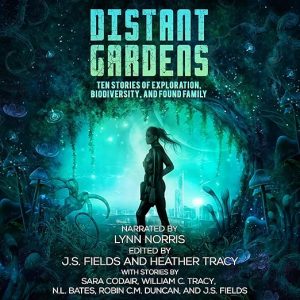
Anthologies are harder to review honestly than single-author novels, and harder still to listen to in one sitting. I went through Distant Gardens over three sessions, treating each story as its own standalone listen rather than trying to absorb the whole thing in a single stretch. That approach, it turns out, is how the book was designed to be consumed. Editor J.S. Fields has organized the collection with per-story heat levels, content warnings, and representation notes at the start of each piece, a structural choice that more anthologies should make and almost none do.
The collection is organized under the banner of the Worlds Apart series, and its central conceit is botanically grounded sapphic speculative fiction: stories where plants, ecology, and biodiversity are not backdrop but active force. The range is considerable, from space opera to terraforming narratives to something that a reviewer described as "how do you help a Marsh Kraken." What holds the collection together is the consistent commitment to lesbian and sapphic leads, and the insistence that these heroines practice science, magic, and seduction with equal competence across very different worlds.
The anthology's ambition is its greatest strength and its most visible limitation. The scope of settings, from terraformed outposts to magical realms to failed colonies, means the quality of individual stories varies considerably. One reviewer from Editors Weekly described it as "inventive, diverse, inconsistently executed," which is a fair characterization of most anthologies at this scale. The best stories here, including the piece about attacking plant species that a reviewer compared to Little Shop of Horrors with weaponry and without the sentiment, are genuinely inventive and funny. The weaker entries feel like they ran out of space to develop their concepts fully, though the range of representation across lesbian, bisexual, pansexual, asexual, demisexual, trans, and non-binary characters is a consistent strength throughout. The per-story content guidance is one of the collection's most practically useful features.
Why Listen to Distant Gardens
Lynn Norris is a capable and consistent presence across the fourteen-plus hours of the collection, which is no small feat given the tonal range she is asked to cover. She handles the comedic stories without overselling the humor and brings genuine gravity to the more melancholic pieces. The breadth of representation across sapphic identities is notable even within the LGBTQ+ SF/F space, and it is executed with care rather than as a checklist. For listeners looking to expand their reading in sapphic speculative fiction, this anthology functions as a useful introduction to a variety of approaches to the genre. Stories like the Agetha piece, with its aggressively carnivorous plant ecosystem, stick in the memory in the way the best short fiction does.
What to Watch For in Distant Gardens
Because this is an anthology, your mileage will vary by story. Do not abandon the whole collection because a single entry does not click. The content warning and heat rating system at the start of each story is there precisely so you can make informed decisions about what to skip or return to. The botanical emphasis is a real thematic commitment rather than a marketing hook; several stories engage seriously with ecology, invasive species, and biodiversity in ways that feel grounded rather than decorative. Listeners who find plant-centric speculative fiction more strange than appealing may struggle with the recurring motif across the full fourteen-plus hours.
Who Should Listen to Distant Gardens
This is ideal listening for sapphic SF/F readers who want an anthology with built-in content guidance, a genuine ecological focus, and a wide range of tonal registers from comedic to somber. Less suitable for listeners who want a single sustained narrative or who prefer their speculative fiction without a strong identity-forward framing. At nearly fifteen hours, it is a substantial commitment for an anthology format, but the episodic structure makes it easy to pace comfortably across multiple listening sessions without losing the thread.
How are the heat levels and content warnings structured in this anthology?
Each story in the collection is prefaced with a representation note, a heat level rating, and a content warning. This is a structural feature of the book rather than supplementary material, allowing listeners to make informed choices about each entry.
Is this a good entry point for sapphic science fiction if I have not read much of the genre before?
Yes, the anthology format and range of tones make it accessible as an introduction. The variety of settings and approaches gives listeners a broad view of what sapphic SF/F looks like across different subgenres.
How does Lynn Norris handle the tonal range across such varied stories?
Consistently and competently, though a single narrator across an anthology of this range will inevitably fit some stories better than others. The comedic entries and the more serious ones both receive engaged performances.
Does the botanical theme run through all the stories, or is it just some of them?
It is a genuine through-line. Most stories engage with plants, ecology, or biodiversity in some meaningful way, though the depth and centrality of the botanical element varies from story to story.