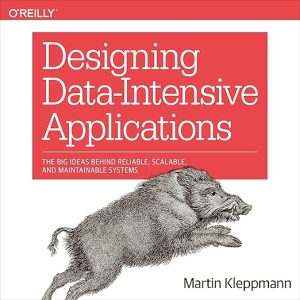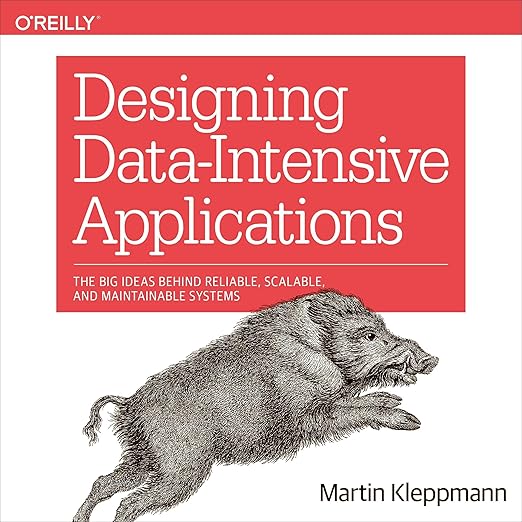
Before You Press Play
- Read by: Benjamin Lange handles 21 hours of dense technical content with measured precision. His pacing is deliberate enough to let complex concepts settle without becoming soporific.
- At its heart: Distributed systems architecture, consistency versus availability trade-offs, the principles beneath the tools
- Vibe: Dense and methodical, rewarding sustained attention from listeners with relevant background
- Short version: Kleppmann's book remains one of the most genuinely useful technical audiobooks in the distributed systems space. Best experienced with the companion PDF open alongside it.
Martin Kleppmann's Designing Data-Intensive Applications has accumulated a reputation in software engineering circles that few technical audiobooks achieve: it is the kind of title people recommend across multiple years without qualification, regardless of how many new databases or frameworks have emerged since its publication. Listening to Benjamin Lange work through the book's 21 hours of content gives that reputation a specific texture. This is not a book that tells you which tool to use. It is a book about why the tools work the way they do, and that distinction is the source of most of its durability.
Lange's Controlled Delivery Gives Concepts Room
Kleppmann's central argument is stated early and guides everything that follows: software keeps changing, but the fundamental principles stay constant. The book enacts that claim by spending more time on the reasoning behind architectural choices than on any specific implementation. When it discusses MongoDB or Kafka or PostgreSQL, it does so in the context of the broader trade-off landscape of consistency, scalability, fault tolerance, and complexity, rather than as product endorsements or dismissals.
That framing means the book ages better than almost anything else in technical publishing. A reader who understands why CAP theorem constraints exist can evaluate any new tool against those principles without needing an updated edition. One reviewer captures this value precisely: even experienced engineers in this area will find their existing knowledge reinforced and clarified, and will encounter new ways of framing problems they thought they already understood. That is a rare outcome for a technical book. Most technical reading either introduces concepts you do not know or confirms concepts you do. Kleppmann's book does the harder thing of restructuring your existing understanding so the pieces connect more coherently.
Benjamin Lange's narration is clean and well-paced throughout. He reads technical terminology with appropriate care and does not rush through complex passages. For material of this density, the controlled delivery is not a stylistic choice but a practical necessity: listeners need time to process before the next concept arrives. Lange provides that time consistently across all 20 hours and 56 minutes.
Serious Engagement Requires the Companion PDF
The audiobook format presents an obvious structural challenge for this material. Distributed systems architecture involves diagrams, data models, and algorithm visualizations that do not translate to pure audio. The publisher's solution is to include a companion PDF alongside the audio, and that pairing is essentially mandatory for serious engagement. Listeners who try to absorb the conceptual content of chapters on encoding formats, replication strategies, or consensus algorithms without the visual supplement will struggle to retain the structural relationships between ideas.
With the PDF companion active, however, the format becomes genuinely effective for this kind of material. Lange's measured delivery gives you time to consult the diagrams and return to the audio without losing the thread, and the act of listening while reading along reinforces retention in ways that either format alone does not. At nearly 21 hours, the runtime reflects the scope of the book's ambitions. This is a comprehensive treatment, not a survey, and the length is earned rather than padded.
Sequential Listening Beats Skipping to a Topic
A second reviewer's caveat is worth amplifying: this book rewards listeners who already have some background in software development. It is not written for complete beginners, and the audio format in particular will feel overwhelming to listeners encountering concepts like write-ahead logs, leader election, or two-phase commit for the first time. The book assumes you know what a database is and why scalability matters. It does not assume you know how distributed consensus works. That places the target listener somewhere in the middle-to-advanced range of software engineering experience: someone who has built and deployed systems but wants a more rigorous conceptual foundation for the decisions they are already making.
Listeners should also be aware that the book covers a rapidly moving field, and some specific tool comparisons and version details may have shifted since publication. The principles Kleppmann articulates remain sound, but anyone using the book for current architectural decisions should cross-reference its specific technical claims against current documentation and release notes. The companion PDF note in the synopsis is worth taking seriously before purchase: confirm it appears in your library, because the audio alone is insufficient for the material.
The book's chapter organization also rewards the audiobook format in one specific way: each major section builds on the conceptual vocabulary established in the previous one, so the sequential listening experience naturally reinforces the cumulative argument. Unlike reference books that can be opened at any chapter, Kleppmann's structure means the listener who follows the audio from beginning to end is better positioned to understand the later material than one who skips to a specific topic. That makes the audiobook a better initial engagement with the material than a selective reading of the print edition, even accounting for the visual supplement limitation.
Download the PDF Before You Start Listening
Software engineers and system architects who design or maintain data infrastructure will find this among the more substantive audiobooks their field has produced. The companion PDF is not optional, so download it before starting. Listeners who prefer a single-narrator experience over a dramatized production will find Lange's delivery well-suited to extended technical listening. Complete beginners in software engineering will find the material inaccessible at this level of abstraction. Anyone who has ever reached for a new database or message queue without fully understanding why it was the right choice for their particular consistency and scaling requirements will find Kleppmann's framework genuinely clarifying, and will likely want to return to specific chapters more than once.
Before You Listen
Can I follow the Designing Data-Intensive Applications audiobook without the companion PDF, or is it essential?
The companion PDF is effectively essential. The book contains diagrams, data model visualizations, and algorithm illustrations that are referenced throughout the text. The publisher includes the PDF in your library alongside the audio file. Download it before you start because the audio alone is insufficient for the material.
Is this audiobook suitable for software engineers who are experienced but not specialists in distributed systems?
Yes, and that is arguably the ideal listener profile. Reviewers consistently note that even engineers experienced in this area come away with clarified conceptual frameworks rather than just new information. The book assumes general software development familiarity but builds distributed systems understanding from first principles.
How does Benjamin Lange handle 21 hours of dense technical narration?
Lange's pacing is deliberate and measured throughout. He reads technical terminology with appropriate care and does not rush through complex passages. Some listeners may find the tempo slower than their preference for lighter content, but for material of this density the controlled delivery is appropriate and aids comprehension.
Will this audiobook still be relevant given how quickly the data infrastructure landscape changes?
Kleppmann's book is deliberately organized around enduring principles rather than current tool recommendations, which is why it has remained widely recommended across multiple years. Specific version details and tool comparisons should be cross-referenced with current documentation, but the architectural reasoning holds up durably.