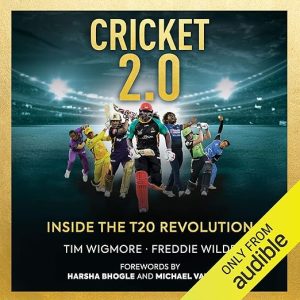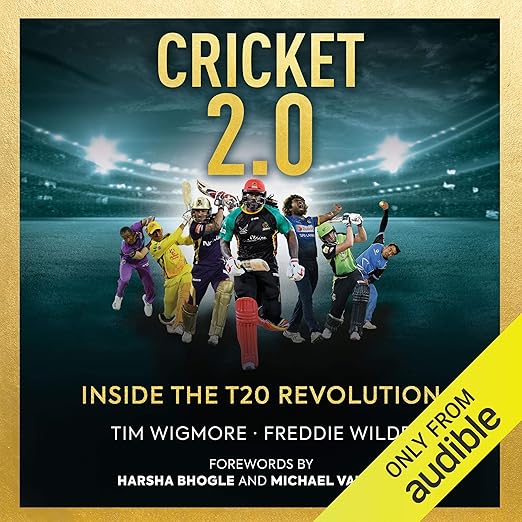
The context that makes Cricket 2.0 worth fifteen-plus hours of audiobook listening is this: Twenty20 cricket was introduced in England in 2003, widely dismissed as a gimmick for audiences unwilling to commit to Test cricket's multi-day demands, and then proceeded to remake the sport more completely than any single development since the covering of pitches. Tim Wigmore and Freddie Wilde , who between them have covered international cricket for more than a decade , set out to explain how that happened, and the result is the kind of book that only makes sense to write when the subject is genuinely, historically significant.
The storytelling architecture is built on more than fifty player and coach interviews. Brendon McCullum on how T20 changed his understanding of captaincy. Rahul Dravid and Ricky Ponting , Test match specialists by instinct and formation , trying to decode what the format actually requires. Kieron Pollard and Sunil Narine on becoming among the first T20 millionaires and what the IPL economy meant for cricketers from the Caribbean. AB de Villiers on the limits of modern batting. Rashid Khan on how T20 created the possibility of a superstar from Afghanistan. These are not peripheral voices assembled for color; these are the people who were inside the revolution as it was happening.
What separates this from the crowded field of cricket nostalgia books is the analytical rigor Wigmore and Wilde bring alongside the human stories. The tactical evolution they describe , death-bowling strategy, powerplay field-setting innovations, the bat-weight developments that changed what is physically possible at the crease, the borrowings from baseball analytics , is explained with the kind of precision that suggests the authors know not just what changed but why it worked and what made it spread. The interview material humanizes that analysis without softening it into mere personality profiles.
The Venky Mysore chapter is one of the book's genuine surprises. Mysore spent years running KKR during the period when the franchise became one of the most sophisticated operations in global cricket, and his account of how the game changed off the field , the franchise model economics, the broadcast revenue revolution, the global player market that T20 created where none existed before , provides essential context for understanding the format's success. Wigmore and Wilde are wise to treat the commercial transformation as inseparable from the tactical one. You cannot explain T20 cricket without explaining IPL economics.
What Stands Out
Oliver J. Hembrough's narration handles the density of cricket-specific knowledge with assurance. The book assumes familiarity with the game's structures and terminology , powerplays, death bowling, the specific franchises of the IPL, BBL, and CPL, the scoring rates that separate T20 competence from T20 excellence , and Hembrough navigates that terminology without condescension or unnecessary explanation. For cricket-literate listeners, this is exactly the right approach. The analytical sections benefit from a narrator who clearly understands the material and paces the argument to give complex tactical ideas time to land before moving forward.
A PDF companion is available in the Audible Library alongside the audio. This is worth retrieving before you begin listening. Wigmore and Wilde's analysis includes statistical tables and tactical diagrams that audio cannot reproduce, and some of the fielding placement analysis and batting data comparisons will be significantly clearer with the charts available during the relevant chapters. The audiobook is complete without the PDF, but the combination gives listeners access to the full evidentiary picture the authors assembled.
Weak Spots in Cricket 2.0
One reviewer describes the book as great for cricket T20 knowledge but finding it boring to read , which is a useful calibration for potential listeners. This is not narrative sports biography in the tradition of a compelling personal memoir. It is sophisticated sports journalism with sustained analytical ambitions, and the audiobook experience rewards listeners who genuinely want to understand the tactical and commercial mechanics of T20 rather than those seeking dramatic personal storytelling. The interview material provides consistent human dimension, but the frame is analytical throughout. That combination is exactly right for the subject; it just needs to be the right combination for the listener.
The scope covers T20's development through the publication date, which means the most recent franchise innovations and current debates about Test cricket's viability are not addressed. For a format moving as fast as T20, this creates some datedness at the edges. The core analytical framework and the historical account of the revolution itself remain entirely valid. Treat the book as authoritative history of how T20 arrived at its current form rather than as current affairs reporting on where the format is heading.
The book also functions as an unexpected tribute to the smaller nations and franchises that T20 created space for. The Afghan phenomenon , Rashid Khan and his generation of cricketers who would not have had a pathway to global recognition in a Test-only world , runs as a thread through multiple chapters, and Wigmore and Wilde give it the weight it deserves. The format's democratizing effect on cricket's geography is one of its genuinely surprising legacies.
Best Suited For
This audiobook is for serious cricket followers who want to understand T20's transformation of the sport at a level beyond match results and individual performances. Fans who have followed the IPL, the Big Bash, or international T20 from early on will find the analytical depth genuinely illuminating rather than redundant. Casual observers and cricket newcomers will find the assumed knowledge level substantial. Download the PDF companion from the Audible Library before starting the audio , it is worth having, particularly for the tactical analysis sections that reference specific field placements and batting data.
In Brief
- Read by: Oliver J. Hembrough handles the dense analytical text and rich ensemble of interview voices in Cricket 2.0 with clarity and appropriate pacing for long-form sports journalism.
- At its heart: Sport's transformation under commercial pressure, the tactics and data revolution, globalization of cricket
- Vibe: Detailed and enthusiastic, with the depth and rigor of serious sports writing
- Short version: The most comprehensive account of how Twenty20 remade cricket, told through the players and coaches who built the revolution , essential listening for serious followers of the modern game.
Is the PDF companion that comes with this audiobook important to the listening experience?
It is worth downloading before you begin. Wigmore and Wilde's analysis includes tactical diagrams, fielding placements, and statistical comparisons that audio cannot reproduce. Having the PDF available during the analytical chapters makes some of the more detailed tactical discussion significantly clearer, particularly the sections on field-setting evolution and the batting data that underpins their arguments.
At over 15 hours, how does this audiobook maintain momentum across such a long runtime?
The variety of interview subjects , McCullum, Dravid, de Villiers, Pollard, Narine, Rashid Khan, and many others , keeps the human dimension fresh across the full runtime. Some analytical sections are dense and require sustained attention, which one reviewer acknowledges honestly. Listeners who prefer narrative biography over analytical sports journalism may find the pacing demanding in places, but the interview material consistently re-energizes the text.
How current is the information in this audiobook, given how rapidly T20 cricket continues to evolve?
The book covers T20's development through its publication date, so very recent franchise innovations, the Hundred competition's maturation, and the latest IPL economics are not addressed. The historical account of the revolution and the analytical framework Wigmore and Wilde construct are durable, but the contemporary snapshot has aged at the edges. It functions best as authoritative history rather than current affairs reporting.