In Brief
- Narration: Rudd reading his own text is exactly right for this material, slow, clear, and deliberately paced. His voice carries the same quality of settled attention the book is trying to teach.
- Themes: Contemplation as distinct from meditation and mindfulness, insight into everyday problems, stillness as a practical tool
- Mood: Quiet and spacious, designed to be listened to slowly and returned to
- Verdict: A short, genuinely useful guide to an undervalued practice, works best when you let it breathe rather than consume it in one sitting.
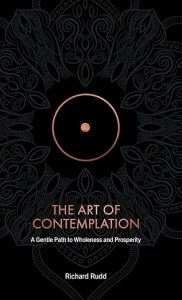
I found Contemplation on a Sunday evening when I was looking for something I could listen to without needing to track an argument. I had been working through dense nonfiction all week and wanted something that would settle the mind rather than challenge it. Six hours later, I understood why one reviewer calls it a book she returns to again and again. This is not a text you consume; it is a text you visit.
Richard Rudd is best known for his work on the Gene Keys, a dense cosmological and philosophical system he has been developing for years. Contemplation, by contrast, is small and precise, at 102 pages, it is closer to a long essay than a full book. Rudd's explicit aim is to explain a technique of contemplation that can be learned quickly but practiced indefinitely. He makes a distinction that I found genuinely clarifying: contemplation is not meditation, and it is not mindfulness. It is something older and more specific, a way of directing sustained, receptive attention at a question or situation and waiting for insight to surface rather than reaching for it.
A Closer Look at Contemplation
The book does what it claims. Rudd explains the practice with enough structure that a complete beginner can follow, and with enough depth that someone who has meditated for years will find new conceptual handles. The distinction between meditation's outward turning of the mind toward stillness and contemplation's inward inquiry toward specific understanding is drawn carefully and revisited from multiple angles across the six hours.
One reviewer, describing herself as a fan of Rudd's larger works, positions Contemplation as something that could have been an appendix to the Gene Keys but works better as its own entry point for new readers. That framing is accurate. You do not need to know anything about Rudd's larger cosmological framework to benefit from this book. It stands entirely on its own terms as a practical guide, and its simplicity is a feature rather than a limitation.
What Makes Contemplation Worth Hearing
Rudd narrates the audiobook himself, and the choice matters. His voice is unhurried in a way that matches the subject matter, listening to him explain how to settle the mind actually has a slightly settling effect, which is either very clever or simply the right person for the material. Reviewers have consistently praised the voice as "agreeable" and suited to bedtime listening. This is not sycophancy; it is accurate description of a narration style that creates the kind of audio environment the content requires.
At six hours, this is one of the shorter audiobooks I review. The length is appropriate. Rudd does not pad the content to match commercial expectations for a full-length book. He says what needs to be said and stops, and the result is a text that earns its brevity.
Things to Know Before Starting Contemplation
Readers expecting a structured, step-by-step program, ten minutes a day for thirty days, with measurable outcomes, will need to adjust their expectations. Rudd works through metaphor and poetic description as much as practical instruction. One reviewer quotes him directly on this: the book belongs to the category of texts that "touch our soul" rather than simply inform or entertain. That is an ambitious claim, and Rudd earns it imperfectly but often enough to justify the aspiration.
The spiritual register of the writing is consistent throughout. Rudd draws on multiple contemplative traditions without naming them explicitly, and the language occasionally drifts toward the abstract. Listeners who prefer concrete, secular self-help language will find the style slightly resistant. Those comfortable with the vocabulary of inner life will find it precise.
Who Richard Rudd Is Writing For
Well-suited to listeners who already have a meditation or mindfulness practice and want a complementary framework for working with specific questions or problems. Also genuinely accessible for those with no prior contemplative experience who are drawn to the idea of a practice less technique-heavy than formal meditation. Not recommended for listeners seeking structured self-help with measurable metrics or those who find poetic, spiritual language unproductive.
Do I need to be familiar with Richard Rudd's Gene Keys work to benefit from Contemplation?
No. Rudd wrote this as a standalone guide, and it works entirely independently of his larger framework. It may deepen your interest in the Gene Keys, but no prior knowledge is assumed or required.
How is contemplation different from meditation, according to Rudd?
Rudd distinguishes contemplation as a directed, receptive inquiry into a specific question or area of life, whereas meditation he characterizes as a more general settling of the mind. Contemplation waits for insight to surface rather than seeking stillness as an end in itself.
Can this audiobook be used as a guided practice during listening, or is it primarily informational?
Both. Some sections work as ambient listening that settles the mind as you hear it. Others are more instructional. Reviewers mention using it with Audible's sleep timer to select specific sections before bed, which suggests the material lends itself to repeated, partial listening.