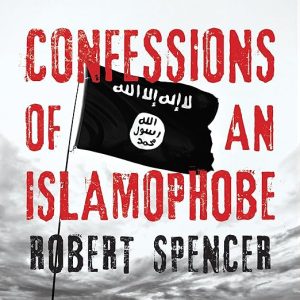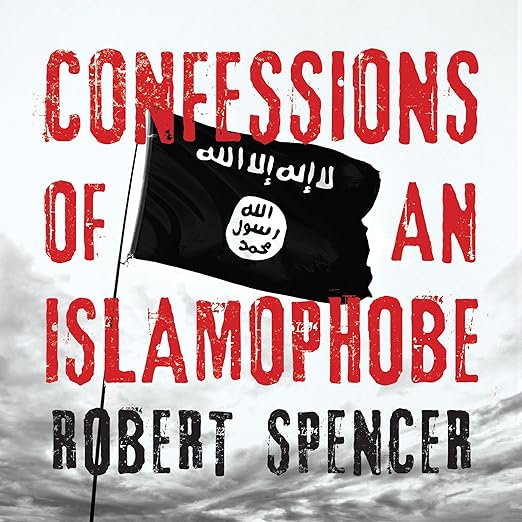
There is a kind of book that requires the reviewer to be precise about what it is before engaging with how it works. Confessions of an Islamophobe by Robert Spencer is a polemic, explicitly and proudly so. Spencer, the founder of Jihad Watch, reclaims the term Islamophobe in the title as a rhetorical provocation, positioning the label as a silencing device used against legitimate criticism. That framing shapes everything that follows.
Spencer is not an academic in a conventional sense, though he holds degrees and has written extensively on Islamic history and jurisprudence. His work occupies a contested space: cited by some as a serious reader of primary Islamic texts, and designated a hate group leader by the Southern Poverty Law Center, which has criticized his readings as selective and agenda-driven. This review will not adjudicate that debate, but it is information a listener deserves before investing ten and a half hours in this title.
The Review
What Spencer does well, within his chosen framework, is present his argument clearly and consistently. He draws on specific Quranic passages, hadith, and historical examples to support a thesis that terrorism is not a deviation from but an expression of authentic Islamic teaching. He is specific where he chooses to be specific, and one reviewer who found the book persuasive noted Spencer's clear, simple language and his capacity to make the reader feel addressed directly rather than lectured at.
The writing is accessible. Spencer has spent decades operating in public-facing media, and his prose reflects that, it is not academic in the way that creates distance. Whether that clarity is the product of genuine intellectual confidence or the simplification inherent in polemical writing depends on what you bring to it. Readers who have engaged with scholars like Reza Aslan, Kecia Ali, or Tariq Ramadan will find Spencer's framing of Islamic texts dramatically different from theirs.
Why Confessions of an Islamophobe Works as an Audiobook
Dave Michaels narrates with a steady, authoritative delivery that suits Spencer's essayistic structure. The book is organized as a series of argued points rather than as narrative history, and Michaels keeps each section distinct without becoming monotonous over the ten-plus-hour runtime. For listeners who are already familiar with Spencer's broader body of work, he has written extensively on this subject, the audiobook format works well for what is essentially extended political journalism.
Reviewers who found the book valuable consistently praised it for documenting events they felt mainstream media had underreported or framed differently. That audience, readers who believe scrutiny of Islamic doctrine is being suppressed in public discourse, is the audience this book is designed for, and it delivers what those listeners came for.
The Caveats
The book does not engage seriously with contrary scholarship. Spencer's argument is constructed by selecting supporting evidence from Islamic texts and contemporary events; counterarguments about context, historical interpretation, or the diversity of Muslim practice receive minimal engagement. One reviewer noted that while the material was presented as fact-based, they had criticisms of the approach, the book is more prosecutorial than analytical, and readers hoping for genuine intellectual tension will not find it here.
The political framing is also dated in specific ways. Published in 2018, the book references the political landscape of the mid-Obama and early-Trump years. Some of the specific policy debates it engages have evolved, though Spencer's core thesis remains unchanged from his broader output.
Should You Listen to Confessions of an Islamophobe?
Listeners already sympathetic to Spencer's broader project and wanting a consolidated statement of his argument will find this satisfying and clearly structured. Listeners seeking an introduction to Islam, a scholarly account of Islamic history and doctrine, or a balanced examination of the relationship between religious ideology and political violence should look elsewhere, to works by Malise Ruthven, Karen Armstrong, or the academic literature on radicalization studies, which offers considerably more complexity and engagement with counterevidence.
At a Glance
- Narration: Dave Michaels delivers a clean, authoritative read suited to Spencer's declarative essayistic style.
- Themes: Criticism of Islamic doctrine and jurisprudence, national security framing, Western political discourse around Islam
- Mood: Polemical and urgent throughout, Spencer argues a consistent thesis from first chapter to last
- Verdict: A deeply partisan work that will confirm the views of its target audience; readers seeking balanced scholarship on Islam should look elsewhere.
A Few Questions About Confessions of an Islamophobe
Is Robert Spencer considered a credible scholar of Islam in academic circles?
Spencer's standing is contested. He has written extensively on Islamic primary texts and been cited by some commentators as informed. He has also been designated a hate group leader by the Southern Poverty Law Center and is widely criticized by Islamic studies scholars for selective readings. Listeners should be aware of this context before deciding.
Does the book offer a balanced examination of Islam, or is it explicitly polemical?
Explicitly polemical. Spencer embraces the Islamophobe label in the title as a rhetorical move and argues a consistent critical thesis throughout. The book does not seek balance, it builds a case. Readers seeking a balanced or academic account should look to other sources.
How does Dave Michaels's narration suit this material?
Michaels delivers a clean, confident read that matches Spencer's declarative essayistic style. The narration is even-paced and authoritative, which works for a book structured as extended political argument rather than narrative history.
Does the book address Muslim communities in the West, or is it focused on global Islamic politics?
Both. Spencer addresses international terrorism and political Islam, but also argues about the trajectory of Muslim demographics and influence within Western liberal democracies. The scope is global with recurring attention to North American and European policy responses.