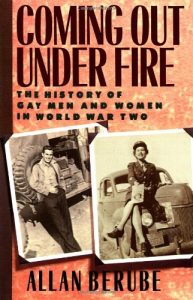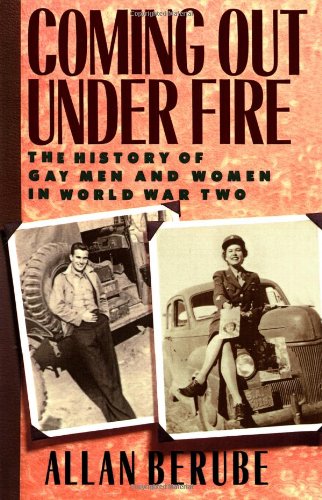
An ISBN, a page count and a print imprint sit where the audio fields belong. The identifier slot on this record holds 0743210719, which is a valid ten-digit book number and not a product code; a thirteen-digit ISBN sits beside it; the page count reads 384; the publisher is a print house; and the release date says April 1, 2000. Exactly two fields on the whole record describe a recording, the runtime of twelve hours and thirty-nine minutes and the reader credit for Lily Barkley. Everything else on this audiobook's page describes a hardback. The history underneath all of it is worth the trouble.
Print Fields Everywhere, Only Two Describe a Recording
Allan Berube reconstructed something that had been deliberately kept out of the record: the lives of gay and lesbian Americans inside the wartime military, the policy machinery built to detect and remove them, and what the war did to a subculture that had been scattered and abruptly was not. The description on this page, a single catalog sentence that surveys, discusses and looks at, undersells it badly. That sentence is a librarian's abstract and not publisher copy, which is one more sign of where this record came from, and it leaves a browser with no idea what kind of book waits underneath.
Scale is what surprises readers. A September 2017 five-star describes arriving with no idea that so many gay people served, or that they built a subculture of their own directly beneath a government that would blue-slip them out of the Army the moment it noticed. That is the book's central discovery and its central tension: an apparatus designed to exclude, and a population that found room inside it anyway. The same entry reaches for the present, calling the book important under the administration in office when it was written, which is how a good deal of this material tends to get read.
Barkley Gives Voice to People Once Silenced
The argument that makes this more than a recovery project comes through in the column too. A January 2008 five-star, calling it a very well-researched study of a subject long hidden and ignored, singles out what it finds most revealing: that the military's postwar shift in attitude helped propel the country's evolution into a homophobic nation. That is a causal claim about how institutional policy shapes a whole culture, and it explains why the book stays on university reading lists. Berube was not only documenting a hidden population but arguing that wartime policy manufactured much of the hostility that followed.
Twelve hours and thirty-nine minutes is a serious commitment and the material earns it. Archival social history of this kind depends on accumulation: individual testimony, then policy documents, then the pattern the two together reveal, and a compressed version would keep the anecdotes and lose the case entirely. Lily Barkley reads the whole of it, and that credit alongside the runtime are the only things on this record describing an audio product at all. On a book whose subject is people who could not speak openly, giving their accounts a voice is a format choice with something real to recommend it.
Bought for Class, and Surprisingly Insightful
Not every reader arrived voluntarily. One entry filed in September 2010 carries three stars beneath the title Great book!, a mismatch worth noticing on its own, and its body explains the gap: the book had to be bought for a class, and it turned out interesting and insightful. That is a fair and modest verdict from somebody with no prior stake in the subject, and the mixed signal is a reminder that a written headline and a grade can point in different directions. Anybody skimming this page quickly would count that entry as unqualified praise.
Old Metadata, Older Research, and Classroom Readers
Metadata matters more here than it looks. A record carrying a print publisher, a print publication date from 2000 and a page count tells a shopper nothing about when the recording was made, who produced it, or whether it corresponds to a later edition of the text. The identifier field compounds that by holding a book number in place of a product code. Several fields also open with an invisible formatting character, which is the signature of a catalog row copied out of another system. None of this damages the scholarship. All of it means a buyer cannot date the audio.
Age is a genuine consideration with a book of this vintage. The print edition on this record dates to 2000 and the research behind it is older still, so terminology, framing and the state of the archive have all moved since. Anyone coming for current scholarship on gender and sexuality in the military will find a foundational text and not a recent one, and nothing on the page flags the difference. Forty-five grades is a thin base for a work of this standing too, which happens when a book's real readership has been assigned it in classrooms instead of buying it in audio.
Many Lives and Documents, No Single Protagonist
Take this if you want the definitive account of its subject and not a survey that touches on it. A December 2016 five-star calls it the best book on the LGBTQ community in World War II, praises the research and the style in the same breath, and closes by thanking Allan Berube by name for having the vision to write it. That combination, scholarly credibility alongside prose somebody can actually enjoy, is rare in academic history, and it is why the book functions as a listen and not only as a reference.
Approach differently if you want narrative history built around a single protagonist, since this is a study assembled from many lives and a great many documents, and twelve and a half hours of it asks for patience. Students required to cite it should work from print, given that page numbers exist in the record and cannot be recovered from a recording. And anybody who cares when a recording was made should ask before buying, because this listing answers that question about a hardback published in 2000 and about nothing else at all.
Quick Take
- Performance: Lily Barkley reads twelve hours and thirty-nine minutes of archival history, and that reading credit is one of only two audio-native facts anywhere on the page.
- What it covers: gay and lesbian service in World War II, official screening and expulsion, a subculture formed under surveillance
- Feel: Scholarly and steady, with individual testimony carrying the weight
- Our call: The foundational history of its subject, readable enough to work as a listen, sold on a record describing a hardback in almost every field.
Is this audiobook based on the print edition from 2000?
The record cannot settle it. Its publisher, its April 2000 date, its page total and its identifier all belong to a printed volume and not to a recording. Runtime and reader credit stand alone as audio facts, so ask which text was actually taken into the studio.
Does it cover lesbian service members as well?
The description frames the book around the experiences of gay service members, military policy toward homosexuals, and the war's effect on the subculture, so both are within scope. Anyone needing coverage weighted toward women's service specifically should check the contents first, since the record does not break the balance down.
Will an audiobook work for a course assignment?
Partly. Listening carries the argument well, and one five-star bought it for a college class and found the author engaging despite no prior interest in the subject. Citation is the problem: the record lists 384 pages a recording cannot reproduce, so quoting it in written work needs a print copy alongside.
How difficult is the material?
Less than its length suggests. The book moves between individual testimony and policy history instead of settling into either register, which keeps it from reading like a monograph. Twelve and a half hours is the real demand, so plan it across a couple of weeks and not across a single weekend.