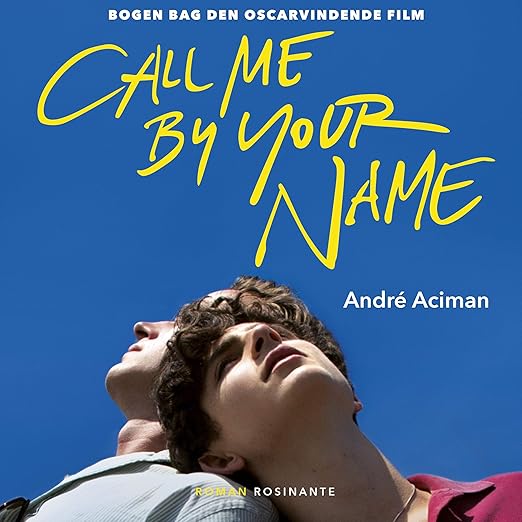
Key Details
- Narration: Thomas Knuth-Winterfeldt narrates this Danish-language edition, English-language listeners should be aware that this Audible listing is not the English audiobook, and multiple reviewers have noted surprise and disappointment upon discovering the language.
- Themes: First love and its permanence, desire and the incapacity to name it, the particular anguish of a summer that cannot be retrieved
- Mood: Languid and aching, saturated with northern Italian light and the weight of things unsaid
- Verdict: Andre Aciman's novel is one of the defining works of contemporary LGBTQ+ literature, but English-language listeners must verify the edition carefully before purchasing this specific listing.
Before anything else about the novel: a practical note. This Audible listing for Call Me by Your Name is the Danish-language edition, narrated by Thomas Knuth-Winterfeldt and published by Gyldendalske Boghandel. Multiple reviewers have discovered this only after purchase, and several describe difficulty obtaining a refund or exchange. If you are an English-language listener, you need to find a different edition, the English audiobook narrated by Armie Hammer exists separately and is the version most commonly associated with the novel's wider reception. Proceed with full knowledge of what you are buying.
That clarification made, Andre Aciman's novel is worth discussing on its own terms, because it is genuinely one of the more significant works of literary fiction published in the first decade of this century, and it circulates now with the particular complexity of a book whose cultural presence has been significantly shaped by a film adaptation whose lead actor has since become a complicated public figure. I want to separate the novel from that association, because the book is doing something the film could only approximate.
A Closer Look at Call Me by Your Name
The story is, in outline, simple: summer 1983, northern Italy, a seventeen-year-old named Elio and a twenty-four-year-old American graduate student named Oliver, a house with too many books and not enough air, a relationship that develops through weeks of charged obliqueness before it becomes explicit. Aciman writes in the first person from Elio's adult retrospective, a forty-year-old man looking back at a summer that restructured him entirely. The narrative distance is part of the novel's subject: memory as a mode of continued possession, the past as something that cannot be returned to but cannot be left behind.
What André Aciman Gets Right
The prose is genuinely literary in a way that benefits from audio, the long, rolling sentences that accumulate emotional weight through repetition and variation, the way Aciman uses architectural and landscape description as a form of psychological projection, the exact rendering of adolescent desire as a state that is total and absolutely without an object it can name safely. In Danish the sonic qualities of the prose translate differently, and listeners for whom Danish is a familiar language will find Knuth-Winterfeldt's narration has the particular intimacy that comes from hearing a first-person story in one's own tongue. The novel earns its intimacy in any language.
Where André Aciman Loses Some Ground
The rating of 3.4 on this listing reflects almost entirely the language confusion and the difficulties multiple buyers had obtaining refunds rather than any evaluation of the novel's quality. The reviews themselves split between genuine five-star appreciation of the story and one-star reactions to the edition mismatch. That distribution is unusual and should not be read as a signal about the audiobook's production quality or Aciman's writing. The confusion is a metadata and retail problem, not an artistic one.
Who André Aciman Is Writing For
Danish-language listeners seeking an intimate, literary first-love novel with a specifically gay male perspective and a Proustian relationship to memory will find this edition beautiful and appropriate to the material. English-language listeners should source the English edition separately. The novel itself is essential reading for anyone interested in contemporary LGBTQ+ literary fiction, in the phenomenology of first love and desire, or in what Italian summer sounds like in prose that has lived there long enough to know the quality of the light in August. It is a book you carry with you afterward, whatever language you heard it in.
One thing the novel does that the film necessarily compressed: it gives full space to the retrospective frame. We are not simply inside Elio's seventeen-year-old experience; we are inside his forty-year-old account of that experience, and the difference between those two things is where Aciman's literary argument actually lives. The past is not recovered in this novel. It is held. Elio carries Oliver the way, the book suggests, we all carry the summers that changed us, as a permanent present tense dressed in the grammar of the past. For readers who have never encountered a novel that treats memory itself as the primary subject rather than the device for delivering it, this is where to start.
Before You Listen
Is this Audible listing for Call Me by Your Name in English?
No. This specific listing is the Danish-language edition, published by Gyldendalske Boghandel and narrated by Thomas Knuth-Winterfeldt. English-language listeners should search for the English edition separately. Multiple reviewers on this listing were caught off guard by the language, so verify carefully before purchasing.
Is Call Me by Your Name appropriate to read independently of the Luca Guadagnino film?
Yes, and arguably it should be. The novel is narrated entirely from Elio's adult retrospective and deals in interior states that film cannot fully represent. Readers who encountered the story first through the 2017 film will find the novel significantly more interior, more ambiguous about desire, and less conclusive in its emotional resolution. Both versions are worth experiencing on their own terms.
Is the novel part of a series?
Aciman wrote a sequel, Find Me, published in 2019, which follows the characters from Call Me by Your Name into later life. Find Me received mixed reviews and divided readers who were deeply attached to the original. Call Me by Your Name is complete as a standalone, and many readers prefer to leave it there.