The Short Version
- Narrator: Peter Kim is the credited reader, with audio engineering by Blake Rook, though no listener review on this listing evaluates the recording itself.
- Subjects: private correspondence as biography, discipline and self-instruction, family duty alongside public fame
- Tone: Intimate and unhurried, closer to eavesdropping than to reading
- Bottom line: A rewarding companion for anyone already invested in Bruce Lee's writing, and the wrong place for a newcomer to start.
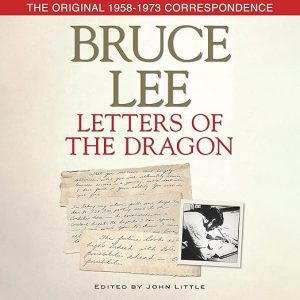
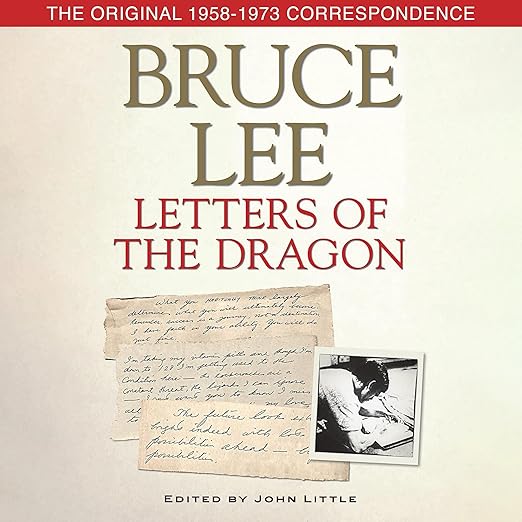
Correspondence is the least performed literary form I know, which is exactly why this audiobook edition of Bruce Lee: Letters of the Dragon caught me off guard. A letter is written to one person. It assumes a shared history, skips the exposition, and frequently ends mid-thought because the writer had somewhere to be. Four hours and fifteen minutes of that, delivered by a single reader, should not cohere. Peter Kim reads it, Blake Rook handled the audio engineering, and Echo Point Books and Media, an independent bookseller in Brattleboro, Vermont, produced and published the edition.
The Last Letter, Written Hours Before His Death
The sequence begins with a schoolboy's resolution to leave for America and continue his education there, runs through the reversals and renewed efforts that followed, and closes with the last letter Lee composed, written hours before his sudden death. Nobody has imposed a narrative on that sequence. The shape comes from chronology alone, and the collection is stronger for the restraint. What accumulates is not a career summary but a habit of mind. The publisher's description promises a man who 'never wrote without careful thought, and never thought from the head alone, but always from the head and heart together,' and for once the jacket copy is describing something the letters actually do.
What correspondence gives you that biography cannot is the absence of an audience. One reviewer set out the distinction better than I would have: 'These letters were intended as intimate and private expressions from the heart, to be transmitted to family members and close friends.' The same reviewer adds that they 'were not formal and highly edited manuscripts prepared for a large unknown audience.' That is the whole case for the book in two sentences. A biographer selects. An autobiographer performs. A letter writer is solving today's problem in front of one reader, and the self that shows up is unguarded because it was never expecting company.
Parenting and Paying Bills Between Letters on Philosophy
The audio format suits this material better than I expected going in. A letter is speech aimed at a single person, and one reader addressing you approximates that geometry more closely than a page does. Reading correspondence with your eyes, you stay aware that you are looking over somebody's shoulder. Hearing it, you move closer to being the person it was sent to. Four hours and fifteen minutes is also short enough that accumulation works in your favor: the repetitions of tone, the recurring names, the way certain arguments keep coming back in new clothes, all register inside a single day of listening rather than dissolving across a week.
The domestic register is the surprise. One listener who came for the philosophy noticed instead 'the everyday world of parenting and paying bills that doesn't stop simply because your thoughts or goals are lofty.' That is the texture of the thing. The publisher's own framing points the same way, describing a man who would give as much care to answering a young fan as to a letter from an old friend, and who made time for a family friend in need of simple companionship. Whether or not you have any interest in martial arts, that is a recognizable adult life, and it is being lived by someone the culture has flattened into a poster.
Placement helps too. The listing sets this volume inside the Bruce Lee Library alongside Striking Thoughts, The Celebrated Life of the Golden Dragon, The Tao of Gung Fu, Artist of Life, The Art of Expressing the Human Body, and Jeet Kune Do. One reviewer had finished this collection and Striking Thoughts back to back, noted how little the two resembled each other, and committed on the spot to working through the whole library. That reaction matches my sense of the design. These are not chapters of one project but separate angles on a single body of work, and the letters are the least filtered of them.
Pooled Across Formats, No Word on Peter Kim's Reading
The most useful warning comes from a reviewer who has clearly thought about placement: 'I believe this volume was meant to be a companion to other works by Bruce Lee, which is how I think it plays best.' I agree, and I would push it harder. Arrive wanting the biography, the career narrative in order, the training methods explained, and you will spend four hours waiting for a spine that never appears. The letters assume you already have the outline. They fill in a temperament, not a chronology.
A second practical note concerns the accompanying PDF, which the listing says lands in your library along with the audio. I have not seen it, and I would open it early rather than late. Letters volumes carry apparatus that audio flattens by its nature: dates, addressees, the editorial notes that tell you whose name you just heard. A reader glances at a header and knows at once who is being written to. A listener has to hold all of it in memory. The PDF is the obvious remedy, and it is worth checking before the first chapter rather than after you have lost the thread.
The last thing to weigh is what the star average actually covers. This audio edition arrived on April 22, 2025, and all five reviews attached to the listing predate it, the earliest by thirteen years and the most recent by a fortnight. The 4.8 average is pooled across formats rather than earned by this recording, and not one of those five listeners says anything at all about Peter Kim's reading. I would rather be plain about that than imply otherwise. I have no listener evidence on the performance to weigh here, only a credit line and whatever a sample tells you, so use the sample.
A Writer Who Never Considered You Might Be Listening
Owners of any other Bruce Lee Library volume should treat this as the natural next step, and coaches and teachers will find usable material in the way Lee talks people through setbacks without softening them. It also works unusually well as a gift, which one reviewer confirms from experience after buying it for a grown son who had been a fan as a boy and was now meeting the person behind the image. The four-hour runtime is friendly to listeners who rarely finish anything longer.
Pass on this if you want a documented biography, if you need context and chronology supplied for you, or if fragmentary forms frustrate you, because it is a book of pieces and some of those pieces are very short. I would also steer away anyone hoping for the philosophy in concentrated form, since the collection gives you a man thinking on the run rather than a system laid out in order. Everyone else is getting a genuinely unusual four hours: an audiobook whose writer never once considered that you might be listening.
Does this audiobook work as a first introduction to Bruce Lee?
Not really. The letters presume you already know the outline of his life, and they fill in temperament instead of events. One reviewer treats the volume as something to read alongside his other titles, which matches my own reading. Begin with a straight biography, then come here for the unguarded version.
Is the accompanying PDF necessary to follow the audiobook?
Not necessary, though I would open it before pressing play. Collections of correspondence rely on dating and addressee information that spoken audio cannot signal, and four hours of unfamiliar names is a lot to track by ear. The listing says the file arrives alongside the recording.
How does this compare with the rest of the Bruce Lee Library?
One reviewer read this and Striking Thoughts consecutively and found them barely alike, which is the point. Striking Thoughts gathers distilled statements, while the letters catch the same man mid-sentence, handling ordinary obligations. Six further volumes sit in the same library, covering his martial art, his life, and his craft.
Do the star rating and reviews reflect this 2025 audio edition?
Only in part. Every one of the five visible responses was written before the recording appeared in spring 2025, the oldest reaching back to 2012 and the newest by only a couple of weeks. That average therefore covers several formats at once, and none of those readers mentions the narration.