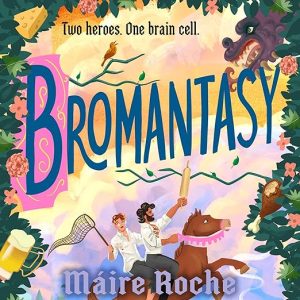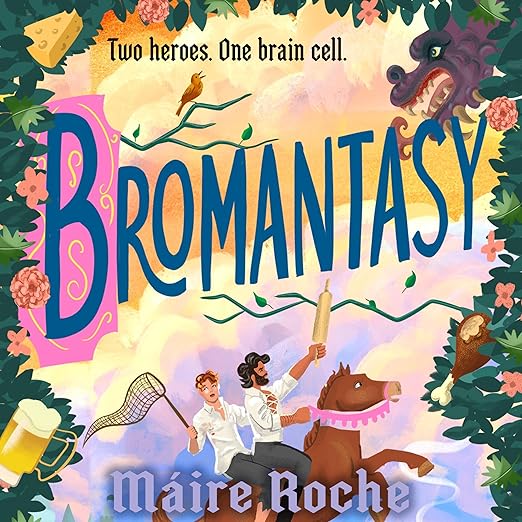
Máire Roche built this queer fantasy around one of the most specific sources of romantic comedy tension available: the moment when a person realizes their best friend might be the person they have been looking for, while also being the last person on earth they would admit that to. Juniper O'Reilly is the kind of narrator who would rather notice how good Mo Elmthorn looks in his questing pants than examine what that noticing actually means, and this audiobook earns its premise because Roche commits to Juniper's particular brand of obtuse self-awareness with full conviction. The cozy fantasy genre has grown crowded quickly, but Bromantasy locates itself within that landscape by being genuinely funny in a specific character-rooted way rather than generically warm in the manner that has become the genre's ambient temperature. I listened to the first half in an afternoon and finished the second in a single evening sitting, which is a decent indicator of how well the voice sustains itself across nine hours.
Mark Sanderlin narrates with a light comic touch that serves Juniper's voice without reducing him to a clown. The performance tracks Juniper's gradual shift from cheerful obliviousness to dawning recognition with enough subtlety that the emotional arc feels earned when it arrives rather than announced pages in advance. At nine hours, the audiobook gives Roche room to build the friendship-as-love dynamic slowly, which is structurally the right call for this kind of story and the format that benefits most from it.
What Makes Bromantasy Worth Hearing
The book's central device, a quest that forces proximity and crisis on two people who have successfully avoided examining their relationship by being busy with ordinary life, is a classic romantic comedy structure applied to a fantasy setting with enough freshness that the formula does not announce itself too loudly. Roche's fantasy world-building is light by design: the forest they quest through, the monster they are hunting, and the social obligations that motivated the volunteer in the first place are all present without demanding the kind of extended world-building attention that would slow the emotional story down. The cozy register is consistent without being saccharine, and the book's willingness to let Juniper be genuinely unhelpful and occasionally useless rather than secretly competent gives the character more life than the genre typically allows its protagonists.
The queer framing is handled with confidence and without either over-announcing itself or treating same-sex attraction as requiring special treatment or explanation. Juniper's specific crisis, the 'fellas, is it gay to...' question that the synopsis poses directly, is funny because it is specific to a recognizable form of male self-deception about friendship, not because queerness itself is the punchline. Roche understands the distinction, and the book is considerably better for it throughout.
The reveal that the monster they have been tasked to kill is actually a scared child torn from her family changes the book's register in the third act in a way that earns real emotion without being manipulative. Sanderlin handles the tonal shift well. The cozy warmth of the opening does not clash with the more urgent ethical question the final act poses; Roche has calibrated the transition carefully enough that the two registers feel like the same story at different depths rather than two different books awkwardly joined.
Things to Know Before Starting Bromantasy
Listeners who come to Bromantasy wanting high fantasy mechanics or complex world-building will be disappointed. The fantasy setting is a framework for the relationship story rather than an independent area of creative investment. The magic system is gestured at rather than systematized, the social world is sketched rather than detailed, and the quest itself is a container for the central dynamic rather than an adventure with intrinsic stakes independent of what happens between Juniper and Mo. Readers who need the fantasy elements to be fully realized to enjoy the story should recalibrate expectations before the first chapter begins.
The pacing in the middle section is comfortable to the point of leisureliness. Roche allows the quest to proceed through extended scenes of Juniper and Mo interacting in the kind of low-stakes way that friends on a forest walk might actually spend their time. This will work well for readers who respond to slow-burn relationship development and will frustrate those who want the story to move through plot more quickly. The two-hero-one-brain-cell premise requires the slower pace to land its jokes correctly, so the pacing choice is justified, but it represents a specific taste that not every listener will share.
As this is Máire Roche's debut novel, some structural decisions reflect a first book's tendency to trust the central dynamic more than the plot scaffolding. The villain, when the true antagonist emerges, is somewhat underwritten relative to the depth given to Juniper and Mo. The resolution works emotionally but resolves too quickly on the plot level to fully satisfy readers who want the external threat to feel as developed as the internal one.
Who Should Pick Up Bromantasy
Listeners who enjoy cozy fantasy with a queer romantic center, slow-burn best-friends-to-more development, and comedy that is character-specific rather than genre-generic will find this audiobook a satisfying listen. Mark Sanderlin's narration is the right format delivery for a book where Juniper's voice is the primary pleasure on offer.
Readers of T.J. Klune's cozy queer fantasy work and fans of the lighter end of romantasy who want explicitly queer main characters and low external stakes will find Bromantasy a comfortable addition to that reading list. Given the debut context and the nine-hour runtime, this is an ideal candidate for a relaxed weekend audiobook session rather than a commute listen, where the leisurely middle pacing may feel too slow without the right kind of uninterrupted attention.