Before You Press Play
- Narration: A first-person memoir voiced by someone other than its subject, with Allyson Ryan named as the reader.
- Themes: Olympic gold, eating disorder recovery, the economics of elite training, small-town beginnings
- Mood: Earnest, gritty, openly motivational
- Verdict: A frank, generous sports memoir whose recovery chapters are worth the whole eleven hours, provided you can handle the subject.
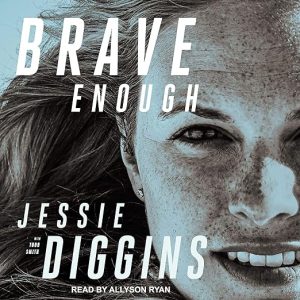
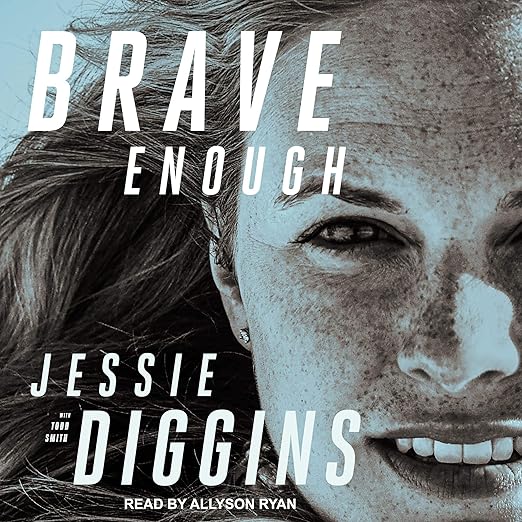
A ski boot crossing a finish line by inches is where this memoir opens, and it is the only moment in the whole book that most listeners will already know. Pyeongchang, February 21, 2018: Jessie Diggins came past two of the world's finest sprinters and stretched a boot over the line for the first cross-country skiing gold the United States had ever won at a Winter Games. The audiobook then spends ten hours and fifty-two minutes on everything that was not that, and the everything else is the reason to press play.
The Review
The medal is a hook, not a subject. What Diggins actually writes about is the enormous unglamorous mass of work underneath it, and one four-star reviewer puts the ratio better than the publisher does, describing 'an unsparingly honest look at life on the road as a world class athlete' where 'all the hard work that goes into the few minutes of a race is amazing' precisely because 'it's months long day in day out training'. That is the correct emphasis. A race lasts minutes; the book is about the years, the travel, the injuries and the money.
The best image in the whole setup arrives early and comes from childhood. Diggins grew up in Afton, Minnesota, and the copy describes her as a scrappy twelve-year-old who insisted on carrying her own canoe over the portages. Read that detail as the thesis in miniature: a kid who would not let anyone else carry her weight, fourteen years before a final leg where nobody could. The book keeps returning to that continuity, and it earns the return, because the through-line from the Minnesota woods to a start gate in South Korea is the part a straightforward sports chronicle would flatten into a highlight reel.
What Makes Brave Enough Worth Hearing
The chapters on bulimia are why this memoir matters beyond its sport. The publisher describes the struggle as harrowing and says she recounts both the adversity and the healing so that others living with eating disorders will find hope and understanding in it. One five-star reviewer registers exactly that effect in four words, writing that the book 'made me feel seen'. That phrase is doing something specific and worth pausing on. It is not praise for craft or for excitement; it is a reader reporting recognition, which is the hardest thing this kind of memoir can achieve and the reason it exists.
Diggins was also explicit about her intentions. Another reviewer references a promotional interview in which she explains that 'her intention in writing this book was not to author just another sports book', and the reviewer's verdict is that she pulls it off. I agree, with the caveat that the ambition is more visible in some sections than others. The recovery narrative and the training economics are genuinely unusual for the genre. The race recaps are competent and conventional.
The audio arrangement deserves a word of its own, because it is not the obvious one. Allyson Ryan holds the narrator credit on a first-person memoir, which means a listener spends nearly eleven hours with an 'I' that belongs to Jessie Diggins and a voice that does not. On material this exposed, including the illness chapters, that is a real structural choice rather than a neutral production detail, and it will read differently to different people. Some listeners find an interpreter creates useful distance on painful autobiography; others want the person themselves. Worth sampling before you commit.
The Caveats
Take the eating disorder content seriously before you start. It is not a chapter you can skip past, because the illness runs through a period of Diggins's competitive career rather than sitting in a self-contained section, and the descriptions are specific about behavior. The book handles it responsibly and ends in recovery, which is the right shape. Even so, anyone currently in treatment or recently out of it should decide deliberately rather than discovering it at hour four on a run.
The sport itself is the second consideration. Cross-country skiing sits well outside the mainstream in most of the English-speaking world, and the book does not apologize for that: expect course descriptions, technique distinctions, wax and equipment detail, and a World Cup calendar that will mean nothing to you at the outset. None of it is impenetrable, but the first couple of hours ask you to absorb a vocabulary, and listeners who wanted a general inspiration memoir with a bit of skiing attached will feel the imbalance.
The review pool is also worth reading carefully rather than by its average. Two of the three visible reviews are written in a register of enthusiasm for the athlete as much as assessment of the book, with one ending on an invitation to join the fan club and another asking who would not enjoy such a feel good story. That is not a criticism of those readers, and 331 ratings at 4.6 is a solid, meaningful sample. It does mean that the sharpest critical information on the page sits in the single four-star review, which is where I would look first.
One last calibration, on length. Almost eleven hours is generous for a sports memoir, and the pacing reflects a career recounted more or less in order. If you want the eating disorder material specifically, you will be waiting through a substantial amount of season-by-season narrative to reach it. My own view is that the wait is worth taking rather than skipping ahead, because the training chapters establish exactly how much pressure the illness was operating under, and the recovery reads as far less abstract once you understand the schedule it had to survive.
Who Should Listen to Brave Enough
Endurance athletes at any level will get the most from this, particularly anyone who has tried to combine serious training with a body that is not cooperating. It also belongs in the hands of parents with a competitive kid, because the account of what elite development actually costs is unusually frank about money, travel and the emotional bill. And it is a genuinely valuable listen for people in or near eating disorder recovery who want a story that does not end with quitting the sport.
A tight race-by-race chronicle of an Olympic cycle is not what this is; the competition is the frame, not the content, and anyone wanting the former should look elsewhere. The same goes for readers who prefer their memoirs cool and ironic, since the prevailing tone here is earnest, warm and openly motivational. Approach it as a book about persistence that happens to be set on skis and it delivers exactly what it promises.
Before You Listen
How much cross-country skiing detail is in Brave Enough?
A significant amount, and it arrives without hand-holding. Technique distinctions, waxing, course profiles and the World Cup calendar all feature. None of it requires prior knowledge, but the opening hours ask you to pick up a vocabulary that most listeners will not already have.
How explicit is the eating disorder material in the audiobook?
Specific about behavior and woven through the competitive years rather than confined to one chapter, so skipping it is not really possible. The publisher calls the struggle harrowing and the arc ends in recovery. Decide before starting rather than encountering it unprepared partway through a session.
Does Jessie Diggins narrate her own memoir?
No. Allyson Ryan is credited with the reading, which is worth knowing for a book written throughout in the first person. Some listeners welcome the small distance an interpreter puts between them and the most painful passages; others want the athlete's own voice on autobiography. Sample it first.
Is the audiobook worth it if I do not follow winter sports at all?
Yes, provided you are there for the person rather than the results. The strongest sections concern illness, recovery and what elite development costs a family, none of which depends on caring who won a World Cup stage. The skiing is the setting for those questions, not the point of them.