
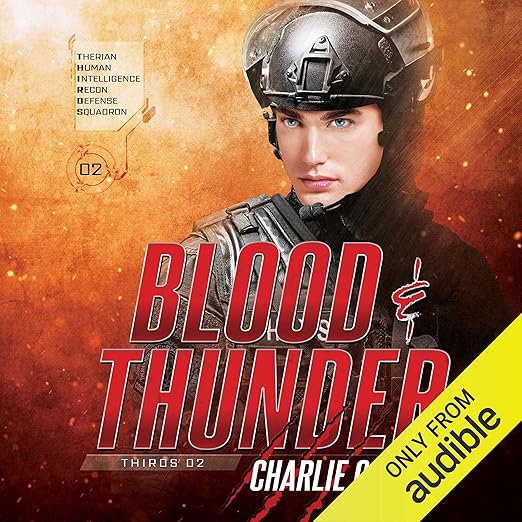
Charlie Cochet's THIRDS series arrives in its second installment with a clear sense of what it wants to be: a paranormal buddy-cop thriller with genuine emotional stakes and a slow-burn romance between two men who clearly need each other but are not yet willing to admit it. This audiobook, narrated by Mark Westfield, picks up with Dex Daley and Sloane Brodie already at a fragile kind of closeness, which a series of bomb attacks against a Therian youth center immediately begins to tear apart. The Order of Adrasteia, a radical anti-Therian group, is the visible threat. But the deeper damage is happening between partners who are being forced apart by grief, suspicion, and the weight of a past that Sloane has tried very hard to bury.
One reviewer noted this entry is "so much better than the first," and that tracks with what the structure actually delivers. Cochet uses the bombing as a pressure test rather than just a plot engine. The fracture between Dex and Sloane is not manufactured drama - it grows logically from who both characters are and what they stand to lose. Sloane's secrets, rooted in a past involving the THIRDS organization itself, give the second half of the book a genuinely unsettling quality. The conspiracy is not just about political extremism; it is about institutional betrayal, which raises the emotional temperature considerably. The Order of Adrasteia, easy to dismiss as a villain-of-the-week faction, turns out to have tendrils deep enough to make the resolution feel earned rather than tidy.
Where the first book established the world of Therians - humans with the ability to shift into animal forms - and introduced the THIRDS enforcement unit, Blood & Thunder assumes that groundwork and invests instead in complication. The Human-Therian political landscape feels genuinely precarious here. Propaganda filling the streets, fear spreading through communities, institutional figures failing their own people: the allegory is not subtle, but Cochet does not need it to be. The human cost is what matters, and several supporting members of Team Destructive Delta get enough development to register as people rather than background color. Hobbs gets moments in this installment that reward listeners who paid attention to his quieter presence in the first book, and the ensemble's loyalty to one another under institutional pressure is one of the series' most consistent pleasures.
The Strengths
Mark Westfield's narration is the thread that holds the tonal variety together. Dex narrates in first person for much of the book, and Westfield leans into the character's defensive humor without softening the moments when that humor breaks down entirely. Sloane is harder to render - reserved, physically imposing, emotionally defended - and Westfield finds a register that is quieter but no less present. The romantic tension between the two comes through cleanly in how Westfield shifts between them: a slight change in pace, a restraint in the voice when one of them is trying not to feel something. At nearly eight hours, the pacing never drags, partly because the investigation moves at a clip and partly because the narration keeps the emotional undercurrent audible throughout even during the procedural sequences.
The series has a devoted following for good reason. Readers who appreciate LGBTQ+ fiction that does not treat queerness as the story's central crisis will find Blood & Thunder particularly satisfying. The romance between Dex and Sloane is central and serious, but the book is equally invested in what it means to build something durable - a team, a partnership, a future - in the face of organized hatred and institutional rot. Cochet walks a careful line between genre pleasure and substantive thematic concern, and that balance is part of what the series does well across multiple installments.
Before You Commit to Blood & Thunder
The Order of Adrasteia's ideology is painted with a broad brush in the early chapters, but the payoff is specific: the revelation about the organization's actual goals recontextualizes several earlier scenes and forces a reckoning with how complicit silence enables extremism to take root inside institutions. Watch for the way Cochet seeds Sloane's discomfort with certain case details well before the explanation arrives. The first reviewer who worried this would be dark and depressing was wrong in the simple sense - Cochet does not punish her characters or her readers - but was right that the book moves into territory that demands something from the listener rather than simply entertaining them.
One note on entry point: Blood & Thunder is book two of the THIRDS series. Listeners new to the universe should start with Hell & High Water to understand the team dynamics and the Therian world-building that this installment builds directly upon. Arriving here cold means missing the context that makes Sloane's past revelations land with their full weight, and the romantic tension has its meaning only against the first book's establishment of what Dex and Sloane actually mean to each other.
Who Should Listen to Blood & Thunder
LGBTQ+ readers looking for paranormal fiction that centers a same-sex relationship with genuine emotional investment - not as a subplot - will find this series among the better-constructed examples in the genre. Fans of procedural urban fantasy who appreciate ensemble casts and investigation plots will enjoy the team dynamics and case structure. Anyone who values narration that earns the quiet moments as much as the action sequences should consider this one carefully. Listeners who are sensitive to violence directed at vulnerable communities should know the bombing of a youth center is not treated lightly. Those who have not read the first book should begin there; starting with Blood & Thunder risks both plot confusion and significantly reduced emotional payoff for the installment's key revelations.
Key Details
- Narration: Mark Westfield handles the full ensemble of THIRDS Team Destructive Delta with confidence, differentiating Dex's sardonic wit from Sloane's guarded intensity without letting the distinction slip across a nearly eight-hour runtime.
- Themes: Human-Therian tensions, loyalty under pressure, secrets from the past
- Mood: Propulsive and emotionally charged with a streak of dark comedy
- Verdict: THIRDS Book 2 delivers tighter plotting and deeper character investment than its predecessor, and the narration makes the most of both.
A Few Questions About Blood & Thunder
Do I need to listen to the first THIRDS audiobook before Blood & Thunder?
Yes. Blood & Thunder picks up directly from the events of Hell & High Water, assumes knowledge of the Therian world-building, and relies on established character dynamics for its emotional impact. Starting here will mean missing key context about Dex and Sloane's relationship and the history that makes Sloane's revelations so significant.
Is this audiobook appropriate for listeners who prefer romance without explicit content?
Blood & Thunder contains romantic and sexual content between its main male leads. The series is written for adult readers and the audiobook reflects that. Listeners who prefer their LGBTQ+ fiction without explicit scenes should be aware before purchasing.
How dark does the content get in this audiobook?
The bombing of a Therian youth center sets a serious tone, and the investigation uncovers institutionalized corruption and violence. Cochet does not sensationalize the darkness, but the themes - extremism, betrayal, community under threat - are treated with real weight. It is challenging without being gratuitous.







