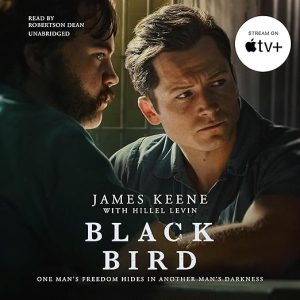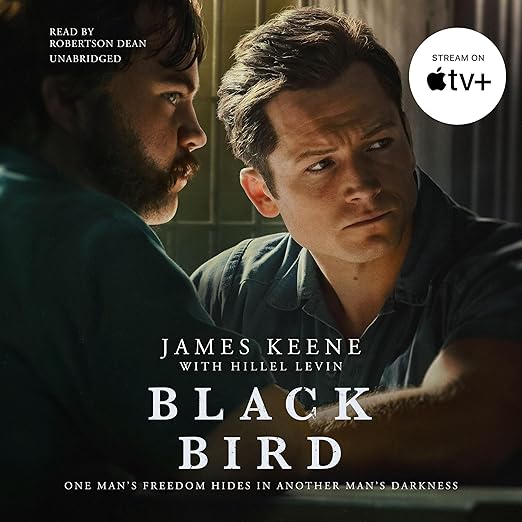
A convicted drug dealer walks into the nation's highest security prison for the criminally insane with a single job: befriend an inmate accused of terrible things and get him to say so out loud. That is the premise of Black Bird, and the reason this audiobook holds you across seven hours and twenty-six minutes is that the man who did the walking wrote the book. James Keene had, in the account's own inventory, "cars, girls, houses up and down the Gold Coast" before a sentence took all of it, and the offer that followed was simple in the way only genuinely dangerous offers are.
Our Take on Black Bird
The setup does most of the work, and it is worth spelling out because it sounds invented. Keene was a well-connected star athlete on the surface and a money-obsessed dealer underneath, chasing the score that would let him quit. Prison should have been the end of the story. Instead he was offered his freedom back in exchange for going undercover inside a maximum-security facility, getting close to Larry Hall, and obtaining a confession. Around that central task sit the complications: deranged inmates, imprisoned Mafia dons whose favor was worth courting, and a psychiatrist oddly protective of the man Keene was there to break.
What lifts it above the stunt is the line the book keeps returning to. For nearly a year Keene walked between the part he played and the self he hoped to redeem, and that gap is the actual subject. The performance had to be convincing enough to earn a killer's trust and sustained long enough that maintaining it became its own kind of damage. Anyone who has listened to informant narratives knows the pattern; few of them are told from inside the performance by the person who gave it.
The written response is short and revealing. CaringSped credits Keene with "a clear and honest account of his life's beginnings, as well as the extraordinary tale of his ascent and descent". A four-star reader came to the book only because she could not reach the screen adaptation, and her takeaway is the least glamorous one available: "The sad thing is how you really don't realize how hard it is to catch a killer." A third comment runs one sentence and reports passing the book along.
Why Listen to Black Bird
Seven hours and twenty-six minutes is unusually disciplined for true crime, and the compression is a feature. No detours into unrelated cases, no padded chapters on forensic history, no lengthy scene-setting about the American prison system. The book has one operation to describe and it describes it, which makes this a genuinely single-sitting listen for anyone with a long drive and a strong stomach.
The psychology is the real draw. Getting a confession is not an interrogation-room trick here; it is months of proximity, flattery, patience and calibrated interest, conducted by an amateur with everything to lose. The four-star comment about how hard it actually is to catch a killer lands precisely because the book demonstrates it rather than asserting it. Listeners raised on procedurals where a case breaks in forty-two minutes will find the timescale corrective.
Robertson Dean has the reading, and the material makes a specific demand: Keene's voice needs the easy charm that made the operation possible, and the prison sections need flatness rather than performance. Overplay Hall and the book becomes a horror show; underplay Keene and the charm that carried him disappears. No listener comment attached to this title addresses the recording at all, so what I can offer is the shape of the difficulty rather than a verdict on how it was met.
What to Watch For in Black Bird
This is real, and the crimes are not abstract. Keene's target is described as a serial rapist and murderer, and while the book is not written for shock, the subject matter carries what the subject matter carries. Listeners who keep true crime at arm's length by preferring cold cases and distant decades will not get that buffer here. The four-star comment also flags an unresolved thread, noting that the book does not state whether every victim was accounted for, and her sentence is cut off before she finishes the thought.
The bigger interpretive caution is structural. Keene is the narrator, the hero and the beneficiary of his own account, and one commenter calls his experiences heroic without hesitation. A first-person memoir written by a man who traded a confession for his freedom has obvious incentives, and none of that makes it false. It does mean the book is testimony rather than adjudication, and a listener should hold it the way a jury holds a cooperating witness: attentively, and with the arrangement in mind.
If the screen version brought you here, calibrate accordingly. One reviewer bought the book precisely because the adaptation was out of reach, which is a decent argument for the audio as a substitute. Expect the source material rather than the script, told at the pace of a man remembering rather than a season of television building toward episode endings.
Recommended For
True crime listeners who prefer first-person accounts over reported ones will find this among the better examples, and anyone interested in informant psychology gets a rare view from inside the arrangement. It also suits people who came to the story through the screen and want the original, particularly since the runtime is shorter than a season of television and considerably more specific about what the job actually involved.
Anyone hoping for the investigators' side, with case files, task-force detail and procedural rigor, is reading the wrong book: this is Keene's account, start to finish. Serial-murder material as a hard limit is reason enough to pass. For everyone else, the appeal is watching a man discover that the hardest part of his sentence was the part he volunteered for.